

Last updated: April 17, 2026
Quick Answer
Inverter generators win for quiet operation, fuel efficiency, and clean sub-3% THD power that is safe for laptops, phones, and medical devices. Conventional generators win on raw wattage and lower upfront cost, making them the better pick for job sites and whole-home backup via a transfer switch. The right choice comes down to what you plan to power and where you plan to run it.
Choosing between an inverter generator and a conventional generator comes down to how you plan to use it. If you need clean, quiet power for camping trips, RV travel, or sensitive electronics, an inverter generator is the clear winner. If you need raw wattage for a job site or whole-home backup power during an outage, a conventional portable generator delivers more output per dollar. This guide covers the pros and cons of inverter and conventional models. Understanding the cons of inverter generators (higher price, lower wattage ceiling) alongside the advantages helps you make a confident choice. It and breaks down every major difference so you can pick the right type of generator for your power needs.
Key Takeaways
- Inverter generators produce clean power with less than 3% total harmonic distortion (THD), making them safe for laptops, phones, and medical devices.
- Conventional generators cost 30-50% less upfront and deliver higher wattage, but they run louder and burn more fuel.
- Inverter models weigh 30-60 lbs on average, while conventional portable generators often exceed 100 lbs.
- Fuel efficiency favors inverter generators because they adjust engine speed to match the load, using up to 40% less gasoline.
- Noise levels range from 50-60 dB for inverter generators (conversation level) vs. 70-80+ dB for conventional models (lawnmower level).
Who This Guide Is For
- Campers and RV owners who need quiet, portable power on the road
- Homeowners comparing backup power solutions for power outages
- Contractors deciding between portability and high-wattage output for job sites
- Tailgaters and outdoor event organizers looking for a travel-friendly power source
How Inverter Generators Work
An inverter generator converts mechanical energy into alternating current (AC) power, then rectifies it to direct current (DC), and finally inverts it back to AC power as a stable sine wave. This three-stage process produces electricity with less than 3% THD. That level of power quality matches what comes out of a standard wall outlet, giving you a reliable power supply for any device in your home.
The key advantage of this design is that the engine does not need to run at a constant 3,600 RPM. An inverter generator adjusts its engine speed based on the actual load. When you plug in a single phone charger, the engine throttles down. When you connect a portable air conditioner and power demand increases, the engine ramps up. This variable engine speed is what makes inverter generators more fuel efficient and quieter than conventional models.

How Conventional Generators Work
A conventional generator (also called a standard generator or traditional generator in the inverter vs traditional debate) uses an alternator connected directly to the engine. The engine runs at a fixed 3,600 RPM to produce 60 Hz AC power. There is no electronic conversion step.
This simpler design has tradeoffs. Conventional generators produce power with higher THD (typically 5-10%), which can damage sensitive electronics over time. Because the engine runs at full speed regardless of the load, a conventional generator burns the same amount of gasoline whether you are drawing 500 watts or 5,000 watts. Both types must also meet EPA nonroad engine emissions standards for small spark-ignition engines [2]. However, the mechanical simplicity means fewer components that can fail, and repairs are straightforward.
Power Quality and Total Harmonic Distortion
Total harmonic distortion (THD) measures how much the electrical output deviates from a pure sine wave. The lower the THD percentage, the cleaner and safer the power is for your appliances.
Inverter generators produce power with less than 3% THD [3]. This is critical for sensitive electronics like laptops, smartphones, CPAP machines, and smart TVs. Plugging these devices into a generator with high THD can cause overheating, data loss, or permanent damage to electronic equipment and internal components.
Conventional generators typically produce power with 5-10% THD or higher. That level works fine for resistive loads and household appliances like incandescent lights, space heaters, and power tools. But it creates risk for anything with a microprocessor or circuit board. If you plan on powering sensitive electronics like computers or medical monitors, an inverter generator is the safer choice. The U.S. Department of Energy recommends using clean power sources for electronics to prevent voltage-related damage.
Fuel Efficiency Comparison
Fuel efficiency is one of the biggest practical differences between these two types of generators. Inverter generators use less fuel because their engines adjust speed to match the load. A 2,000-watt inverter generator running at 25% load may consume as little as 0.1 gallons per hour, giving you 8-10 hours of run time on a single gallon of gasoline.
A conventional generator of similar wattage running at the same 25% load still operates at 3,600 RPM, consuming roughly 0.2-0.3 gallons per hour. Over a full day of use, that difference adds up to significant fuel savings. For camping trips, tailgates, or any situation where you carry your own fuel supply, an inverter generator stretches your gasoline further. Both types run on gasoline, though dual fuel models also accept propane.
According to U.S. Department of Energy research on engine load management, variable-speed engines (like those in inverter generators) can achieve 20-40% better fuel economy than fixed-speed engines under partial load conditions [1].
Noise Levels: How Loud Is Each Type?
Noise is a deciding factor for many buyers, especially those who camp at RV parks with quiet hours or live in neighborhoods with noise ordinances.
Most inverter generators operate at 50-60 decibels (dB) measured at 25% load from 23 feet away. That is roughly the volume of a normal conversation. Many inverter models include sound-dampening enclosures that produce even lower noise at partial loads.
Conventional generators typically produce 70-80+ dB at the same distance. That is comparable to a vacuum cleaner or lawnmower. The constant high-RPM operation creates a steady, loud drone that carries across campsites and neighborhoods.
For reference, every 10 dB increase represents a perceived doubling of loudness. A 75 dB conventional generator sounds roughly four times louder than a 55 dB inverter generator to the human ear.
Portability, Weight, and Size
Inverter generators are built for portability. Most models in the 2,000-3,000 watt range weigh between 40-60 pounds and come with integrated carrying handles. Even a small portable inverter fits easily in a car trunk, truck bed, or RV storage compartment.
Conventional portable generators are heavier. A 3,000-watt conventional model typically weighs 80-110 pounds. A large generator with 5,000+ watts can weigh 150 pounds or more. While many include wheel kits and fold-down handles, loading them into a vehicle still requires two people in most cases.
If single-person portability matters to you, inverter generators have a clear advantage. If the generator will stay in one place (like a garage for home backup power), weight is less of a concern.

Inverter vs. Conventional Generator: Side-by-Side Specs
| Feature | Inverter Generator | Conventional Generator |
|---|---|---|
| Power Quality (THD) | Less than 3% | 5-10%+ |
| Noise Level | 50-60 dB | 70-80+ dB |
| Weight (2,000-3,000W) | 40-60 lbs | 80-110 lbs |
| Fuel Efficiency | Variable speed, up to 40% savings | Fixed 3,600 RPM, higher consumption |
| Safe for Electronics | Yes (clean sine wave) | Risky for sensitive devices |
| Typical Wattage Range | 1,000-7,000W | 3,000-15,000W+ |
| Parallel Capable | Most models, yes | Rarely |
| Price (2,000-3,000W) | $300-$800 | $150-$500 |
| Engine Speed | Variable (adjusts to load) | Fixed at 3,600 RPM |
| Best For | Camping, RV, tailgating, electronics | Job sites, home backup, high-wattage tools |
Decision Factor Scorecard
This scorecard rates inverter and conventional generators across the six factors that matter most to buyers. Use it to see which type wins in the categories you care about.
| Decision Factor | Inverter | Conventional |
|---|---|---|
| Power Quality (THD) | Excellent | Fair |
| Fuel Efficiency | Excellent | Fair |
| Noise Level | Excellent | Poor |
| Portability / Weight | Excellent | Fair |
| Price | Higher | Lower |
| Sensitive Electronics Safety | Safe | Risky |
Scenario: Tailgate Party vs. Job Site
Tailgate party: You need to power a TV, phone chargers, a blender, and LED string lights. Total draw is about 800 watts. An inverter generator handles this load quietly, uses minimal fuel, and fits in your truck bed next to your cooler. Your neighbors in the parking lot will thank you for picking the quiet option.
Job site: You need to run a 15-amp circular saw, an air compressor, and work lights simultaneously. Peak draw exceeds 5,000 watts. A conventional generator delivers the raw power output needed to start high-draw motors, and it costs significantly less than an inverter generator with equivalent wattage. Noise is not a factor outdoors on a construction site, though OSHA portable generator guidance on proper grounding, GFCI protection, and safe placement still applies [4].
Top Inverter Generators for Portability
If clean power, low noise, and easy transport are your priorities, these inverter generators deliver on all three. Each model includes CO alert safety sensors for added protection in enclosed or semi-enclosed spaces.
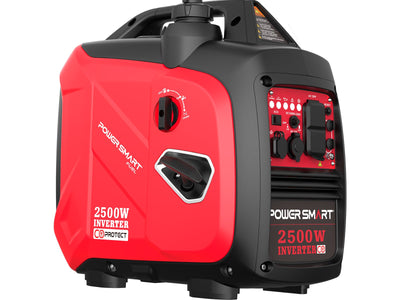
Budget Pick: 2500W Inverter Gas Generator HB5020C
The HB5020C provides 2,500 watts of clean inverter power at a price point that competes with many conventional generators. The built-in CO alert sensor shuts the unit down automatically if carbon monoxide levels get too high. This portable model weighs under 50 pounds, so one person can carry it from the garage to the truck bed without help. This is a strong pick for campers, tailgaters, and anyone who needs portable backup power for an RV or small home appliance circuit.

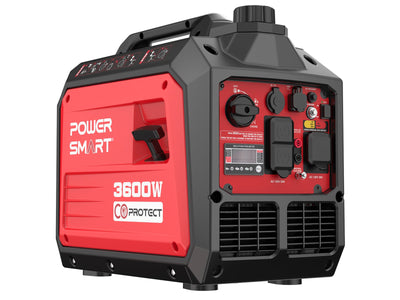
Mid-Range Pick: 3600W Inverter Gas Generator DL5035C
The DL5035C bumps the output to 3,600 watts while keeping the clean sine wave output that protects sensitive electronics. The extra wattage lets you run a portable air conditioner, a mini fridge, and charge devices simultaneously. CO alert protection is included, and the fuel-efficient inverter engine stretches each gallon of gasoline further than a conventional generator of similar wattage.

High-Output Pick: 4800W Inverter Generator HB5046C
The HB5046C bridges the gap between portable inverter convenience and higher wattage demands. With 4,800 watts of power capacity, it can handle larger home appliances during a power outage, including a well pump or window AC unit. The included wheel and handle kit makes transport practical despite the extra power. CO alert protection is standard.

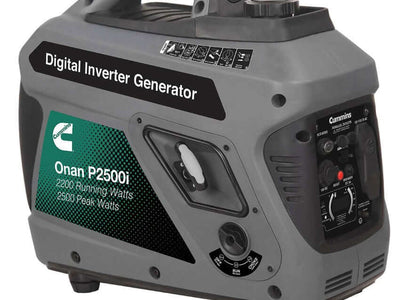
Premium Pick: Cummins Onan P2500i
The Cummins Onan P2500i delivers 2,500 watts of inverter power backed by the Cummins name and commercial-grade build quality. It runs quieter than most inverter generators in its class and includes a longer standard warranty. If you want a generator built to last and use it frequently for RV travel, camping, or home backup, the P2500i is worth the investment. If you plan to buy an inverter generator for frequent use, this model pays for itself over time.

Top Conventional Generators for High-Wattage Needs
When you need maximum power output and upfront cost matters more than noise or portability, conventional generators deliver. These models provide serious wattage for job sites, whole-home backup, and power equipment that demands high starting amps.
Budget Workhorse: 9625W Gas Generator DB5080
The DB5080 produces 9,625 running watts, enough to power most essential home circuits during an outage or run multiple power tools on a job site simultaneously. It connects to a transfer switch for whole-home backup power. At under $1,000, it offers strong value for buyers who need high wattage without paying inverter premiums.

Heavy-Duty Pick: 12000W Generator DB5095
The DB5095 delivers 12,000 watts, enough to run a central AC unit, refrigerator, well pump, and lights all at the same time during a grid outage. This is the right choice when you need serious power output and plan to keep the generator in a fixed location. It connects to a home transfer switch for seamless backup power during storms and blackouts.

Maintenance and Long-Term Durability
Conventional generators have a simpler mechanical design. Oil changes, air filter replacements, and spark plug swaps are straightforward and inexpensive. Most owners handle basic maintenance themselves with common hand tools.
Inverter generators use more advanced electronics, including circuit boards and voltage regulators. Routine maintenance (oil, filters, plugs) is similar to conventional models. But if the inverter electronics fail, repairs require a qualified technician and can be expensive to fix since replacement parts cost more.
When it comes to routine upkeep, generators are no different from other small engines. Both types benefit from the same core maintenance habits: fresh gasoline (or fuel stabilizer for storage), regular oil changes, and clean air filters. Keep the exhaust area clear of debris, store your generator in a dry location, and run it for 15-20 minutes every month to keep the engine and carburetor in good condition.
When to Choose an Inverter Generator
An inverter generator is the right choice when you need:
- Clean power for laptops, phones, CPAP machines, medical equipment, or smart TVs (less than 3% THD)
- Quiet operation for campsites, RV parks, neighborhoods, or events with noise restrictions
- Portability that one person can handle (under 60 lbs)
- Fuel efficiency for extended runtime on limited gasoline supply
- Parallel capability to link two units together for double the wattage when needed
When to Choose a Conventional Generator
A non inverter (conventional) generator is the right choice when you need:
- High wattage (5,000W+) for power tools, air compressors, or whole-home backup via a transfer switch
- Lower upfront cost for the same wattage output
- Simple, DIY-friendly maintenance with widely available parts
- Power for resistive loads (heaters, lights, pumps) that do not require clean sine wave output
- A fixed-location backup power solution where weight and noise are not concerns (some standby models also connect to natural gas lines)
Inverter vs. Conventional Generator: Pros and Cons Summary
Inverter generator pros: Clean and stable power output for sensitive electronics, fuel efficient variable-speed engine, lower noise levels (50-60 dB), lightweight and portable, parallel capable for doubled power capacity.
Inverter generator cons: Higher purchase price, lower maximum wattage (typically under 7,000W), electronic components can be expensive to fix, not ideal for running heavy power equipment at full load.
Conventional generator pros: Lower upfront cost, higher wattage output for home backup power and job sites, simpler mechanical design with easy DIY maintenance, widely available replacement parts.
Conventional generator cons: Louder operation (70-80+ dB), heavier and harder to transport, higher fuel consumption at partial loads, power quality not safe for sensitive electronic equipment.
The Bottom Line
In the inverter generators vs conventional generators debate, each type serves different needs. Inverter models win on power quality, fuel efficiency, noise levels, and portability. Conventional models win on raw wattage, upfront price, and mechanical simplicity.
For most recreational users, RV owners, and homeowners who want to protect sensitive electronics, an inverter generator is the smarter investment. The higher upfront cost pays for itself through fuel savings, quieter operation, and the ability to safely power modern devices.
For job sites, large-scale home backup power through a transfer switch, or any application where you need 5,000+ watts and noise is not a factor, a conventional generator delivers more power per dollar. The right generator depends on your specific power needs. Choose based on those needs, where you will use it, and what appliances like refrigerators, AC units, or power tools you plan to run.
References
- U.S. Department of Energy. "Small Engine Fuel Efficiency." energy.gov
- U.S. Environmental Protection Agency. "Nonroad Engine Emissions Standards." epa.gov
- Institute of Electrical and Electronics Engineers. "IEEE 519 Recommended Practices for Harmonic Control." ieee.org
- Occupational Safety and Health Administration. "Portable Generator Safety on Job Sites." osha.gov
- U.S. Consumer Product Safety Commission. "Portable Generator Safety Guide." cpsc.gov
- National Fire Protection Association. "NFPA 70 National Electrical Code." nfpa.org