

Last updated: April 17, 2026
Quick Answer
For most CPAP users, the Pecron E2400LFP (2048Wh, pure sine wave) is the best all-round pick. It runs a 40W CPAP for about 43 hours, which covers five nights without a humidifier or two full nights with one running. If you only need power for travel and a single dry night, the Jackery E500v2 (512Wh LiFePO4, pure sine wave) covers about 10 hours. The non-negotiable spec is pure sine wave output. Below roughly 500Wh you are buying a partial night, not a night.
Our Picks for CPAP Backup Power
A CPAP machine keeps you breathing through the night. The benefits of CPAP therapy[1] depend entirely on consistent use, and consistent use requires reliable power. Without power, it stops. For the 30 million Americans living with sleep apnea[2], a power outage or camping trip is not just an inconvenience. It is a health problem. Miss one night and you wake exhausted. Miss several and the health consequences compound.
This guide is for:
- CPAP and BiPAP users preparing for storm season or power outages
- Campers and RV travelers who use CPAP nightly
- Anyone who needs uninterrupted sleep therapy off the grid
The right portable power station for CPAP delivers reliable backup power whether the grid goes down or you are sleeping off the grid entirely. It runs silently at 0 dB, produces no fumes, and requires no special setup. Plug in, turn on, and your sleep therapy continues exactly as it would from a wall outlet.
This guide covers what to look for in a power station, which units work reliably with CPAP machines, and how to match battery capacity to your specific setup. Every unit below delivers pure sine wave power for CPAP machines and accepts solar charging, and is available through Mighty Generators as an authorized dealer with full manufacturer warranty support. Check with your HSA or FSA provider to see if CPAP-related power accessories qualify as eligible expenses under your specific plan.
Why CPAP Machines Need a Pure Sine Wave Power Station
Most CPAP machines require pure sine wave AC power, the same clean, smooth power your wall outlet delivers. Modified sine wave inverters, common in cheaper backup units, produce choppy power that can trigger error codes, shorten motor life, or shut your machine off mid-night.
The difference matters more than most people realize. A pure sine wave mimics the continuous wave that utility power delivers. A modified sine wave is stepped and approximated. Many household electronics tolerate the difference. CPAP motors and humidifier heating elements often do not. Symptoms include unusual humming, error codes on startup, or the machine cycling off unexpectedly during the night, robbing you of uninterrupted sleep.
Before buying anything, check your CPAP manual or the label on the power supply. It will list the input voltage range (typically 100-240V AC) and wattage. Most machines draw 30-60W without a humidifier, depending on settings. A heated humidifier and heated tubing can roughly double that. Your power supply rating is the ceiling, for example 65W on a ResMed AirSense 11.
These power stations offer clean pure sine wave output and can run most CPAP machines without issue. None of them will damage your CPAP devices or cause error codes.

How Much Battery Capacity Do You Need?
Battery capacity is measured in watt-hours (Wh). Multiply the station capacity by 0.85 to allow for inverter losses, then divide by your machine's wattage to estimate run time.
A 512Wh station running a 45W CPAP (no humidifier) lasts roughly 10-11 hours. Enough for one full night with margin to spare. Add a heated humidifier and plan on twice the battery capacity.
- CPAP without humidifier: 30-60W power usage. A 300-500Wh station covers one night.
- CPAP with heated humidifier: 60-100W power usage. Plan for 500-1000Wh per night.
- Multi-night or extended outages: 1000Wh+ with solar panel recharging.
BiPAP and APAP users: The same rules apply. BiPAP machines typically draw 30-80W depending on pressure settings and whether a heated humidifier is active. APAP machines adjust pressure automatically and may draw slightly more on average than a fixed-pressure CPAP. Check the wattage label on your machine and use the same capacity math. The power stations in this guide work with all three machine types.
Battery chemistry also matters. The four units below use LiFePO4 (lithium iron phosphate). LiFePO4 holds capacity better over time than older lithium cobalt designs and is rated for 2,500 to 3,500 charge cycles before capacity drops noticeably[4]. These are not disposable backup batteries. They are long-term backup power solutions that last through years of storm seasons and camping trips.
If you use a heated humidifier regularly, buy more capacity than the math suggests. How much power a humidifier adds varies depending on the machine settings, room temperature, and altitude. A 20% buffer gives you peace of mind when conditions are not ideal.
Scenario: 3-Night Camping Trip, CPAP Required
You have a weekend camping trip planned at a state park with no electrical hookups. Your ResMed AirSense 11 draws about 45W on AC without the humidifier. You sleep 7 hours per night. That is 45W x 7 hours = 315Wh per night. Over three nights: 945Wh total. A Pecron E2400LFP (2048Wh) covers all three nights with over 300Wh of margin. Using a DC cable drops the draw to roughly 35W, stretching total consumption to about 735Wh and leaving nearly half the battery untouched. Add a 100W solar panel and you recover 400-500Wh during the day, making four or five nights realistic without a wall outlet. Pack the station fully charged, test it at home for one night first, and you sleep confidently off-grid.
| Station Capacity | Low Setting (~30W) | Medium Setting (~50W) | High + Humidifier (~70W) |
|---|---|---|---|
| 500Wh | ~14 hrs (2 nights) | ~8.5 hrs (1 night) | ~6 hrs (partial night) |
| 1000Wh | ~28 hrs (4 nights) | ~17 hrs (2 nights) | ~12 hrs (1-2 nights) |
| 1500Wh | ~42 hrs (6 nights) | ~25 hrs (3 nights) | ~18 hrs (2-3 nights) |
| 2000Wh | ~56 hrs (8 nights) | ~34 hrs (4-5 nights) | ~24 hrs (3 nights) |
Estimates assume 85% inverter efficiency on AC power. Actual runtime varies by machine model, altitude, and temperature. DC cable use adds 20-30% to these figures.
DC vs AC: How to Get More Runtime from Your CPAP
Most CPAP machines have a DC input port, a small round barrel jack on the back or side of the unit. If yours has one, use it.
Running a CPAP on DC power instead of AC skips one conversion step inside the power station, reducing power consumption and making the most of your power source. Without DC input, the station converts battery power to AC, then the CPAP's internal power supply converts it back to DC for the motor. Two conversions, two losses. DC input cuts that to one conversion, and the result is 20-30% more run time from the same battery.
A 512Wh station running a CPAP at 45W on AC might deliver 10 hours. The same station on DC often delivers 13 hours. On a car camping trip or backpacking trip where you are relying on a solar panel to recharge during the day, those extra hours matter.
To use DC power, you need a cable specific to your CPAP brand and model. ResMed, Philips Respironics, and DeVilbiss all use different connectors and DC input voltages (typically 12V or 24V). Search your machine model number plus "DC power cable" or "travel DC adapter" to find the right cable. The power stations in this guide include 12V car outlets that work with these cables.
Check your machine first. Some auto-adjusting (APAP) machines and heated humidifiers require AC even if a DC port is present. If the manual does not list DC input specs, use AC.
Quick Comparison: Best CPAP Power Stations
Runtime figures assume a CPAP drawing 40W without a heated humidifier over an eight hour night. A heated humidifier roughly doubles the draw, so halve these numbers if you run one. Current pricing sits on each product card below.
| Station | Capacity | AC Output | Est. CPAP Run Time | Best For |
|---|---|---|---|---|
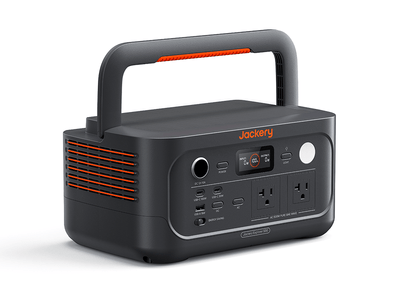
| Jackery E500v2 | 512Wh | 500W | ~10 hrs | Travel and one dry night |
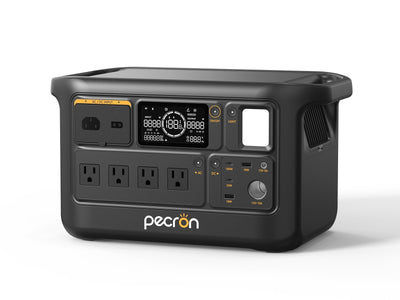
| Pecron F1000LFP | 960Wh | 1500W | ~20 hrs | Two dry nights, or one humidified |
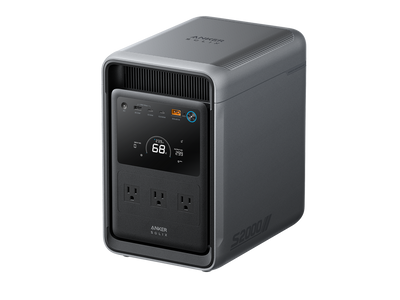
| Anker SOLIX S2000 | 2010Wh | 1500W | ~42 hrs | Sub-10ms switchover for sensitive gear |
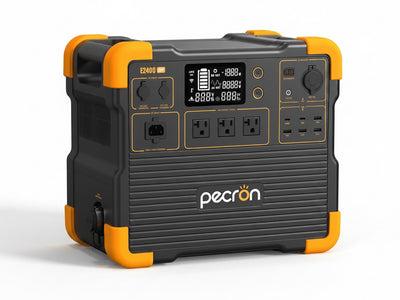
| Pecron E2400LFP | 2048Wh | 2400W | ~43 hrs | Best all-around, multi-night outages |
| Pecron E3600LFP | 3072Wh | 3600W | ~65 hrs | Extended outages and whole-room backup |
| Station | Battery Capacity | CPAP Runtime | Portability | Charging Speed | Value |
|---|---|---|---|---|---|
| Jackery E500v2 | ●●○○○ | ●●○○○ | ●●●●● | ●●●●○ | ●●●○○ |
| Pecron F1000LFP | ●●●○○ | ●●●○○ | ●●●○○ | ●●●○○ | ●●●●● |
| Anker SOLIX S2000 | ●●●●○ | ●●●●○ | ●●○○○ | ●●●●● | ●●●●○ |
| Pecron E2400LFP | ●●●●○ | ●●●●○ | ●●○○○ | ●●●○○ | ●●●●● |
| Pecron E3600LFP | ●●●●● | ●●●●● | ●○○○○ | ●●●●○ | ●●●●● |
Best Portable Power Stations for CPAP Use
Best for Travel: Jackery E500v2 (512Wh)
The Jackery E500v2 holds 512Wh and weighs 12.6 lbs. That covers one full night of therapy without a humidifier, roughly 10 hours at typical draw. It is the lightest unit here and fits a carry-on without trouble.
Its LiFePO4 battery is rated for 6,000 cycles. That is double what most stations in this class offer, so it survives years of nightly use. Two AC outlets deliver pure sine wave power, which every CPAP requires.
Skip this one if you run a heated humidifier. At roughly 4 hours with the humidifier on, it will not reach morning.

Best for One-Night Backup: Pecron F1000LFP (960Wh)
The Pecron F1000LFP holds 960Wh and runs a CPAP for roughly 20 hours. That is two nights without a humidifier, or one full night with one running. Its 1500W inverter powers the CPAP plus a lamp, a phone, and a router together.
This is the first unit here that carries a humidified night start to finish. At 23.9 lbs it stores easily in a closet or a car trunk. It is not carry-on gear.
Pecron rates the battery for 3,500 cycles to 80% capacity.

Best All-Around: Pecron E2400LFP (2048Wh)
The Pecron E2400LFP holds 2048Wh and runs a CPAP for about 43 hours. That is five nights without a humidifier, or two full nights with one. Its 2400W inverter starts a furnace blower, which most stations this size cannot do.
This unit answers the real question behind most CPAP power searches. A storm takes the grid down for two days and your therapy does not stop. It runs your refrigerator and your phones at the same time.
At 55 lbs it stays where you put it. Treat it as home equipment, not travel gear.

Also Consider: Anker SOLIX S2000 (2010Wh)
The Anker SOLIX S2000 holds 2010Wh and switches to battery power in under 10 milliseconds. Most stations in this class take 20 to 30 milliseconds. That gap matters if you leave the CPAP plugged into the station full time.
A switchover that slow can restart some machines when the grid drops. Under 10 milliseconds, therapy continues without interruption. The tradeoff is a smaller 1500W inverter and slightly less capacity than the E2400LFP.
At 35.7 lbs it is the easier of the two to move. Choose it when uninterrupted switchover matters more than inverter headroom.

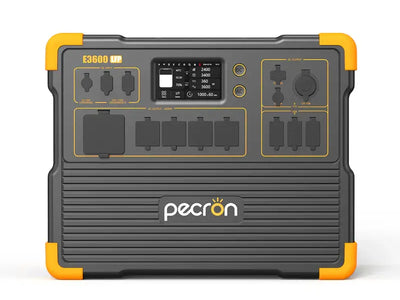
Best for Extended Outages: Pecron E3600LFP (3072Wh)
The Pecron E3600LFP holds 3072Wh and runs a CPAP for roughly 65 hours. That is eight nights without a humidifier, or three full nights with one running. Its 3600W pure sine inverter surges to 7,000W.
It switches over in 8 to 20 milliseconds and accepts up to 2,400W of solar input. With panels attached you extend therapy through a multi-day outage indefinitely. It recharges from a 30A circuit in about 1.3 hours.
This is whole-room backup. Buy it when the CPAP, the refrigerator, and the lights all need to survive the same outage.

CPAP and Solar: What You Need to Know
A solar panel extends CPAP camping power indefinitely on multi-day trips. Match panel wattage to the station's maximum solar input rating.
The Pecron E3600LFP accepts up to 2,400W of solar panel input. A 100W panel in good sun adds roughly 5-6 hours of CPAP run time through the day, enough to recover from a night of use.
Keep panels clean, angle them toward the sun, and avoid partial shade. A shadow on one corner of a panel drops output across the whole array.
Weather planning matters. In overcast regions or during stretches of poor weather, a single solar panel may not fully recover a 245Wh station in a day. If your trip destination gets reliable sun, one panel covers a 600Wh station. If conditions are uncertain, pair a 1000Wh station with 200W of solar panels to stay ahead.
A solar panel also works as a permanent home backup answer. A station connected to roof panels or kept near a south-facing window stays charged without grid power. During a multi-day outage, solar charging removes the concern about running out entirely.
Browse our for bundles sized for extended off-grid use.
Traveling with a Portable CPAP Power Station
TSA allows portable power stations in carry-on bags[3] for flights within the US, with capacity limits. Stations under 100Wh are allowed without airline approval. Stations between 100Wh and 160Wh require airline approval but are generally permitted. Stations above 160Wh are not allowed on passenger aircraft.

None of the four units above qualify for air travel under those rules. For flights, use a dedicated CPAP travel battery rated under 100Wh. Search for your machine brand plus "travel battery" or "DC battery pack". ResMed, Philips, and DeVilbiss all make or license compatible units. Most hotels and rental properties have outlets, and calling ahead to confirm removes the guesswork.
For car camping, backpacking access routes, and road trips, no restrictions apply. Every unit on this list handles vehicle transport, temperature swings, and repeated charging without issue.
- Store the station at 50-60% charge for transport to reduce heat risk during a long drive.
- Pack the AC cable and any DC adapter cables together in a labeled pouch.
- Run a full overnight test at home before the trip to confirm run time with your specific machine and pressure settings.
- Check your destination for outlet availability. Many campgrounds now offer electrical hookups for topping off backup batteries between nights.
How to Set Up Your CPAP with a Portable Power Station
Plug your CPAP power cord into an AC outlet on the station. Turn the station on to use your CPAP machine with reliable power for your CPAP exactly as it would draw from a wall outlet. Running your CPAP machine on battery power works exactly as it does at home.
- Run a full-night test at home before a camping trip or storm season to confirm actual run time with your specific machine.
- If your CPAP has a DC input port, use it. DC power skips the inverter and extends run time by 20-30%.
- Disable the heated humidifier when running on limited battery. Most machines allow this without affecting therapy pressure.
- Store the station at 40-60% charge if it sits unused for more than a few weeks.
- Check the station charge level weekly during storm season. A station at 5% when the power goes out provides little backup power.
- Good power management: drain the station below 10% and recharge fully every 3 months. This recalibrates the battery management system so charge readings stay accurate.
Using a Power Station as a Home CPAP Backup
A portable power station works as a permanent home backup for CPAP therapy, giving you reliable emergency power during a power outage at home. Keep it plugged in and it stays charged. During a short power blip or a multi-day outage, it switches to battery automatically. No setup required.
For home backup, larger units like the Pecron E2400LFP or the Pecron E3600LFP are the right call. Large enough to cover a multi-day outage, and useful enough to power lights, a router, and a phone at the same time, giving your family peace of mind during extended outages. Position it within reach of the CPAP power cord. A short extension cable gives placement flexibility. Keep it in a ventilated space away from bedding.
For households where multiple people depend on powered medical devices, a second station or a unit with expansion capacity removes single-point-of-failure risk. Two 1000Wh stations covering separate rooms is a more reliable setup than one large station with a long extension cord.
If you are also evaluating whole-home coverage, our includes options that scale from a bedside CPAP backup to full-home systems.
The Bottom Line
Choosing the right portable power station for CPAP use comes down to simple math: check your machine's wattage label, decide whether you run a heated humidifier, and multiply by the hours you sleep. Without a humidifier, most CPAP machines draw 30-60W. With one, plan for 60-100W. A 960Wh station covers two nights without a humidifier or one night with. A 2000Wh+ station handles multi-day outages.
For most CPAP users, the Pecron E2400LFP hits the right balance of capacity, runtime, and price. It delivers pure sine wave power, accepts solar charging, and carries two humidified nights. If you need multi-day home backup or run a humidifier every night, step up to the Pecron E3600LFP.
Run a full overnight test at home before relying on any station during a storm or camping trip. Knowing your exact runtime removes the guesswork and lets you sleep without worry.
References
- American Academy of Sleep Medicine. "CPAP Therapy Overview." aasm.org
- U.S. Food and Drug Administration. "CPAP Machines: Consumer Guide." fda.gov
- Federal Aviation Administration. "Lithium Battery Packing Safety." faa.gov
- U.S. Department of Energy. "Lithium-Ion Battery Basics." energy.gov
- National Renewable Energy Laboratory. "Lithium Iron Phosphate Battery Performance." nrel.gov
- Pecron. "E2400LFP Portable Power Station Specifications." pecron.com
Frequently Asked Questions
What size portable power station do I need for a CPAP machine?
For a CPAP without a humidifier, a 300-500Wh station covers one night. With a heated humidifier, plan for 500-1000Wh per night. For two or more nights between charges, or to run other devices alongside CPAP, 1000Wh gives you reliable backup power with solid margin.
Can I use any portable power station with my CPAP?
To run a CPAP machine safely, only use a station with pure sine wave AC output. Modified sine wave inverters can cause CPAP error codes, noisy operation, or motor damage. All four units in this guide output pure sine wave power. Verify this spec for any unit not listed here before connecting your machine.
Will a portable power station run a CPAP with a humidifier?
Yes, but heated humidifiers roughly double the power usage. The Pecron F1000LFP at 960Wh runs a CPAP with a humidifier for about one full night. For two or more humidified nights, step up to the Pecron E2400LFP at 2048Wh.
What is the difference between a CPAP battery pack and a portable power station?
A dedicated CPAP battery pack is a small, lightweight unit designed for one machine. It is often under 100Wh, qualifies for air travel, and runs nothing else. A portable power station is larger, powers multiple CPAP devices and other equipment, and handles everything from phone charging to small appliances. For home backup power and multi-night camping, a portable power station gives you far more flexibility. For frequent air travel, a dedicated portable CPAP battery is the right tool.
What should I buy when I first start using a CPAP machine?
To choose the best CPAP battery backup for someone who just started using a CPAP machine, the Pecron F1000LFP is the right starting point. It offers enough CPAP battery power for two nights without a humidifier, accepts solar panel charging, and handles most travel scenarios. It delivers extended runtime, it is easy to store at 23.9 lbs, and it covers other devices during an outage. Start here and expand capacity only if your needs grow.
Is it safe to run a CPAP on a portable power station all night?
Yes, as long as the station outputs pure sine wave power and has enough capacity for your machine run time. Run a test at home before relying on the station during a storm or a remote trip so you know how it performs with your specific CPAP model.
Can I charge a portable power station with a solar panel while camping?
Yes. The Pecron E3600LFP accepts up to 2,400W of solar panel input. One 100W panel in good sun adds hours of CPAP run time through the day. With 200W of panels you fully recover overnight use by early afternoon on a clear day.
How do I know if my CPAP requires pure sine wave power?
Check the CPAP manual or the power supply label. If it lists AC input voltage and no special requirements, assume pure sine wave is needed. Some newer CPAP models include universal switching power supplies that tolerate modified sine wave, but manufacturers rarely advertise this clearly. When in doubt, use pure sine wave. All four stations in this guide output pure sine wave, so connecting any of them to any CPAP is safe.
How do I get power for my CPAP without electricity?
A portable power station is the most reliable way to run your CPAP without grid electricity. Pair it with a solar panel for indefinite run time on extended trips. Charge the station fully at home before any trip or storm season. If your machine has a DC input port, use a DC cable instead of AC to skip the inverter's conversion loss. A dependable station with enough capacity functions like an uninterruptible power supply for your sleep therapy, keeping it running regardless of grid access.