
Never lose poweragain.
A standby generator wires into your home and starts itself the moment the power goes out. It runs on natural gas or propane, no fuel to haul. Keep the whole house running through any outage.
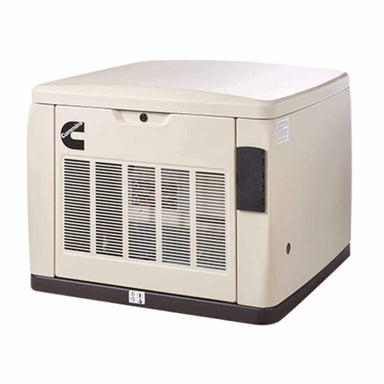
★ 5.00 Cummins 20kW Quiet Connect Standby Gene...Covers most whole homes, including central AC20kW · Natural gas / LP · 1 reviews · from $5,803.60 →Ships freight on a pallet. Professional install required — transfer switch and gas hookup by a licensed pro. We'll help you find one.
Start Here
3 picks · by use
Cummins 17kW Standby Generator RS17A | Automatic ...
Briggs & Stratton PowerProtect+ 26kW Standby Gene...
How to choose a home standby
What Size Standby Generator Do I Need?
Standby generators are sized in kilowatts (kW), and the right size depends on how much of your home you want to run. A larger unit covers more, including central air conditioning. Match the size to your home:
- Essentials only (fridge, furnace, well pump, lights): 10 to 13 kW
- Average home, most circuits: 14 to 18 kW
- Large home with central AC: 20 to 22 kW
- Whole-home, everything at once: 24 to 26 kW
A 20 kW unit covers most homes, including one central air conditioner, which is why it is the popular choice.
How Does a Standby Generator Work?
A standby generator is wired into your home through an automatic transfer switch. When the power goes out, it senses the outage, starts itself within seconds, and powers your circuits. When utility power returns, it transfers back and shuts off. You do nothing. It runs on natural gas or propane, so there is no fuel to haul and nothing to refill.
Natural Gas or Propane?
These units are dual-fuel, so they run on either. Natural gas connects to your home gas line for unlimited runtime with no refilling. Propane is the choice for homes without natural gas, drawn from a tank on your property. Both start automatically and run for days.
What About Installation?
A standby generator ships on a freight pallet and requires professional installation. A licensed pro sets the pad, connects the gas line, wires the transfer switch, and pulls the permit and inspection. Budget for install on top of the unit price. Call us and we will help you plan it and find an installer.
Whole-Home or Essential Circuits?
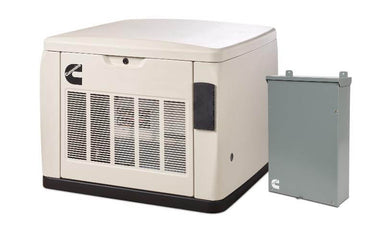
Pair a larger unit with a whole-house transfer switch and smart load management to run everything, including AC. A smaller unit with an essential-circuits switch keeps the must-haves on, like heat, the fridge, and the well pump. A transfer switch is required and is installed with the unit. Some models include one; for others your installer supplies a compatible switch sized to your home.
Who These Are For
A standby generator is for homeowners who want permanent, automatic, hands-off backup. It is the right call for storm-prone areas, medical equipment, well and sump pumps, home offices, and protecting a full freezer. Set it once and never think about power again.
Before you buy
What size standby generator do I need?+
Standby generators are sized in kilowatts. Essentials need 10 to 13 kW, an average home 14 to 18 kW, a large home with central AC 20 to 22 kW, and whole-home coverage 24 to 26 kW. A 20 kW unit covers most homes including one central air conditioner.
How does a standby generator work?+
It wires into your home through an automatic transfer switch. When the power goes out, it senses the outage, starts within seconds, and powers your circuits. When utility power returns, it switches back and shuts off automatically. You do nothing.
Do I need a transfer switch?+
Yes. A transfer switch is what lets the generator start on its own and safely power your home without backfeeding the utility line. It is required and set up during installation. Some models come with one; for others your installer supplies a compatible switch sized to your home.
Does it run on natural gas or propane?+
Both. These units are dual-fuel. Natural gas connects to your home line for unlimited runtime. Propane draws from a tank for homes without natural gas. You choose the fuel at install.
How much does installation cost?+
Installation varies by home and region because it includes the pad, gas connection, electrical wiring, and permit. Budget for professional install on top of the unit price. Call us and we will help you plan it and connect you with an installer.
Can it run my whole house, including air conditioning?+
Yes, with the right size. A 20 kW unit runs most homes including one central AC. Larger homes or multiple AC units step up to 24 to 26 kW with a whole-house transfer switch and load management.
How long can a standby generator run?+
On natural gas it can run indefinitely, since it draws from your home line. On propane it runs for days, limited only by tank size. These are built to run continuously through long outages.
How loud is a standby generator?+
Quiet-series home standby units run about 60 to 65 decibels at a normal distance, roughly the volume of a conversation. They are far quieter than a portable gas generator.
Does it start automatically during an outage?+
Yes. It constantly monitors your power. When an outage hits, it starts within seconds, transfers your load, and runs until utility power returns, then shuts itself off. It also self-tests weekly.
Do I need a permit to install one?+
Yes. Professional installation includes the required permit and inspection to meet local electrical and gas code. Your installer handles this as part of the job.