
Skip to content

Best Power Stations for Construction Sites - ACOPOWER

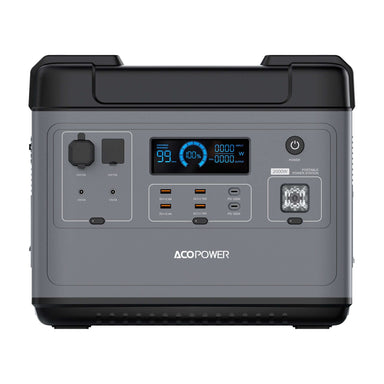
Construction sites demand reliable, powerful, and versatile energy solutions that can keep pace with professional-grade tools and equipment. Our curated collection of industrial portable power stations delivers the robust performance contractors need, featuring LiFePO4 battery technology for exceptional longevity, high-output inverters capable of running demanding power tools, and expandable capacity systems that scale with your project requirements. Whether you're framing a residential addition, running finish carpentry equipment, or powering an entire remote construction operation, these power stations eliminate the noise, fumes, and maintenance hassles of traditional gas generators while providing clean, consistent electricity. From the compact 2000W ACOPOWER P2001 perfect for small crews to the massive 16384Wh expandable BP2000 system for multi-day commercial projects, each unit is engineered for the demanding conditions of active jobsites. With multiple AC outlets, USB charging ports, and solar compatibility, these power stations keep your tools running, devices charged, and projects on schedule—all while reducing your carbon footprint and operating costs.

Key Takeaways

  • Construction sites require power stations with at least 2000W continuous output to run professional-grade tools and equipment reliably
  • LiFePO4 (lithium iron phosphate) batteries offer superior longevity with 3000+ cycles, making them ideal for daily construction site use
  • Expandable power systems allow you to scale capacity from 2000Wh to 16000Wh+ as project demands increase
  • Industrial portable power stations eliminate fuel costs, reduce noise pollution, and provide clean energy for indoor construction work

What should you look for in a power station for construction sites?

When selecting a power station for construction sites, prioritize continuous wattage output over peak ratings—most professional power tools require 1500-3000W of sustained power. Look for LiFePO4 battery chemistry, which delivers 3000-5000 charge cycles compared to standard lithium-ion's 500-1000 cycles, making them significantly more cost-effective for daily commercial use. Ensure the unit offers multiple outlet types including 120V AC outlets, USB ports, and ideally 240V capability for high-draw equipment like welders or compressors. Rugged construction with IP-rated protection against dust and moisture is essential for jobsite conditions. Expandability is crucial—modular systems that allow capacity upgrades mean your investment grows with project requirements. Finally, consider recharge options: solar compatibility provides off-grid independence, while fast AC charging minimizes downtime between shifts.

How do you choose the right power station capacity for construction needs?

  • Calculate total wattage requirements: List all tools you'll run simultaneously (circular saw 1500W + drill 800W + lights 200W = 2500W minimum capacity needed)
  • Add 20-30% overhead buffer: Power tools experience surge draws during startup that can exceed rated wattage, so a 3000W+ station is recommended for 2500W calculated loads
  • Consider runtime needs: Divide battery capacity (Wh) by tool consumption to estimate hours of operation—a 2000Wh station running 500W of tools provides approximately 4 hours of runtime
  • Evaluate expandability for multi-day projects: Systems like the ACOPOWER BP2000 that expand to 16384Wh eliminate the need for daily recharging on remote sites
  • Match voltage requirements: Standard 120V outlets handle most tools, but heavy equipment like table saws, air compressors, or welders may require 240V capability

Frequently Asked Questions

What is the most reliable power station brand?
ACOPOWER has established itself as a leading reliable brand for construction-grade power stations, specializing in industrial applications with LiFePO4 technology that delivers exceptional durability. Their power stations feature commercial-grade components, comprehensive battery management systems (BMS), and are rigorously tested for jobsite conditions. Other reputable brands include Goal Zero, known for solar integration, and Jackery for consumer-grade applications. However, for construction sites specifically, ACOPOWER's focus on high-capacity expandable systems (up to 16384Wh), robust 2200-3000W outputs, and industrial build quality makes them particularly suited for professional trades. Reliability factors include battery cycle life (LiFePO4 offers 3000+ cycles), warranty coverage (typically 2-5 years for quality units), thermal management systems, and proven performance in temperature extremes. Always verify the manufacturer provides dedicated customer support and readily available replacement parts for commercial applications.
What is the most efficient power station?
The most efficient power stations utilize LiFePO4 (lithium iron phosphate) battery chemistry, which achieves 95-98% charge/discharge efficiency compared to 85-90% for standard lithium-ion. ACOPOWER's industrial models like the BP2000 and P5000 feature pure sine wave inverters with 90%+ conversion efficiency, ensuring minimal energy loss when converting DC battery power to AC outlet power. Efficiency metrics to evaluate include: inverter efficiency rating (look for 90%+ at typical loads), battery round-trip efficiency (LiFePO4 excels here), standby power consumption (quality units draw less than 10W when idle), and solar charging efficiency with MPPT controllers that extract 25-30% more power than PWM alternatives. For construction applications, real-world efficiency also depends on matching power station capacity to actual loads—oversized units waste energy through phantom draw and conversion losses. The ACOPOWER P2001 and P5000 models optimize efficiency through intelligent power management that adjusts inverter output based on connected load, maximizing runtime per charge cycle.
What size generator do I need for construction?
Construction sites typically require 3000-7000W of power capacity depending on the tools and equipment being operated simultaneously. For small residential projects using basic power tools (drills, saws, sanders), a 2000-3000W portable power station like the ACOPOWER P2001 suffices. Medium construction operations running multiple tools simultaneously—such as a miter saw (1800W), compressor (1500W), and lighting (300W)—need 3500-5000W capacity, making the P5000 with 2200W continuous (5000W surge) ideal when paired with strategic tool rotation. Large commercial sites with heavy equipment like welders, large compressors, or multiple crews require 5000W+ systems or multiple interconnected units. Calculate your needs by: (1) listing all equipment with wattage ratings, (2) identifying which tools run simultaneously versus sequentially, (3) adding 25% safety margin for startup surges, and (4) considering runtime requirements to determine necessary battery capacity (Wh). For extended projects, expandable systems like the BP2000 (scalable to 16384Wh) or solar-rechargeable stations eliminate fuel logistics. Unlike gas generators, portable power stations provide consistent output without voltage fluctuations that can damage sensitive electronics and battery-powered tool chargers common on modern jobsites.
Who is better, EcoFlow or Bluetti?
Both EcoFlow and Bluetti are reputable portable power station manufacturers, but they serve slightly different market segments compared to industrial-focused brands like ACOPOWER. EcoFlow excels in fast-charging technology (their X-Stream can recharge in 1-2 hours) and offers sleek, consumer-friendly designs with excellent app integration for monitoring and control. Bluetti specializes in high-capacity systems with their expandable battery architecture and generally offers better value per watt-hour at larger capacities. For construction site applications specifically, ACOPOWER provides advantages including: industrial-grade durability with reinforced housing, higher continuous output ratings suitable for professional tools, LiFePO4 chemistry standard across their line for maximum cycle life, and expandability up to 16384Wh for multi-day projects. EcoFlow's Delta Pro and Bluetti's AC300 are comparable alternatives, but ACOPOWER's models like the BP2000 and IP-3526 are purpose-built for commercial/industrial environments. The 'better' choice depends on priorities: choose EcoFlow for fastest recharging and tech features, Bluetti for capacity-to-cost ratio in residential backup scenarios, or ACOPOWER for rugged construction site reliability and professional-grade power output with expandable capacity tailored to contractor needs.
Can portable power stations replace gas generators on construction sites?
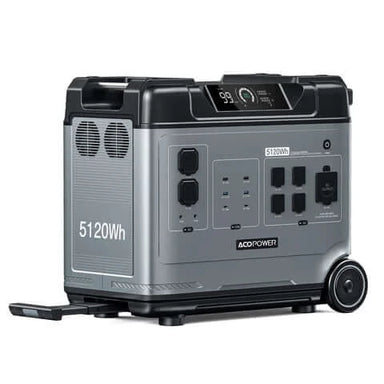
Portable power stations are increasingly viable gas generator replacements for many construction applications, offering distinct advantages including zero emissions for safe indoor use, silent operation for noise-sensitive locations, no fuel logistics or carburetor maintenance, and instant power without warmup time. Modern high-capacity units like the ACOPOWER P5000 (5120Wh, 2200W) or expandable BP2000 (up to 16384Wh) provide sufficient energy for full workdays running standard power tools. They excel for residential remodeling, indoor construction, urban sites with noise restrictions, and finish work requiring clean power for sensitive equipment. However, limitations exist: extremely high-draw equipment like large welders (5000W+), extended runtime applications exceeding battery capacity, or situations without recharge access may still necessitate gas generators. The ideal solution for many contractors is a hybrid approach—using portable power stations for daily tool operation, lighting, and device charging while reserving gas generators for occasional high-demand tasks. Solar panel integration (most ACOPOWER models support 500-1000W solar input) enables indefinite off-grid operation, making power stations particularly effective for remote sites with adequate sunlight. As battery technology advances and costs decrease, portable power stations are rapidly becoming the preferred choice for environmentally conscious contractors and projects with strict emissions requirements.

Sources

  • The 7 Best Portable Power Stations for Outages and Outings — www.popularmechanics.com
  • The 3 Best Portable Power Stations of 2025 | Reviews by Wirecutter — www.nytimes.com
  • The Best Power Stations of 2025 — www.outdoorgearlab.com
  • Best Tested Portable Power Stations in 2025 - CNET — www.cnet.com
  • The Ultimate Guide to Portable Power Stations — www.outdoorlife.com
close
close
close
I have a question
sparkles
close
product
Hello! I am very interested in this product.
gift
Special Deal!
sparkles