

Skip to content

Best Solar Panels for Off Grid Living - Premium Solar Solutions

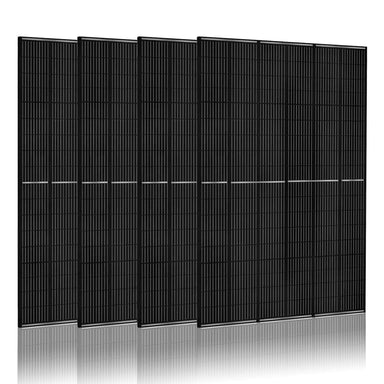
Achieve true energy independence with our premium collection of solar panels specifically curated for off-grid living. Whether you're powering a remote cabin, building a self-sufficient homestead, or creating a backup system for emergencies, our high-efficiency monocrystalline PERC solar panels deliver reliable electricity where the grid can't reach. Our collection features professional-grade 410W panels with industry-leading 20.97% efficiency and IP68 weatherproof ratings, engineered to withstand the harsh conditions common in off-grid locations. From compact 100W starter kits perfect for RVs and tiny cabins to complete 4100W systems capable of powering full-sized homes, we offer scalable solutions that grow with your energy needs. Each system includes essential components like MC4 connectors for secure electrical connections and options for aluminum mounting racks that ensure decades of reliable performance. Our monocrystalline PERC half-cell technology maximizes power output even in partial shade conditions, while the durable construction guarantees performance in extreme temperatures, heavy snow loads, and intense UV exposure. Take control of your energy future with solar panels trusted by off-grid enthusiasts, preppers, and sustainable living advocates worldwide. Free shipping on complete systems makes going off-grid more accessible than ever.

Key Takeaways

  • 410W monocrystalline PERC half-cell panels offer 20.97% efficiency, ideal for maximizing power in limited roof space
  • Off-grid systems typically require 3-7kW capacity for average homes, with 10-panel kits providing 4100W of reliable power
  • IP68-rated panels withstand harsh weather conditions, essential for remote off-grid installations
  • Complete mounting solutions and proper cable management (50ft+ cables) ensure safe, professional installations

What should you look for in solar panels for off-grid living?

When selecting solar panels for off-grid living, prioritize efficiency, durability, and power output to ensure reliable energy independence. Monocrystalline PERC (Passivated Emitter and Rear Cell) technology delivers superior performance with efficiency ratings exceeding 20%, meaning you'll generate more power from less roof space—critical when every watt counts in off-grid scenarios. Look for IP68-rated panels that provide complete protection against dust and water ingress, as off-grid installations often face extreme weather without easy access for repairs. Half-cell technology reduces resistive losses and improves performance in partial shade conditions common in rural settings. Consider panel wattage between 400-410W for modern off-grid systems, as higher wattage panels reduce the number of units needed, simplifying installation and reducing potential failure points. Finally, ensure your panels come with MC4 connectors and adequate cable length (50ft minimum) for flexible installation options in remote locations where professional installers may be unavailable.

How do you choose the right solar panel configuration for off-grid needs?

  • Calculate daily energy consumption in watt-hours, then multiply by 1.5-2x to account for cloudy days, system losses, and battery charging inefficiencies typical in off-grid setups
  • Match panel quantity to your power needs: 2-pack systems (820W) suit small cabins or RVs, 4-packs (1640W) work for tiny homes, while 10-pack systems (4100W) power full-sized off-grid homes
  • Verify mounting options align with your installation surface—aluminum mount rack kits provide secure, weather-resistant installation on roofs, ground mounts, or pole systems
  • Consider scalability by starting with a smaller system and ensuring compatibility for future expansion as energy needs grow
  • Assess your location's sun hours using solar maps to determine if you need more panels to compensate for reduced sunlight in northern latitudes or heavily forested areas

Frequently Asked Questions

How big of a solar system do I need for off-grid living?
The size of your off-grid solar system depends on your daily energy consumption and location. The average American home uses 30 kWh per day, but off-grid homes typically use 10-20 kWh daily due to energy-efficient appliances and conservation practices. To calculate your needs, multiply your daily consumption by 1.5-2x to account for cloudy days and system inefficiencies. For a home using 15 kWh daily, you'd need approximately 22.5 kWh of generation capacity. With an average of 5 peak sun hours, this requires a 4.5kW system—achievable with our 410W 10-pack (4.1kW) plus 1-2 additional panels. Smaller applications vary: cabins or weekend retreats (2-5 kWh/day) work well with 2-4 panel systems (820W-1640W), while tiny homes (5-10 kWh/day) typically need 4-6 panels. Always oversize your system by 20-30% to account for panel degradation over time, seasonal variations, and battery charging losses. Consider that off-grid systems also require adequate battery storage (typically 2-3 days of backup) and a properly sized charge controller and inverter to complete your energy independence setup.
What is the 33% rule in solar panels?
The 33% rule in solar panels is a guideline stating that your solar charge controller's input wattage should be at least 33% higher than your solar array's rated output to accommodate voltage drops, temperature effects, and optimal battery charging. This rule ensures your system operates efficiently under real-world conditions. For example, if you install a 4100W solar array (like our 10-pack system), your charge controller should handle at least 5,453W of input. The rule accounts for several factors: solar panels often produce above their rated wattage in ideal cool, sunny conditions; voltage drops occur through cables and connections; and maximum power point tracking (MPPT) controllers need overhead to optimize performance. Additionally, this buffer prevents controller overload during unexpected high-production periods. When designing your off-grid system, apply this rule by calculating total panel wattage, multiplying by 1.33, then selecting an appropriately rated MPPT charge controller. For our 410W panels, a 2-pack (820W) needs a ~1100W controller, while a 10-pack (4100W) requires a 5500W+ controller. This sizing prevents bottlenecking your solar production and protects your investment in both panels and electronics.
What is the best off-grid solar system?
The best off-grid solar system balances high-efficiency panels, reliable battery storage, and properly sized components matched to your specific energy needs. For panels, monocrystalline PERC half-cell technology with 20%+ efficiency ratings provides maximum power generation in minimal space—essential for off-grid properties with limited installation areas. Our 410W panels represent the sweet spot for off-grid applications, offering excellent power density without the premium pricing of ultra-high-wattage panels. A complete best-in-class system includes: solar panels sized to 150-200% of daily consumption, lithium iron phosphate (LiFePO4) batteries with 2-3 days of storage capacity, an MPPT charge controller rated 33% above panel output, and a pure sine wave inverter matching your peak loads. For a typical off-grid home, this means a 4-5kW solar array (our 10-pack plus 2 additional panels), 20-30 kWh battery bank, 80-100A MPPT controller, and 5000W inverter. IP68-rated panels ensure longevity in exposed locations, while aluminum mounting systems provide decades of secure installation. The "best" system ultimately depends on your location's solar resources, energy consumption patterns, and budget, but prioritizing quality components like high-efficiency monocrystalline panels ensures reliable power generation for 25+ years of off-grid independence.
What will a 1000W solar panel run?
A 1000W solar panel system (approximately 2.5 of our 410W panels) can generate 4-6 kWh of electricity daily depending on your location's sun exposure, enough to power essential appliances in a small off-grid setup. In practical terms, this capacity can continuously run a full-size refrigerator (150W), LED lighting (50W), laptop charging (65W), phone charging (20W), and a water pump (100W) simultaneously, with power to spare. Alternatively, it can operate higher-draw appliances intermittently: a microwave (1000W) for one hour, a coffee maker (900W) for 30 minutes, or power tools for several hours of work. For off-grid living scenarios, a 1000W system suits small cabins, RVs, or backup power applications rather than full-time residential use. The actual runtime depends on battery storage capacity—with a 2.4 kWh battery bank (two 12V 200Ah batteries), you could run 300W of loads for 8 hours overnight. Important considerations: inverter efficiency reduces usable power by 10-15%, and you should never discharge batteries below 50% for longevity. To put it in perspective, our 2-pack 410W system (820W) approaches this capacity and would power a weekend cabin comfortably, while our 4-pack (1640W) doubles this capability for extended off-grid stays or tiny home living with careful energy management.
How many solar panels do I need to go completely off-grid?
To go completely off-grid, most homes need between 10-25 solar panels depending on energy consumption, location, and seasonal variations. Calculate your requirements by first determining daily energy use: an energy-efficient off-grid home typically consumes 10-15 kWh daily, while conventional homes use 20-30 kWh. Divide your daily consumption by your location's peak sun hours (3-6 hours depending on latitude and season) to find required system size. For example, 15 kWh ÷ 5 sun hours = 3kW system, requiring approximately 8 of our 410W panels. However, off-grid systems should be oversized by 50-100% to account for winter months with reduced sunlight, cloudy weather, and panel degradation over time. This means our 10-pack system (4100W) provides an excellent foundation for a 15 kWh/day home, while higher consumption homes may need 15-20 panels (6-8kW). Geographic location significantly impacts panel count: northern regions with fewer sun hours need more panels than sunny southern locations. Additionally, your lifestyle affects requirements—if you can shift heavy loads (laundry, power tools) to sunny days, you'll need fewer panels than running everything on-demand. Start by auditing your energy use, identify conservation opportunities, then size your array to meet reduced consumption. Our scalable systems allow you to begin with a 4-pack or 10-pack and expand as needed, providing flexibility as you transition to off-grid living.

Sources

  • Best Solar Panel Kits for Off-Grid Living: 2025 Reviews — lowenergysupermarket.com
  • What Are The Best Off-Grid Solar Systems To Buy? — www.solarreviews.com
  • The best solar panels for off grid solar power systems — shopsolarkits.com
  • Best Solar Panels For Off-Grid Living (October 2025) — www.greenmatch.co.uk
  • Your Ultimate Guide to Choosing Solar Panels for Your Off-Grid Home — www.ecoflow.com
close
close
close
I have a question
sparkles
close
product
Hello! I am very interested in this product.
gift
Special Deal!
sparkles