
Skip to content

Best Solar Panels for Shed - Nature's Generator

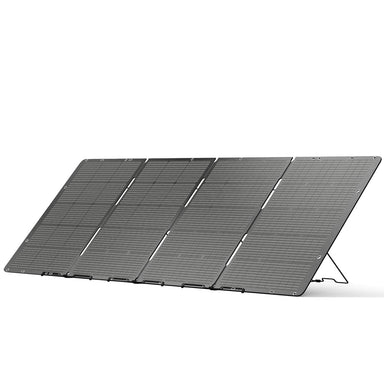
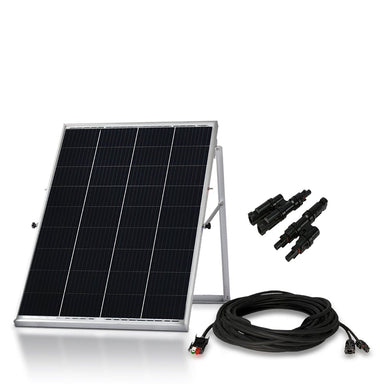
Transform your shed into a fully powered workspace with our carefully curated collection of the best solar panels designed specifically for shed applications. Whether you're looking to add basic lighting to a garden shed, power a complete workshop with professional-grade tools, or create an off-grid studio space, our range of monocrystalline solar solutions delivers reliable, sustainable energy tailored to your needs. From compact 100W portable panels perfect for small sheds to robust 4100W systems capable of running comprehensive workshop operations, each product in this collection features high-efficiency monocrystalline technology, weather-resistant construction, and flexible installation options. Our solar panels for sheds include innovative features like adjustable tilt stands for optimal sun angle positioning, wheeled carts for easy seasonal repositioning, and IP67/IP68 weather ratings that ensure decades of reliable performance. Discover portable folding panels that require no permanent installation, PERC half-cell technology that maximizes output even in partial shade, and scalable systems that grow with your power needs—all designed to make solar shed power accessible, affordable, and remarkably simple to implement.

Key Takeaways

  • 100W panels are ideal for small sheds with basic lighting and tool charging needs
  • 400W+ systems can power workshops with multiple tools, refrigerators, and electronics
  • Monocrystalline panels offer superior efficiency and performance in limited shed roof space
  • Portable options with adjustable stands and wheeled carts provide flexible installation without permanent mounting

What should you look for in solar panels for sheds?

When selecting solar panels for your shed, prioritize efficiency, durability, and power output that matches your needs. Monocrystalline panels are the gold standard for shed applications because they deliver higher efficiency rates (typically 18-22%) in smaller footprints—crucial when roof space is limited. Look for weather-resistant ratings like IP67 or IP68, which ensure your panels withstand rain, dust, and temperature extremes common in outdoor shed environments. Consider whether you need portable options with adjustable tilt stands for seasonal angle optimization or permanent roof-mounted solutions. The wattage should align with your shed's power requirements: 100W panels work well for basic lighting and phone charging, while 400W+ systems can handle power tools, heaters, and appliances. PERC (Passivated Emitter and Rear Cell) technology and half-cell designs offer improved performance in partial shade conditions, making them excellent choices for sheds surrounded by trees or buildings.

How do you choose the right solar panel system for your shed's power needs?

  • Calculate your daily energy consumption by listing all devices you'll use and their wattage requirements (multiply watts by hours of daily use)
  • Consider your shed's location and available sunlight—south-facing installations receive optimal sun exposure, while shaded areas require higher-capacity panels
  • Evaluate installation flexibility—portable panels with wheeled carts offer easy repositioning for maximum sun tracking, while fixed installations with tilt stands provide stable year-round performance
  • Factor in expandability—starting with a 100W system and adding panels as needs grow is more cost-effective than oversizing initially
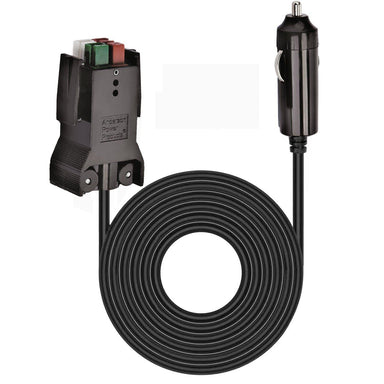
  • Check compatibility with your power storage system—ensure voltage matches your battery bank (typically 12V for small sheds) and connectors work with your charge controller

Frequently Asked Questions

What solar panels are best for sheds?
Monocrystalline solar panels are the best choice for sheds due to their superior efficiency, space-saving design, and longevity. For small sheds with minimal power needs (LED lighting, phone charging, small fans), a 100W monocrystalline panel provides sufficient energy. Medium-sized workshops benefit from 400W folding or fixed panels that can power multiple tools and devices simultaneously. Large sheds or workshop spaces requiring substantial power for refrigerators, heaters, power tools, and electronics should consider 410W PERC half-cell panels in multi-pack configurations (2-pack for 820W or 10-pack for 4100W total capacity). Monocrystalline panels outperform polycrystalline alternatives in limited space scenarios and maintain better performance in low-light conditions. Look for panels with weather-resistant ratings (IP67 or IP68) to ensure durability against outdoor elements, and consider portable options with adjustable stands if you want flexibility to optimize sun angle throughout seasons.
How many solar panels do you need to power a shed?
The number of solar panels needed depends on your shed's daily energy consumption and the panel wattage. For basic shed lighting and small device charging (consuming 200-300 watt-hours daily), a single 100W panel is typically sufficient, generating approximately 400-500 watt-hours on sunny days. A workshop with power tools, a radio, and LED lighting (using 800-1200 watt-hours daily) requires 2-3 panels totaling 400-600W. For fully-equipped sheds running refrigerators, heaters, multiple tools, and electronics (consuming 2000-4000 watt-hours daily), you'll need 1000-2000W of solar capacity, which translates to 3-5 high-output 410W panels. To calculate your specific needs: list all devices, multiply their wattage by daily usage hours, add 25% for system losses and cloudy days, then divide by your location's average daily sun hours (typically 4-5 hours). Remember that battery storage capacity must match your panel output—a 12V 100Ah battery stores approximately 1200 watt-hours, so size your battery bank accordingly to store excess energy for nighttime use.
What is the 20% rule for solar panels?
The 20% rule for solar panels refers to a National Electrical Code (NEC) guideline stating that the combined amperage of solar panel output and existing electrical loads should not exceed 120% of the busbar or main breaker rating in grid-tied residential systems. However, for shed applications—which are typically off-grid systems—the 20% rule has different practical applications. First, it's wise to oversize your solar array by 20% beyond your calculated needs to account for efficiency losses, cloudy weather, and seasonal variations in sunlight. Second, when charging batteries, your solar charge controller should prevent overcharging by reducing current when batteries reach 80-90% capacity, with the final 10-20% charged at a slower rate to extend battery life. Third, avoid consistently discharging batteries below 20% capacity to maximize their lifespan—this means your usable battery capacity is effectively 80% of the rated capacity. For shed solar installations, focus on matching panel output to your charge controller's capacity, ensuring proper battery bank sizing, and building in a 20-30% buffer above your calculated daily energy needs to maintain reliable power even during suboptimal weather conditions.
What will a 3000 watt solar panel run?
A 3000-watt solar panel system can power a fully-equipped shed or workshop with substantial energy demands. In optimal conditions (5 peak sun hours), this system generates approximately 15,000 watt-hours (15 kWh) daily. This capacity can simultaneously run: multiple LED light fixtures (50-100W total), a full-size refrigerator (150W continuous, 400-600W startup), a space heater (1500W), power tools like circular saws (1400W), drills (600W), and air compressors (1500W startup), plus charge devices and run fans or ventilation systems. However, it's important to understand that 3000W represents peak production capacity, not continuous output. Your actual usable power depends on battery storage—with adequate battery backup (such as 400-600Ah at 24V or 800-1200Ah at 12V), you can store excess daytime energy for nighttime use. For shed applications, a 3000W system (achievable with 8-10 panels of 300-400W each) provides professional-grade workshop capabilities, supporting welding equipment, large power tools, heating/cooling systems, computers, and even small appliances. This capacity exceeds most shed requirements, making it ideal for year-round workshops, hobby studios, or sheds converted into functional living spaces with comprehensive electrical needs.
Can I run my shed entirely off solar power?
Yes, you can run your shed entirely off solar power with proper system sizing and battery storage. The key to successful off-grid shed operation is accurately calculating your energy needs and installing sufficient solar capacity plus battery backup for nighttime and cloudy days. A basic shed with LED lighting, phone charging, and a radio requires only 100-200W of solar panels and a small 12V battery. A functional workshop with power tools, ventilation, and electronics needs 400-800W of panels with 200-400Ah of battery storage. For year-round reliability, size your system to meet winter demands when daylight hours are shortest—this typically means installing 20-30% more capacity than summer calculations suggest. Critical components include: solar panels matched to your energy consumption, a charge controller to regulate battery charging, deep-cycle batteries sized for 2-3 days of autonomy, and an inverter if you need AC power for standard tools and appliances. Monocrystalline panels with PERC technology maximize efficiency in limited roof space, while IP67/IP68-rated panels withstand harsh weather. Start with a smaller system and expand as needed—modular solar setups allow you to add panels and batteries incrementally, making off-grid shed power accessible and affordable for any budget.

Sources

  • 5 Best Solar Panel Kits for Your Shed in 2025 Reviewed — www.ecoflow.com
  • Complete Guide To Solar Systems For Sheds: Planning & Installation (2025) — solartechonline.com
  • Best Solar Panels of 2025: Expert Guide | SolarReviews — www.solarreviews.com
  • DIY Solar | Can someone recommend an off-the-shelf kit for a shed I’m installing | Facebook — www.facebook.com
  • Best Solar Kit for Every Need: Home, Shed, RV, Greenhouse & More - SunergyHub - Portable Solar & Emergency Energy Solutions — sunergyhub.com
close
close
close
I have a question
sparkles
close
product
Hello! I am very interested in this product.
gift
Special Deal!
sparkles