
Skip to content

Best Solar Panels for Tiny House - Nature's Generator

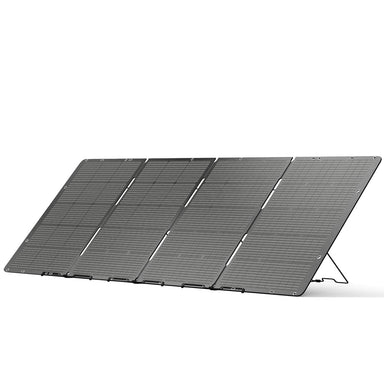
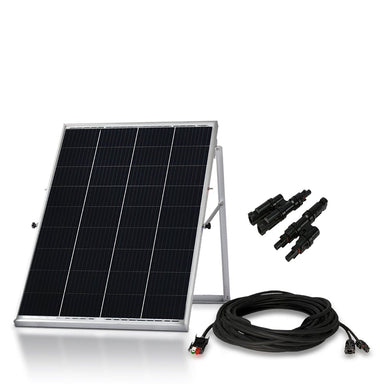
Powering your tiny house with solar energy offers the ultimate freedom—energy independence, lower operating costs, and the ability to live off-grid anywhere you choose. Whether you're building a stationary tiny house on a foundation or a mobile dwelling on wheels, selecting the right solar panel system is crucial for reliable, sustainable power. Our curated collection of premium monocrystalline solar panels is specifically designed for tiny house applications, offering high-efficiency power generation in compact footprints. From portable 100W panels perfect for supplemental power and testing your energy needs, to comprehensive 4,100W systems capable of running all modern conveniences, we provide complete solar solutions for every tiny house lifestyle. Each panel features advanced monocrystalline technology for superior efficiency, weather-resistant construction rated IP67-IP68 for durability against the elements, and flexible mounting options including adjustable tilt stands and wheeled carts for optimal sun positioning. Whether you're a weekend warrior, digital nomad, or full-time tiny house dweller, our solar panels deliver the clean, reliable energy you need to live comfortably while minimizing your environmental footprint and maximizing your independence.

Key Takeaways

  • Most tiny houses need 1,000-3,000 watts of solar capacity depending on energy consumption and appliance usage
  • Monocrystalline solar panels offer the best efficiency and space-saving benefits for limited tiny house roof areas
  • Portable and adjustable solar panel systems provide flexibility for seasonal positioning and off-grid mobility
  • IP67-IP68 rated weatherproof panels ensure durability against rain, snow, and extreme outdoor conditions

What should you look for in solar panels for tiny houses?

When selecting solar panels for your tiny house, prioritize efficiency, durability, and space optimization. Monocrystalline solar panels are ideal for tiny houses because they offer the highest efficiency ratings (typically 18-22%), meaning you can generate more power from a smaller roof footprint. Look for panels with robust weatherproofing ratings like IP67 or IP68, which protect against dust, moisture, and extreme temperatures. Consider your installation options: fixed roof-mounted panels maximize permanent installations, while portable panels with adjustable tilt stands or wheeled carts offer flexibility for seasonal angle adjustments and mobility if you relocate your tiny house. The voltage compatibility (typically 12V or 24V systems) should match your battery bank and inverter setup. Finally, evaluate the warranty coverage and certifications to ensure long-term reliability for your off-grid investment.

How do you choose the right solar panel system for your tiny house needs?

  • Calculate your daily energy consumption in watt-hours by listing all appliances and their usage duration to determine total solar capacity needed
  • Assess your available roof space and orientation to determine how many panels will physically fit and receive optimal sun exposure
  • Consider your lifestyle: full-time off-grid living requires larger systems (2,000-4,000W), while weekend getaways can function with smaller setups (400-1,000W)
  • Factor in your geographic location and average peak sun hours per day, as northern climates may need 25-30% more capacity than sunny southern regions
  • Decide between portable and fixed installations based on whether your tiny house is stationary or mobile, and if you need seasonal adjustment capability
  • Budget for the complete system including panels, charge controller, battery storage, inverter, and installation hardware for accurate cost planning

Frequently Asked Questions

How many solar panels are needed to power a tiny house?
The number of solar panels needed for a tiny house typically ranges from 4 to 12 panels, depending on your energy consumption and panel wattage. A typical tiny house (100-400 sq ft) consumes between 1,000 to 3,000 watts daily. If you're using 400W panels, you'd need 3-4 panels for minimal energy usage (lights, phone charging, small appliances), 5-7 panels for moderate usage (adding a refrigerator, laptop, and occasional power tools), or 8-12 panels for full-time living with all modern conveniences including air conditioning or electric heating. Calculate your specific needs by adding up the wattage of all appliances you'll use and multiplying by hours of daily use. Remember to account for battery storage capacity and add 20-25% extra capacity to compensate for cloudy days, panel efficiency losses, and seasonal variations in sunlight.
What is the 33% rule in solar panels?
The 33% rule in solar panels refers to the guideline that your solar panel array should produce approximately 33% more power than your calculated daily energy needs. This buffer accounts for several real-world factors that reduce actual power generation: cloudy weather conditions, seasonal variations in sunlight, panel degradation over time (typically 0.5-1% annually), dust and debris accumulation, temperature efficiency losses (panels lose 10-25% efficiency in extreme heat), and the conversion losses through charge controllers and inverters. For example, if your tiny house needs 3,000 watt-hours daily, you should install a system capable of producing approximately 4,000 watt-hours. This rule ensures you maintain adequate power even during suboptimal conditions and extends battery life by preventing deep discharge cycles. It's particularly important for off-grid tiny house living where you don't have grid backup power.
Why is my electric bill so high if I have solar panels?
If you have solar panels and still experience high electric bills, several factors may be at play. For tiny house owners, this typically occurs when the system is undersized for actual consumption—perhaps you're using more high-wattage appliances than initially calculated, or your energy habits have changed since installation. Time-of-use issues can also contribute: if you're consuming most electricity during evening hours when panels aren't producing, you're drawing from batteries or the grid. Inefficient appliances, phantom loads from devices on standby, and seasonal variations (shorter winter days, snow coverage on panels) significantly impact production. System performance issues like shading from nearby trees, incorrect panel angle, dirty panels reducing efficiency by 15-25%, or aging equipment can reduce output. For grid-tied tiny houses, utility rate structures, connection fees, and non-bypassable charges remain even with solar. Finally, if your battery storage is inadequate, you may be purchasing grid power during peak rate times. Conduct an energy audit to identify consumption patterns and verify your solar system is functioning at optimal capacity.
What will a 3000 watt solar panel run?
A 3,000-watt solar panel system can comfortably power a well-equipped tiny house with careful energy management. This capacity can simultaneously run essential appliances including: a full-size energy-efficient refrigerator (150-200W), LED lighting throughout (50-100W), laptop and phone charging (100W), a 32-inch LED TV (50-70W), ceiling fans (30-75W each), a microwave for meal preparation (1000W when in use), and a water pump (300-500W when running). You can also power small kitchen appliances like a coffee maker, blender, or toaster individually. For heating and cooling, a 3,000W system can run a mini-split air conditioner (500-1,500W) or space heater for several hours daily, though not continuously with all other appliances. With proper battery storage (typically 400-600Ah at 24V), you'll have power through the night and cloudy days. However, high-draw appliances like electric water heaters, full-size electric stoves, or central HVAC systems would exceed this capacity. The key is staggering usage of high-wattage items rather than running everything simultaneously, making 3,000W ideal for 1-2 people living efficiently in a tiny house.
Can I install solar panels on my tiny house myself?
Yes, you can install solar panels on your tiny house yourself if you have basic electrical knowledge, proper tools, and follow safety protocols, though professional installation is recommended for complex systems. DIY installation is most feasible with portable solar panel kits that include pre-wired components, adjustable mounting hardware, and plug-and-play connections. For roof-mounted permanent installations, you'll need to understand roof structural integrity, proper panel mounting techniques to prevent leaks, electrical wiring from panels to charge controller to batteries and inverter, proper grounding for safety, and local electrical codes. Essential skills include working safely on roofs, using power tools, basic DC electrical wiring, and understanding solar system components. Many tiny house owners successfully install 1,000-2,000W systems themselves using quality components and detailed instructions. However, consider hiring a licensed electrician for final connections, especially for grid-tied systems or when integrating with complex battery banks. Permits may be required depending on your location, and improper installation can void warranties, create fire hazards, or damage expensive components. Start with portable systems to gain experience before attempting permanent roof installations.

Sources

  • Solar Panels for Tiny House [Ultimate Guide 2025] - Jackery — www.jackery.com
  • Best Solar Panels of 2025 — www.consumerreports.org
  • DIY Solar | I’m going solar on my tiny house build | Facebook — www.facebook.com
  • Best Solar Panels of 2025: Expert Guide | SolarReviews — www.solarreviews.com
  • Solar Panel for Tiny House: Ultimate Guide to Sustainable Living — www.autonomous.ai
close
close
close
I have a question
sparkles
close
product
Hello! I am very interested in this product.
gift
Special Deal!
sparkles