
Skip to content

Best Transfer Switch for Home Backup - Power Solutions

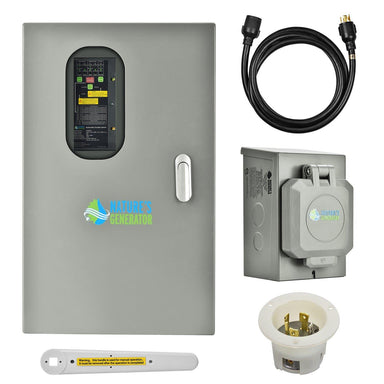
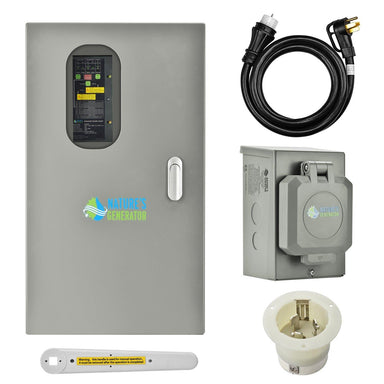
Protect your home from unexpected power outages with our comprehensive selection of transfer switches designed for reliable backup power systems. Whether you're installing a portable generator for emergency preparedness or a whole-house standby system for seamless power continuity, the right transfer switch is essential for safe, legal, and efficient operation. Our collection features manual and automatic transfer switches ranging from 30A to 125A capacity, accommodating everything from essential circuit backup to complete whole-house power solutions. Each transfer switch in our collection meets rigorous UL safety standards and includes critical safety interlocks that prevent dangerous backfeeding into utility lines—protecting both your family and utility workers. We offer indoor-rated panels for garage or basement installations, weatherproof NEMA enclosures for outdoor mounting, and complete kits with everything needed for professional installation. From compact 6-circuit manual switches perfect for powering critical appliances during storms to robust 16-circuit automatic systems that detect outages and restore power within seconds, you'll find the ideal solution for your home's backup power needs. Explore our expert-curated selection and discover how the right transfer switch transforms your generator into a reliable, safe, and code-compliant backup power system that keeps your family comfortable and protected during any outage.

Key Takeaways

  • Transfer switches range from 30A to 125A, with capacity determined by your home's essential circuit needs and generator output
  • Automatic transfer switches provide seamless power transitions but cost more than manual switches, which require physical switching
  • Proper sizing requires calculating total wattage of essential circuits you want to power during an outage
  • Installation costs for whole-house transfer switches typically range from $500-$1,500 in addition to equipment costs

What should you look for in a home backup transfer switch?

When selecting a transfer switch for home backup, prioritize amperage capacity that matches both your generator output and essential circuit requirements. Look for UL-listed switches with appropriate voltage ratings (120V/240V for most residential applications). Consider whether automatic or manual operation suits your needs—automatic switches detect power loss and switch within seconds, ideal for frequent outages or when you're away from home, while manual switches offer reliable, cost-effective operation with hands-on control. Enclosure type matters significantly: indoor-rated panels work for basement or garage installations, while NEMA-rated weatherproof enclosures withstand outdoor conditions. Circuit count determines how many essential loads you can power simultaneously, with options ranging from 6 to 16 circuits. Quality construction materials like heavy-gauge steel ensure durability and safety. Finally, verify compatibility with your generator's connection type and ensure the switch includes proper safety interlocks to prevent backfeeding into utility lines.

How do you choose the right transfer switch capacity for your home?

  • Calculate total wattage of essential circuits: Add up running watts for critical appliances like refrigerators (700W), furnace blowers (600-875W), sump pumps (800-1,200W), lights (60-100W each), and select outlets
  • Match amperage to your generator output: A 5,000W generator typically needs a 30A switch, 7,500W requires 50A, while 10,000W generators pair with 50A switches, and whole-house systems over 15,000W need 100-125A capacity
  • Consider future expansion needs: Choose a transfer switch with additional circuit capacity if you plan to upgrade your generator or add more essential circuits later
  • Verify voltage compatibility: Most homes require 120V/240V dual-voltage switches to handle both standard outlets and 240V appliances like electric dryers, water heaters, or well pumps
  • Account for starting surge: Motors and compressors draw 2-3x their running wattage during startup, so include this surge capacity in your calculations to prevent overload

Frequently Asked Questions

What size transfer switch do I need for my house?
The transfer switch size you need depends on whether you want partial or whole-house backup. For essential circuits only, a 30A transfer switch (handling up to 7,200W) powers 6-8 critical circuits including refrigerator, furnace, lights, and select outlets—ideal for portable generators. A 50A switch (up to 12,000W) accommodates 10-12 circuits, adding window AC units or additional appliances. For whole-house backup, 100A switches handle most average homes (2,000-2,500 sq ft), while 125A-200A switches suit larger homes with central AC, electric heating, or multiple high-draw appliances. Calculate your needs by listing essential circuits and their wattages: add running watts plus 25% buffer for starting surges. Most homeowners find 30-50A switches sufficient for emergency backup, while those seeking uninterrupted whole-home power during extended outages should consider 100A+ capacity matched to a properly sized standby generator.
What is the disadvantage of an automatic transfer switch?
Automatic transfer switches have several disadvantages compared to manual alternatives. The primary drawback is significantly higher cost—automatic switches typically cost $400-$1,500 more than manual switches of equivalent capacity, plus additional installation complexity increases labor costs by $200-$500. They require more maintenance since the electronic sensing circuits, relays, and mechanical contactors need periodic testing and eventual replacement. Automatic switches also depend on battery backup or generator power for their control circuits, creating a potential failure point if batteries die. They're more vulnerable to power surges and lightning strikes due to sensitive electronics. During the switching process, there's a brief power interruption (10-30 seconds) that can affect sensitive electronics, though this is usually minimal. Repair costs are substantially higher when automatic switches fail, often requiring specialized technicians rather than simple DIY fixes. However, for many homeowners, the convenience of automatic operation—especially when away from home or during nighttime outages—outweighs these disadvantages, making them worth the investment for critical backup power needs.
How much does a whole house transfer switch cost?
Whole house transfer switch costs vary significantly based on capacity, type, and installation complexity. The equipment itself ranges from $300-$3,000: manual transfer switches cost $300-$800 for 100-200A capacity, while automatic transfer switches run $800-$3,000 for the same amperage. Installation adds $500-$1,500 for professional electrician labor, depending on your electrical panel location, whether outdoor or indoor mounting is required, distance from the generator, and local permit fees ($50-$200). Total installed costs typically range from $800-$4,500 for complete whole-house systems. Budget-conscious homeowners can reduce costs by choosing manual switches and handling simple installations themselves if they have electrical experience, though permits and inspections are still required. Additional costs may include a generator power inlet box ($50-$150), connection cables ($100-$300), and concrete pads for outdoor generators ($200-$400). While significant, these costs provide invaluable peace of mind and protect thousands of dollars in food, prevent frozen pipes, maintain medical equipment, and keep your family comfortable during extended power outages.
What size transfer switch do I need for a 10,000 watt generator?
A 10,000 watt generator requires a 50A transfer switch rated for 120V/240V operation. Here's why: generators are rated in watts, while transfer switches are rated in amps, requiring conversion using the formula Watts ÷ Volts = Amps. A 10,000W generator at 240V produces approximately 41.6 amps (10,000 ÷ 240 = 41.6A), making a 50A transfer switch the appropriate choice with safe overhead capacity. Never choose a transfer switch smaller than your generator's output, as this creates dangerous overload conditions. A 50A switch at 240V can handle up to 12,000 watts, providing the necessary buffer for starting surges when motors and compressors kick on. This capacity typically supports 10-16 circuits, enough for most essential home systems including refrigerator, freezer, furnace, well pump, sump pump, several lighting circuits, select outlets, and possibly a window AC unit or two. If your 10,000W generator will power your entire home, consider whether you need a 10-circuit, 12-circuit, or 16-circuit switch based on your electrical panel configuration. Always verify your generator's specific amperage rating on its data plate and consult local electrical codes for proper sizing requirements.
Do I need a manual or automatic transfer switch for home backup?
Choosing between manual and automatic transfer switches depends on your budget, convenience needs, and how you'll use backup power. Manual transfer switches require you to physically flip switches to transfer circuits from utility to generator power—they cost $200-$800, offer simple reliable operation with fewer failure points, and work perfectly if you're home during outages and don't mind the 2-3 minute setup process. They're ideal for occasional use, budget-conscious installations, and those who want hands-on control. Automatic transfer switches detect power loss within seconds and switch automatically without human intervention—they cost $800-$3,000 but provide seamless transitions crucial for medical equipment, security systems, and when you're away from home. Automatic switches are essential for standby generators that start automatically, frequent power outages, protecting temperature-sensitive items, or elderly/disabled homeowners who can't safely operate manual switches. Consider manual switches if outages are rare, you have a portable generator requiring manual starting anyway, or upfront cost is a primary concern. Choose automatic switches for whole-house standby systems, frequent outages, critical backup needs, or maximum convenience and peace of mind.

Sources

  • Access Denied — www.electricgeneratorsdirect.com
  • Access Denied — www.ecomfort.com
  • Error Page — www.homedepot.com
  • Transfer Switch For Generators: Definitive Buyer's Guide [] — shopsolarkits.com
  • Generator Transfer Switch Review | The Garage Journal — www.garagejournal.com
close
close
close
I have a question
sparkles
close
product
Hello! I am very interested in this product.
gift
Special Deal!
sparkles