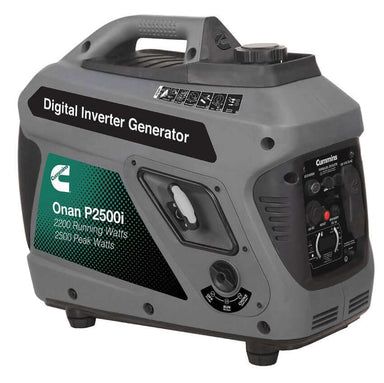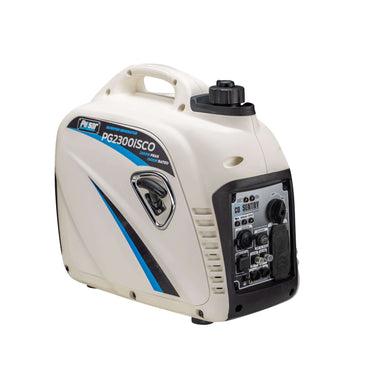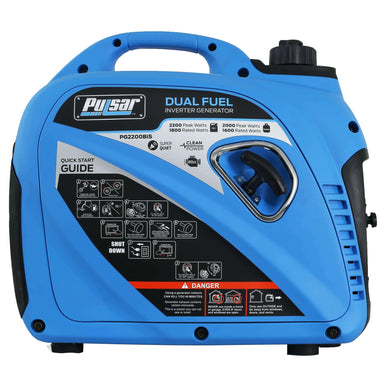

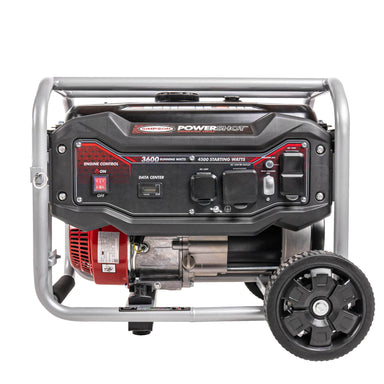
Skip to content
Gas · Inverter · Dual-Fuel · Tri-Fuel

Power that shows upwhen the grid doesn't.

Portable power for home backup, job sites, and camping. Most homes need 5,000 to 7,500 running watts to cover the essentials during an outage.

Shop Generators → Find my sizeIn stock · ships in 1–2 business days
★ Best Seller Cummins Onan P11000iTF Tri-Fuel Inverte...Best for whole-home backup power11000W peak · Tri-Fuel · from $2,424.00
Authorized Dealer
Factory-authorized, every brand
Price Match
See it lower? We'll match it
Free Curbside
Free shipping on most units
Expert Support
Financing
From $29/mo

Curbside delivery. A liftgate lowers heavy units to the ground, noted on each product page.

Start Here

3 picks · by use
Not sure what size you need?
Answer a few quick questions and we'll match you to the right generator for your home, job site, or setup.
Use the Sizing Calculator

Filters

Portable Generators

Browse every portable generator we carry, from compact 1,200-watt inverters for camping to 15,000-watt tri-fuel units that back up a whole home. Filter by fuel type, wattage, and price. In-stock models are shown first.

Buying guide

How to buy the right one

What Size Portable Generator Do You Need?

Most homes need 5,000 to 7,500 running watts to cover the essentials during an outage: refrigerator, furnace blower, well pump, and a few lights and outlets. A portable generator has two ratings that matter. Running watts is the power it delivers continuously. Starting watts is the short surge it can supply when a motor kicks on.

Size to your starting watts, not just running watts. A refrigerator needs about 700 running watts but 2,200 starting watts. A well pump can pull 3,000 to 5,000 starting watts. Add up the running watts of everything you want on at once, then add the single largest starting surge.

  • Refrigerator or freezer: 700 running / 2,200 starting watts
  • Furnace blower (1/2 HP): 800 running / 2,350 starting watts
  • Well pump (1 HP): 2,000 running / 4,000 starting watts
  • Sump pump: 1,050 running / 2,150 starting watts
  • Lights, phone, TV, router: 400 to 600 running watts

Gas, Inverter, Dual-Fuel, or Tri-Fuel?

Inverter generators run about 40 percent more fuel-efficient and 20 decibels quieter than a conventional gas model, because the engine adjusts speed to the load instead of running flat out. Most inverter units stay near 50 to 60 dB, quiet enough for a campsite or a tailgate.

Dual-fuel generators run on gasoline or propane, so you are not stranded when one fuel runs short. Tri-fuel models add natural gas, letting you tie into a home gas line for unlimited runtime. Conventional gasoline generators cost the least up front and deliver the most raw wattage per dollar, which makes them a strong pick for job sites and high-draw tools.

How Long Will It Run?

A typical portable generator runs 8 to 12 hours at 50 percent load on a full tank. Propane extends that further, since a standard 20-pound tank adds several hours and stores for years without going stale. Run continuously only within the manufacturer's oil-change interval, usually 100 to 200 hours.

Who These Are For

If you want the power to stay on when the grid does not, a portable generator is the fastest, lowest-cost way to protect your home. Homeowners keep the fridge cold and the furnace running through a storm. Contractors power tools where there is no outlet. RVers and tailgaters run the comforts of home wherever they park. Pick the fuel type that matches how you will actually use it, then size it to your starting watts.

Common questions

Before you buy

What size portable generator do I need to run a refrigerator?+

A refrigerator needs a generator rated for at least 2,000 running watts and about 2,500 starting watts to absorb the compressor's startup surge. To also run a furnace blower and a few lights, step up to 3,500 to 5,000 watts.

What is the difference between a gas and an inverter generator?+

An inverter generator runs about 40 percent more fuel-efficient and 20 decibels quieter than a conventional gas model, because its engine varies speed with the load. A conventional gas generator costs less up front and delivers more raw wattage per dollar.

What is a dual-fuel or tri-fuel generator?+

A dual-fuel generator runs on gasoline or propane, and a tri-fuel model adds natural gas. The flexibility means you are never stranded when one fuel runs short, and natural gas lets you tie into a home line for unlimited runtime.

How long can a portable generator run continuously?+

A typical portable generator runs 8 to 12 hours at 50 percent load on a full tank of gas, and longer on propane. Run only within the manufacturer's oil-change interval, usually 100 to 200 hours, then shut down to service it.

How loud are portable generators?+

Inverter models run near 50 to 60 dB at 23 feet, about the volume of a normal conversation. Conventional open-frame generators run louder, often 70 to 80 dB, so choose an inverter if noise matters.

Can I power my whole house with a portable generator?+

You can power a home's essentials, not everything at once. Pair a 7,500 to 10,000 watt generator with a manual transfer switch to safely feed circuits like the furnace, well pump, and refrigerator. Central air and electric heat usually need a standby generator.

Do I need a transfer switch?+

A transfer switch is required to safely connect a generator to your home's wiring. It prevents backfeed that can injure utility workers, and it lets you power hardwired equipment like a furnace or well pump that has no plug.

Is propane or gasoline better for a portable generator?+

Gasoline delivers more peak power and is easy to find, while propane stores for years without going stale and burns cleaner. A dual-fuel generator lets you switch between them, which is why many buyers choose one for backup power.