

Pick 01Newest flagship

EcoFlow DELTA Pro 3 Portable Power Station - 4kWh...
Best expandable flagship, to 12 kWh
Capacity4000 Wh
Output4000 W
$2,799.00View →
A portable power station keeps your fridge, WiFi, and CPAP running through an outage. No fumes, no noise, and safe to run inside. Recharge from the wall, your car, or the sun.
★ 4.93 EcoFlow DELTA Pro 3600Wh Portable Power...Best for whole-home outage backup3600Wh · 3600W · 343 reviews · from $1,599.00 →


 Save $10.00
Sale
Save $10.00
SaleCummins Onan SP100 100-Watt Solar Panel The Cummins Onan SP100 solar panel delivers reliable off-grid charging for your Onan Power Stations. This ...
View full details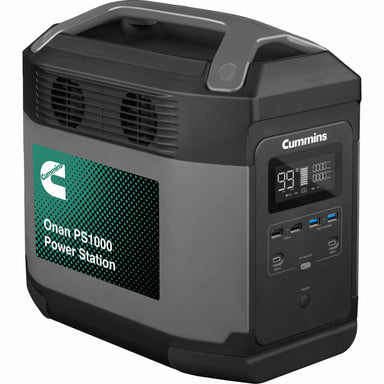 Save $100.00
Sale
Save $100.00
SaleCummins Onan PS1000 Portable Power Station The Cummins Onan PS1000 delivers reliable backup power for camping, emergencies, and off-grid applic...
View full details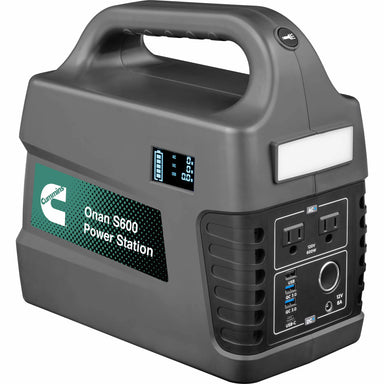 Save $60.01
Sale
Save $60.01
SaleCummins Onan PS600 Portable Power Station Overview The Cummins Onan PS600 Portable Power Station delivers 592 watt-hours of reliable portable powe...
View full details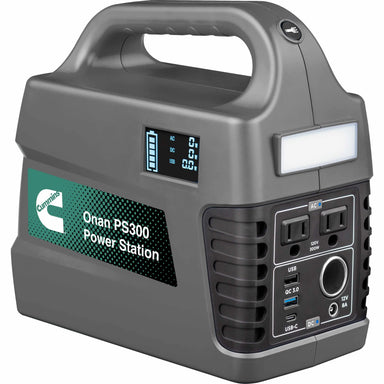 Save $55.01
Sale
Save $55.01
SaleCummins Onan PS300 Portable Power Station - A067W048 The Cummins Onan PS300 delivers 296 watt hours of clean, quiet power in a compact 6.5-pound p...
View full details Save $52.01
Sale
Save $52.01
SaleCummins Onan PS200 Portable Power Station - Model A067W047 The Cummins Onan PS200 portable power station delivers 194 watt hours of clean, quiet p...
View full details Save $10.00
Sale
Save $10.00
SaleCummins Onan PS160 Portable Power Station - A067W046 The Cummins Onan PS160 portable power station delivers 155 watt hours of clean, quiet power i...
View full detailsCapacity is measured in watt-hours (Wh). It tells you how much energy the battery holds. To size it, add up the watts of what you want to run, then multiply by the hours you need. A 100-watt device for 10 hours needs about 1,000 Wh.
Most people buy for one of these jobs. Match the capacity to yours:
Two numbers matter. Capacity in watt-hours sets how long it runs. Output in watts sets what you can plug in at once. A 2,000-watt unit runs a fridge, WiFi, and lights together, but not a 1,500-watt space heater plus a microwave. Check the running watts of your biggest appliance first.
A full-size fridge pulls about 150 watts while running but surges near 1,200 watts at startup. The output rating has to cover that surge, or the unit will shut off.
Nearly every unit we carry uses LiFePO4, or lithium iron phosphate, cells. They last 3,000 to 4,000 charge cycles, about 10 years of regular use, and stay safe under heavy load. Older lithium-ion units fade after 500 to 800 cycles, so LiFePO4 is worth paying for.
Yes. Every station here accepts solar input, so you can top it off for free and stay powered off-grid. A 200-watt panel recharges a 1,000 Wh unit in roughly 5 to 8 hours of good sun. Pair a larger panel array with an expandable unit for true off-grid living.
Compact units have a fixed battery, which is fine for camping and short outages. Flagship units like the EcoFlow DELTA Pro 3 and Anker SOLIX F3800 add extra batteries to reach 12 kWh or more, enough to back up a whole home for days. Buy expandable if your needs may grow.
A power station is the quiet, fume-free way to keep the lights on. Homeowners run the fridge and medical gear through outages. RVers and campers power the comforts of home off-grid. Anyone who needs backup indoors, where a gas generator is unsafe, starts here.
A full-size refrigerator uses about 1,000 to 2,000 watt-hours per day. A 1,000 Wh power station keeps a fridge cold for 10 to 24 hours, depending on the model and how often the door opens. For multi-day backup, choose 3,000 Wh or an expandable unit.
It can run your essentials, and the biggest models can back up a whole home. A 2,000 to 3,000 Wh unit covers the fridge, WiFi, and lights. For central systems and 240-volt appliances, step up to a whole-home unit like the Anker SOLIX F3800 or EcoFlow DELTA Pro 3 with a transfer switch.
LiFePO4, or lithium iron phosphate, is the battery chemistry in nearly every unit we carry. It lasts 3,000 to 4,000 charge cycles, roughly 10 years, and stays safe under heavy load. It costs a little more than older lithium-ion but lasts far longer.
Yes. A power station produces no fumes and no carbon monoxide, so it is safe to use inside your home, unlike a gas generator. It also runs silently, which makes it ideal for bedrooms and medical equipment.
You can recharge from a wall outlet, your car's 12-volt socket, or solar panels. Many flagship models reach 80 percent from empty in about an hour on wall power.
Yes. Every station here accepts solar input. A 200-watt panel recharges a 1,000 Wh unit in about 5 to 8 hours of good sun, which lets you stay powered off-grid.
The LiFePO4 batteries we sell hold up for 3,000 to 4,000 full charge cycles, about 10 years of regular use, before dropping to 80 percent capacity. That is far longer than older lithium-ion units.
A power station is silent, fume-free, indoor-safe, and rechargeable by solar. A gas generator runs as long as you have fuel and delivers more sustained power for heavy loads. Many homeowners keep a power station for quiet indoor backup and a generator for long outages.
Yes, on expandable models. Units like the EcoFlow DELTA Pro 3, Anker SOLIX F3800, and Jackery Explorer 5000 Plus accept add-on batteries to reach 12 kWh or more for multi-day, whole-home backup.
Use our free Generator Sizing Calculator. Match wattage, fuel, and runtime to your home or jobsite in 5 minutes.
No spam. Unsubscribe anytime.