

Last updated: June 27, 2026
Quick Answer
The Anker SOLIX F3800 gives you more inverter power at a lower price, with 6,000W and true 120V/240V from a single unit for $1,999. The EcoFlow DELTA Pro 3 gives you more storage at 4,096Wh, a faster UPS, and a lighter body for $2,599. Pick the F3800 for heavy 240V loads and the best cost per watt-hour. Pick the DELTA Pro 3 for code-ready whole-home backup and bigger expansion.
Who This Guide Is For
- Homeowners shopping a high-capacity power station for outages and home backup
- Off-grid and emergency-prepper buyers who want whole-home power through a transfer switch
- RV owners and off-grid users who need 240V and lots of solar input
- Anyone deciding between the two current 4kWh flagships from EcoFlow and Anker
Two power stations sit at the top of the home-backup class right now. The Anker SOLIX F3800 and the EcoFlow DELTA Pro 3 both promise to keep your house running when the grid goes down. They look similar on paper, but they solve different problems. This guide breaks down the real differences so you can match the right unit to your power needs.
Which Holds More Power?
In the Anker F3800 vs EcoFlow DELTA Pro comparison, capacity is the first thing buyers check. Both are built to ride out power outages and supply reliable power for days.
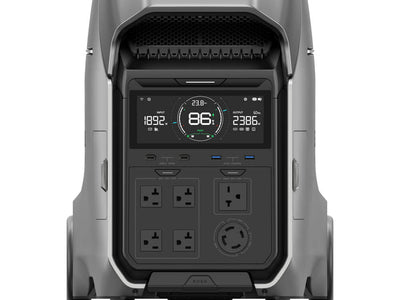
The EcoFlow DELTA Pro 3 wins on raw storage. It holds 4,096Wh, which EcoFlow markets as 4kWh [2]. The Anker SOLIX F3800 holds 3,840Wh [1]. That gap of about 256Wh is small, but it matters over a long outage.
Both units use LiFePO4 (LFP) batteries. This chemistry handles far more charge cycles than older lithium-ion cells, and it runs cooler and safer [3]. The F3800 is rated for 4,000 cycles. The DELTA Pro 3 is rated for 4,000+ cycles, which works out to roughly 11 years of daily use [2].
Here is what that means in practice. Charge either one once a day, and the battery should outlast most other gear in your home. Think of cycle life like the odometer on a truck. Both of these trucks are built to run a long, long way.
Which Has More AC Output and True 240V?
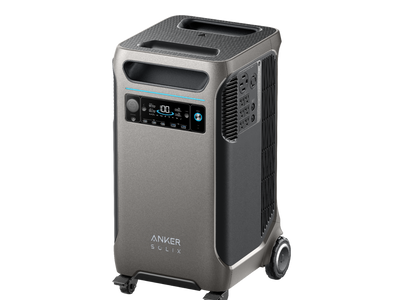
This is where the Anker SOLIX F3800 pulls ahead. It delivers 6,000W of continuous AC output. It also runs true 120V and 240V at the same time from one unit [1]. That is a big deal for heavy loads like a well pump or an electric range.
On ports, the F3800 adds a 12V car socket plus USB-A ports and USB-C. The DELTA Pro 3 leans toward home backup with a mix of USB-A and USB-C. Check the USB-C count if you fast-charge laptops or phones.
The EcoFlow DELTA Pro 3 puts out 4,000W, or up to 4,600W with X-Boost [2]. X-Boost lowers voltage slightly so the unit can start larger appliances. It works, but it is not the same as raw inverter muscle.
Common mistake: buyers focus only on battery size and forget about output. A bigger battery does no good if the inverter cannot start your appliance. For a 240V well pump or a deep-well system, the F3800 has the stronger inverter.
Which Charges Faster and Has the Better UPS?
Both units charge from the wall at 1,800W, and both handle 240V input [1][2]. So basic wall charging speed is close. The DELTA Pro 3 hits 0 to 80% in about 2.7 hours with EcoFlow fast charging [2].
For solar power, the maximum solar input is 2,600W on the DELTA Pro 3 and 2,400W on the F3800. The F3800 Plus raises that to 3,200W. With a strong array, you can reach a full charge from the sun in a few hours. Both also accept a wall charger for quick top-ups.
Solar input is where they split. The base F3800 takes 2,400W of solar input, and the F3800 Plus version takes 3,200W [1]. The DELTA Pro 3 takes 2,600W [2]. If you run a large solar panel array, the F3800 Plus charges fastest from the sun.
The DELTA Pro 3 wins on UPS switchover at about 10 ms. The F3800 switches in about 20 ms. Both are fast enough for a fridge. But that 10 ms figure is safer for a desktop PC, a server, or sensitive network gear that hates even a brief blink.

Which Is Better for Whole-Home Backup?
Both units can feed a transfer switch and back up your home. The choice comes down to certification and ecosystem. The DELTA Pro 3 ties into EcoFlow's Smart Home Panel and is built around code-ready home backup [2].
Here is the catch on the Anker side. Reviews note that the F3800 Plus currently lacks UL certification [4]. For a permitted, inspected whole-home tie-in, that listing matters. Always verify the latest certification status with a licensed electrician before you plan a fixed install.
For DIY or partial-home backup where inspection rules are looser, the F3800 is a strong pick. Its 6,000W output and 240V can run more at once. For a fully permitted whole-home job, the DELTA Pro 3 is usually the safer route today.
 solar panel outside a cabin at golden hour" loading="lazy" width="1400" height="560" style="width:100%;height:auto;border-radius:8px;">
Which Is More Expandable?
If you think you will grow your system, expandability should weigh heavily. The DELTA Pro 3 scales higher. You can stack up to three head units for 12,000W and about 48kWh of total battery capacity [2].
The Anker SOLIX F3800 expands to about 26.9kWh, and two units together give you 12,000W [1]. That is plenty for most homes. But the EcoFlow ecosystem reaches a higher ceiling if you want a near-whole-home battery bank with expansion batteries.
Both systems let you add expansion batteries over time. You pay for extra capacity only when you actually need it. That is a smart way to start small and build toward off-grid living.
One note on the bigger tier. If you need more than these units offer, EcoFlow also sells the DELTA Pro Ultra. It is a larger, semi-permanent home energy system with a separate inverter and battery rack, built for full panel-level whole-home power.
Which Is Lighter and Easier to Move?
Here is a surprise. The DELTA Pro 3 holds more energy yet weighs less. It comes in at 113 lb. The F3800 weighs 132 lb [1][2].
Size and weight matter if you move the unit often. Both roll on wheels, but the lighter DELTA Pro 3 is easier to reposition.
Both units roll on wheels and have handles, so neither is truly portable in the backpack sense. But that 19 lb difference is real when you load one into a truck or move it across a gravel driveway. For an RV that gets packed and unpacked often, the lighter DELTA Pro 3 is friendlier.
How Do the Apps and Smart Features Compare?
Both brands offer a solid app over Wi-Fi and Bluetooth. The EcoFlow app shows real-time power flow, lets you set charge limits, and controls UPS behavior [2]. It also links to other EcoFlow smart gear like smart plugs and the Smart Home Panel.
The Anker SOLIX app handles remote control, solar and AC charge settings, and smart temperature monitoring [1]. Neither app charges a monthly fee. EcoFlow's smart-home tie-ins are deeper today, which helps for automated home backup power and load management.
Full Spec Comparison: F3800 vs DELTA Pro 3
Numbers tell the story faster than marketing copy. Here is how the two flagships stack up head to head, using verified specs.
| Spec | Anker SOLIX F3800 | EcoFlow DELTA Pro 3 |
|---|---|---|
| Capacity | 3,840Wh | 4,096Wh |
| AC Output | 6,000W, true 120/240V | 4,000W (4,600W X-Boost) |
| Battery | LiFePO4, 4,000 cycles | LiFePO4, 4,000+ cycles |
| Solar Input | 2,400W (Plus: 3,200W) | 2,600W |
| AC Recharge | 1,800W, 240V-capable | 1,800W, 0-80% in ~2.7 hr |
| UPS Switchover | ~20 ms | ~10 ms |
| Weight | 132 lb | 113 lb |
| Expandable To | ~26.9kWh; two units = 12,000W | ~48kWh; up to 3 units = 12,000W |
| Warranty | 5 years | 5 years |
| Our Price | $1,999 | $2,599 |
Prices reflect our live store pricing as of June 2026. The F3800 Plus version raises solar input to 3,200W.
What Does Each Unit Cost Per Watt-Hour?
Cost per watt-hour is the cleanest way to compare value. You divide the price by the battery size. A lower number means more stored energy for your money.
These are our current retail prices, not MSRP. Both deliver huge power capacity, so the gap in retail price really comes down to that extra storage. Match the power supply to your real loads, then weigh the output rating against the cost.
| Model | Capacity | Price | Cost per Wh |
|---|---|---|---|
| EcoFlow DELTA Pro (original) | 3,600Wh | $1,799 | $0.50 |
| Anker SOLIX F3800 | 3,840Wh | $1,999 | $0.52 |
| EcoFlow DELTA Pro 3 | 4,096Wh | $2,599 | $0.63 |
The quick read: The Anker SOLIX F3800 wins on cost per watt-hour at $0.52, while the DELTA Pro 3 runs $0.63. The original EcoFlow DELTA Pro is still the cheapest per Wh at $0.50, but you give up output, faster solar input, and the newer UPS.
Our Product Picks
Here are the three units we recommend, with the use case each one fits best.
Anker SOLIX F3800
The F3800 is the power play. You get 6,000W and true 120/240V from one box, which runs a well pump, an electric range, or a full circuit panel with room to spare. At $1,999 it is also the lower price and the better cost per Wh. It is the heavy-duty pick for DIY and partial-home backup.

Anker SOLIX F3800 - 3840Wh LiFePO4 Portable Power Station with 6000W Output
$1999.00
Shop NowEcoFlow DELTA Pro 3
The DELTA Pro 3 is the home-backup specialist. It holds more energy at 4,096Wh, switches in about 10 ms for sensitive electronics, and ties into EcoFlow's smart home panel for code-ready whole-home backup. It also expands higher, up to about 48kWh. It is the pick when you want a mature ecosystem and the highest ceiling.

EcoFlow DELTA Pro (Budget Pick)
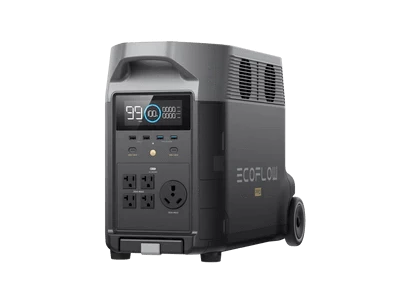
The original DELTA Pro still earns a spot. It holds 3,600Wh and puts out 3,600W, or 4,500W with X-Boost, and it fully recharges from the wall in about 1.8 hours. At $1,799 it is the lowest entry price here. It is a smart choice if you want EcoFlow home backup without paying for the newest tier.

Scenario: A Three-Day Winter Outage
An ice storm knocks out your power for three days. You need to keep a fridge running, cycle the well pump for water, and run the furnace blower so the house stays warm.
The loads: a fridge pulls about 1,200Wh per day, the furnace blower draws roughly 600W when it runs, and the well pump is a 240V motor that surges hard on startup.
F3800 approach: Its 6,000W inverter and true 240V start that well pump without flinching. You run more loads at once, and 3,840Wh covers a day before you recharge from solar input or a generator.
DELTA Pro 3 approach: Its 4,096Wh stretches a little further per charge, and the 10 ms UPS protects your router and any medical gear. For the 240V well pump, plan around the 4,000W limit or use X-Boost.
Both get you through. The F3800 handles bigger surges. The DELTA Pro 3 banks more energy and protects sensitive electronics better.
Go With Which One?
Go with the Anker SOLIX F3800 if:
- You need maximum inverter power. 6,000W runs heavy 240V loads the DELTA Pro 3 cannot match.
- You want true 120V and 240V at the same time from one unit.
- You want the best cost per watt-hour at $0.52.
- You run a well pump, electric range, or power tools off-grid.
- Your backup is DIY or partial-home, where UL listing is not required by an inspector.
Bottom line: Choose the F3800 for raw output, 240V muscle, and value.
Go with the EcoFlow DELTA Pro 3 if:
- You want the most storage at 4,096Wh and the highest expansion ceiling near 48kWh.
- You plan a permitted, code-ready whole-home tie-in with a smart panel.
- You need the fastest UPS at 10 ms for computers, servers, or medical gear.
- You want a lighter unit at 113 lb that is easier to move.
- You value EcoFlow's deeper smart-home ecosystem and app control.
Bottom line: Choose the DELTA Pro 3 for storage, code-ready home backup, and expandability.
The Bottom Line
These two flagships are close, but they lead in different lanes. The Anker SOLIX F3800 is the output leader and the value pick. The EcoFlow DELTA Pro 3 is the storage and whole-home leader. Neither is wrong. The right one depends on your loads and your install.
Here are your next steps:
- Size your loads. Add up the wattage of every appliance you must run at once, then add 20% as a buffer.
- Decide whole-home or partial. Whole-home with a permit leans DELTA Pro 3; DIY partial backup leans F3800.
- Compare cost per Wh. The F3800 leads at $0.52 against $0.63 for the DELTA Pro 3.
- Check your 240V needs. A well pump or range pushes you toward the F3800's 6,000W inverter.
- Shop the unit that fits, and reach out to us if you want help sizing your backup power.
Frequently Asked Questions
Which is better for whole-home backup?
For a permitted, code-ready whole-home tie-in, the EcoFlow DELTA Pro 3 is usually the safer route today. It ties into EcoFlow's Smart Home Panel and reaches about 48kWh of storage. The Anker SOLIX F3800 has more inverter power at 6,000W, which is great for DIY or partial-home backup where an inspector does not require a UL listing.
Can the F3800 run a 240V well pump or electric range?
Yes. The Anker SOLIX F3800 delivers true 120V and 240V from a single unit, with 6,000W of continuous output. That is enough to start and run most 240V well pumps and electric ranges. Always check the running and surge wattage of your specific pump or range first, and confirm the wiring with a licensed electrician.
Can they run an air conditioner?
Yes, both can run an air conditioner. A window AC unit usually draws 500W to 1,500W, which sits well within both units. A central AC compressor surges much higher on startup, so the F3800's 6,000W inverter handles big surges better. Check your AC nameplate for running watts and locked-rotor amps before you rely on either unit.
Are the F3800 and DELTA Pro 3 UL certified?
The EcoFlow DELTA Pro 3 is built around code-ready home backup with its smart panel ecosystem. Reviews note that the Anker F3800 Plus currently lacks UL certification, which matters for inspected whole-home tie-ins. Certification status can change, so verify the latest listing with the manufacturer and a licensed electrician before any fixed install.
How long do they take to recharge?
Both charge from the wall at 1,800W and handle 240V input. The EcoFlow DELTA Pro 3 reaches 0 to 80% in about 2.7 hours with fast charging. The original EcoFlow DELTA Pro fully recharges from the wall in about 1.8 hours. Solar charging speed depends on your solar panel array and the unit's solar input limit.
Which charges faster from solar?
It depends on the version. The DELTA Pro 3 takes 2,600W of solar input. The base F3800 takes 2,400W, but the F3800 Plus takes 3,200W. If you run a large solar panel array, the F3800 Plus charges fastest from the sun. For a smaller array, the difference is minor.
How fast is the UPS switchover?
The EcoFlow DELTA Pro 3 switches in about 10 ms, and the Anker SOLIX F3800 switches in about 20 ms. Both are fast enough for a fridge or lights. The DELTA Pro 3's faster figure is safer for a desktop PC, a server, or sensitive network gear that can reset on even a brief blink.
Which is more expandable?
The EcoFlow DELTA Pro 3 expands higher. You can stack up to three head units for 12,000W and about 48kWh of total capacity with expansion batteries. The Anker SOLIX F3800 expands to about 26.9kWh, and two units give you 12,000W. Both let you add expansion batteries over time, so you pay for extra capacity only when you need it.
Do they work in cold weather?
Both use LiFePO4 cells, which accept charge more slowly in the cold. Each one has a battery management system to protect the cells. Keep either unit above freezing while charging, and store it in a garage or insulated space in winter. Discharge at modest loads still works in cold conditions, but follow the manufacturer's temperature guidance.
Which is lighter and easier to move?
The EcoFlow DELTA Pro 3 is lighter at 113 lb, even though it holds more energy. The Anker SOLIX F3800 weighs 132 lb. Both roll on wheels and have handles, so neither is truly portable in the carry-it sense. For an RV that gets loaded and unloaded often, the lighter DELTA Pro 3 is easier to manage.
Is the DELTA Pro 3 worth the extra cost?
It depends on your goal. The DELTA Pro 3 costs $2,599 against $1,999 for the F3800. You pay extra for more storage, a faster 10 ms UPS, a lighter body, and a higher expansion ceiling near 48kWh. If you want code-ready whole-home backup with a smart panel, it is worth it. If you mainly want raw output and value, the F3800 wins on cost per Wh.
What about the original EcoFlow DELTA Pro?
The original EcoFlow DELTA Pro holds 3,600Wh and puts out 3,600W, or 4,500W with X-Boost. It fully recharges from the wall in about 1.8 hours, and at $1,799 it is the lowest entry price here. It is a smart budget pick for EcoFlow home backup. You give up the newer 10 ms UPS, higher solar input, and the bigger expansion ceiling of the DELTA Pro 3.
References
- Anker SOLIX. "SOLIX F3800 Portable Power Station Specifications." ankersolix.com
- EcoFlow. "DELTA Pro 3 Portable Power Station." ecoflow.com
- U.S. Department of Energy. "Lithium Iron Phosphate Batteries Made Up Nearly Half of New Production." energy.gov
- UL Solutions. "Battery and Energy Storage Testing and Certification." ul.com