

Quick Answer: A tri fuel generator is a portable power unit that runs on three fuel types (gasoline, propane, and natural gas), giving homeowners the ability to switch between fuels based on what's available, affordable, or most practical. Unlike single-fuel or dual fuel generators, a tri fuel model keeps running even when one or two fuel sources are unavailable, making it one of the most dependable backup power options on the market.
What Is a Tri Fuel Generator, Exactly?
A tri fuel generator is a generator that can operate on gasoline, propane (liquid petroleum gas), and natural gas using a single engine and a specialized fuel delivery system. Most standard generators run on gasoline only. Dual fuel models add propane. Tri fuel generators go one step further by adding natural gas compatibility, which is a meaningful difference in real-world use.
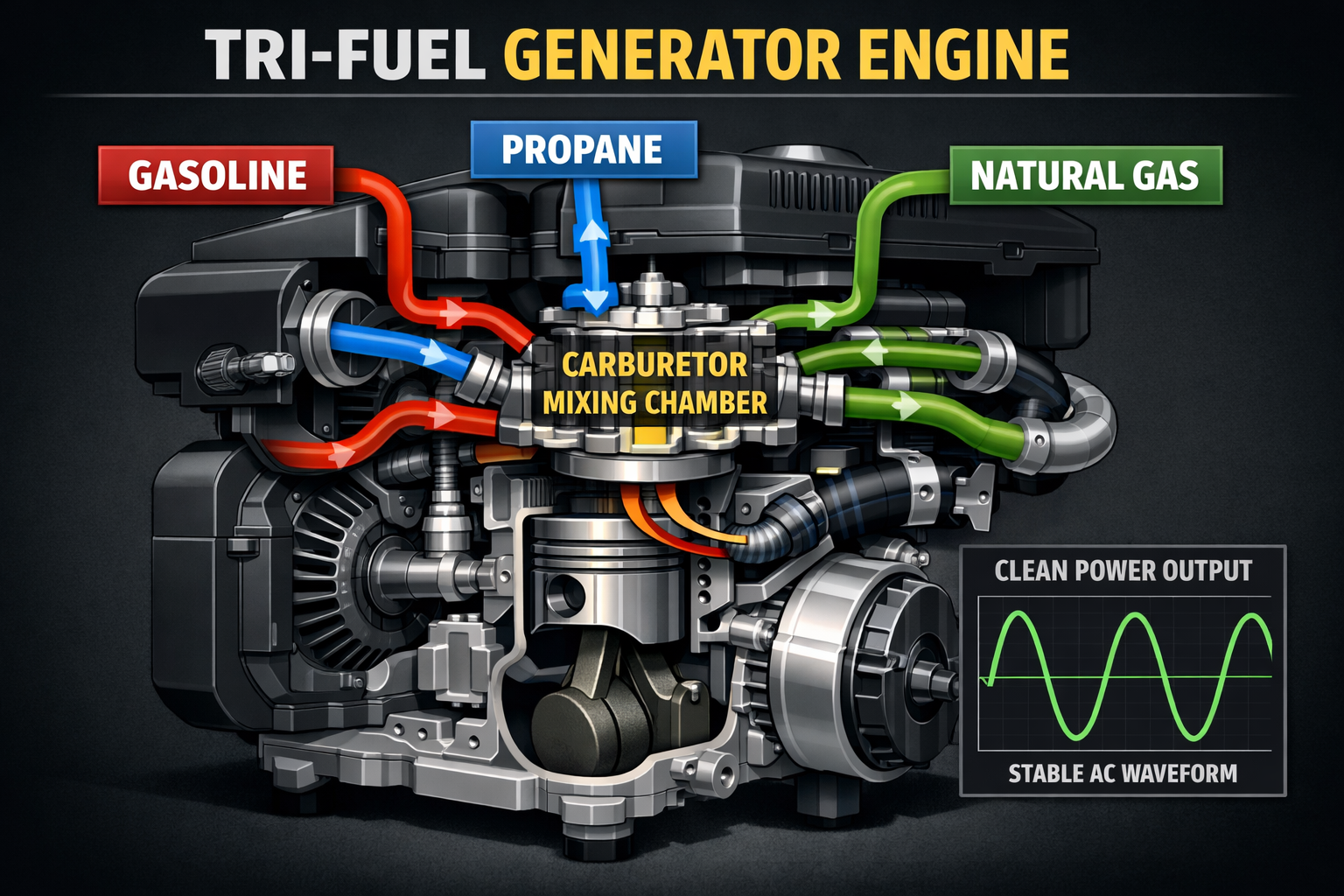
The engine itself isn't dramatically different from a conventional generator. What changes is the fuel management system: a specially designed carburetor, dual-fuel regulators, and mixing chambers that automatically adjust the air-to-fuel ratio depending on which fuel source is active. Electronic sensors help the system compensate for differences in fuel pressure and energy density across all three fuel types.
In practical terms, you get one machine that adapts to your fuel situation rather than the other way around. That flexibility matters most when you can't control which fuels are available, which is exactly the scenario most people buy a generator for in the first place.
How the Fuel Switching System Works
Most tri fuel generators use a selector switch or valve to choose the active fuel. The process is straightforward:
- Start on gasoline for immediate, high-output power.
- Switch to propane when gasoline is unavailable or you want cleaner combustion.
- Connect to natural gas for extended runtime without refueling.
Some models allow switching while the generator is running. Others require a brief shutdown. Check the manufacturer's specifications before assuming hot-switching is supported.
What Fuels Can a Tri Fuel Generator Use?
Tri fuel generators run on gasoline, propane (LPG), and natural gas, and each fuel has distinct advantages depending on the situation.
| Fuel Type | Best For | Storage | Runtime Consideration |
|---|---|---|---|
| Gasoline | Immediate power, high output | Begins degrading in as little as 30 days; use a fuel stabilizer for storage beyond 60 to 90 days | Limited by tank size |
| Propane (LPG) | Long-term storage, cleaner burn | Indefinite shelf life in sealed tanks | Limited by tank volume |
| Natural Gas | Extended/continuous operation | No storage needed (utility line) | Effectively unlimited on a utility connection |
Gasoline is the most accessible fuel and delivers the highest power output. The downside: it degrades over time, and during regional emergencies, gas stations often run dry within hours.
Propane stores indefinitely in sealed tanks, burns cleaner than gasoline, and is widely available. Many homeowners already keep propane on hand for grills or heating. Power output is typically 10 to 15 percent lower than gasoline on the same engine.
Natural gas is the real differentiator for extended outages. When a tri fuel generator is connected to a home's existing natural gas line (the same type of connection used for a gas stove or dryer), it can run continuously for days or weeks, stopping only for routine maintenance like oil checks. That kind of runtime is simply not possible with stored fuel alone. Keep in mind that natural gas output typically runs 15 to 30 percent lower than gasoline, depending on your line pressure and specific generator model, so always check fuel-specific wattage ratings on the spec sheet before sizing your unit.
How Does a Tri Fuel Generator Differ from a Standard or Dual Fuel Generator?
A tri fuel generator offers a third fuel option, natural gas, that standard and dual fuel generators cannot use. That's the critical difference for extended outage scenarios.
- Standard (single fuel) generators run on gasoline only. Simple, affordable, but entirely dependent on fuel availability.
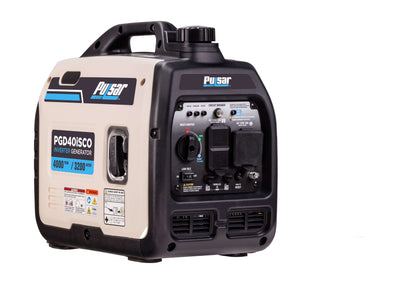
- Dual fuel generators add propane as a second option. A solid upgrade, but still limited when both gasoline and propane are hard to source. Models like the Pulsar PG6580BCO dual fuel portable generator represent this category well.
- Tri fuel generators add natural gas, connecting directly to utility infrastructure for near-unlimited runtime.
Tri Fuel vs. Dual Fuel: Side-by-Side Comparison
| Feature | Dual Fuel Generator | Tri Fuel Generator |
|---|---|---|
| Fuel Options | Gasoline + Propane | Gasoline + Propane + Natural Gas |
| Maximum Runtime | Limited by stored fuel supply | Near-unlimited on natural gas line |
| Extended Outage Performance | Good for 1 to 3 day outages | Built for multi-day and multi-week outages |
| Requires Natural Gas Line | No | Optional, but that's where the real advantage is |
| Upfront Cost | Lower | Higher |
| Best For | Occasional backup, camping, tailgating | Whole-home backup, storm-prone areas, off-grid living |
The practical gap between dual fuel and tri fuel becomes obvious during a multi-day outage. Propane tanks run out. Gasoline becomes scarce. A natural gas line, in most cases, stays pressurized even when the electric grid fails. That's a meaningful advantage for homeowners who need continuous power rather than just a few hours of backup.
If your needs lean more toward occasional use, camping, or short outages, a dual fuel portable generator is probably the better fit for your budget. But if you're planning for serious, extended outages and you have natural gas service at your home, tri fuel is the stronger play.
What Are the Advantages of a Tri Fuel Generator for Emergency Backup?
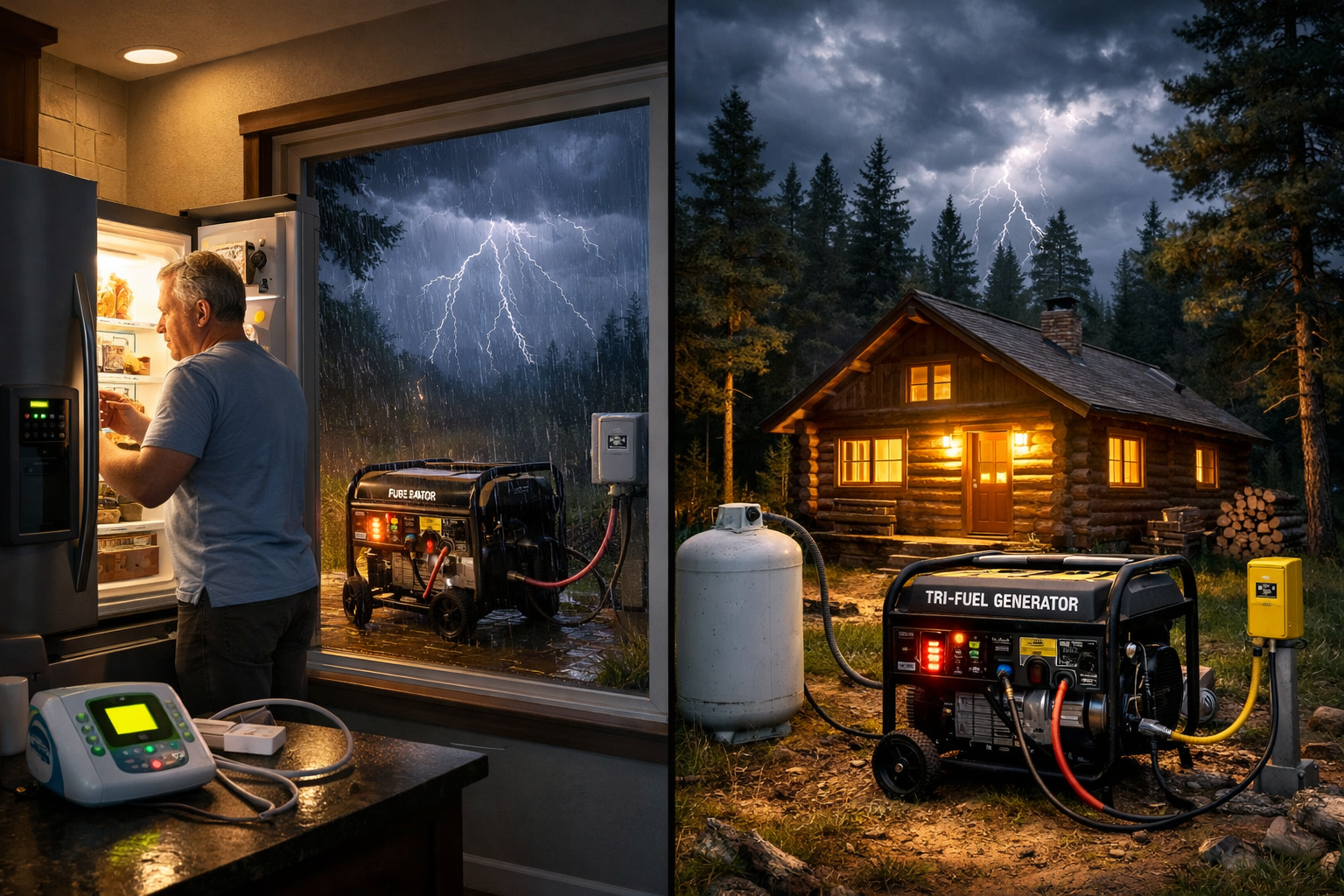
For emergency power backup, the core advantage of a tri fuel generator is resilience: when one fuel source fails, you have two more to fall back on. This isn't a theoretical benefit. It's the difference between keeping your refrigerator, medical equipment, or sump pump running through a multi-day storm versus going dark after your gas can empties.
Key emergency advantages:
- Fuel supply redundancy: If a hurricane clears out every gas station in your county, your propane tank or natural gas line keeps you running.
- Extended runtime via natural gas: Connected to a utility line, a tri fuel generator can operate for days without refueling, stopping only for scheduled maintenance.
- Cleaner combustion options: Propane and natural gas produce fewer harmful emissions than gasoline, which matters when running a generator for extended periods near your home.
- Inverter-equipped models protect electronics: Many tri fuel generators include inverter technology, delivering clean power that won't damage sensitive devices like CPAP machines, computers, or smart appliances.
For homeowners across the Gulf Coast, Southeast, and Midwest, where storm seasons routinely knock out power for days at a time, a tri fuel generator's natural gas fallback is the difference between a manageable outage and a real crisis. Consider the scenario: a major winter storm knocks out power for five days. Gasoline is gone by day two. A homeowner with a standard generator is out of options. A homeowner with a tri fuel generator switches to the natural gas line and keeps the heat, lights, and refrigerator running until the grid comes back.
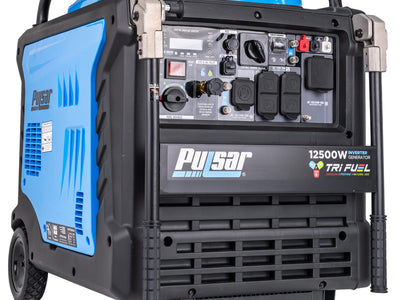
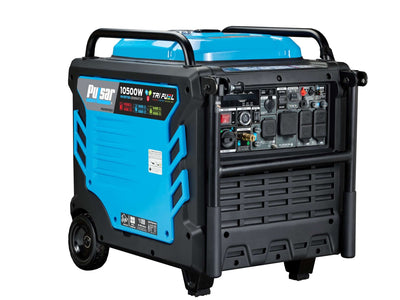
For a capable tri fuel option, the Pulsar PGD105TISCO 10,500-watt tri fuel portable inverter generator combines all three fuel types with CO safety monitoring, making it a practical choice for whole-home backup. If you need more power, the Pulsar PGD125TISRCO 12,500-watt tri fuel inverter generator steps up the output while keeping the same tri fuel flexibility. And for homeowners who want a proven name in engine reliability, the Cummins Onan P11000iTF tri fuel inverter generator delivers 11,000 watts of inverter-clean power backed by Cummins engineering. You can browse the full lineup in our tri fuel generators collection.
Can a Tri Fuel Generator Save Money Compared to Single-Fuel Models?
A tri fuel generator typically costs more upfront than a comparable single-fuel or dual-fuel model, but the ability to choose the cheapest available fuel at any given time can reduce operating costs over the generator's lifespan.
Where the savings come from:
- Fuel price flexibility: Natural gas is generally less expensive per kilowatt-hour than gasoline. When natural gas prices are low, running on the utility line costs less than burning through a tank of gas.
- Propane storage economics: Buying propane in bulk during off-season months (when prices dip) and storing it for winter outages is a practical cost strategy.
- Reduced waste: Gasoline left in a tank degrades and can damage the carburetor. Propane and natural gas don't have this problem, which reduces maintenance costs over time.
- Longer service life: Propane and natural gas burn cleaner than gasoline, producing less carbon buildup in the engine, which can extend engine life and reduce how often you're paying for service.
The bottom line on cost is pretty simple. If you plan to use the generator regularly and have natural gas at your home, the tri fuel premium pays for itself over time through lower fuel costs and less engine wear. If you're only pulling the generator out once or twice a year for short outages, the savings don't add up as quickly, and a dual fuel model will get the job done for less money upfront.
Stick with a dual fuel model if: Your budget is limited and you only need occasional backup power. Options like the Ford FG7750PBE dual fuel portable generator or the Pulsar PG7750B dual fuel generator offer solid two-fuel flexibility at a lower entry price.
Are Tri Fuel Generators Good for Off-Grid or Remote Locations?
Yes. Tri fuel generators are well-suited for off-grid and remote use, particularly because they reduce dependence on any single fuel supply chain.
In remote locations, fuel resupply can be unreliable. A cabin in the mountains might have a propane tank topped off once a month. A job site in a rural area might have gasoline delivered weekly. A tri fuel generator adapts to whatever is available rather than forcing the operator to maintain a single fuel type at all times.
Off-grid use cases where tri fuel generators perform well:
- Remote cabins and properties with propane tanks and no natural gas access
- RV travel where propane is already on board for cooking and heating
- Construction job sites where fuel availability varies by location
- Agricultural operations with mixed fuel infrastructure
One practical note: connecting to natural gas requires a permanent or semi-permanent line installation, which isn't always feasible in truly remote locations. In those cases, the gasoline and propane combination still provides meaningful redundancy over a single-fuel unit.
If portability matters but you also want serious output and brand reliability, the Cummins Onan P11000iTF is worth a look. It puts out 11,000 watts of clean inverter power on all three fuels and carries the Cummins name, which has a long track record in commercial and residential power equipment.
For homeowners who want a standby solution that doesn't require any manual fuel management at all, a whole-home standby unit like the Briggs & Stratton PowerProtect 13kW home standby generator runs on natural gas or propane automatically. No manual switching, no fuel cans, no middle-of-the-night trips outside. It's a different category of product entirely, but worth considering if portability isn't a priority.
Tri Fuel Generator Maintenance: What to Know Before You Buy
Owning a tri fuel generator means maintaining three fuel systems instead of one. That's not as complicated as it sounds, but it does require a little more attention than a standard gasoline-only unit.
Gasoline system: If you store gasoline in the tank between uses, add a fuel stabilizer to prevent degradation. Untreated gas begins breaking down in as little as 30 days and can gum up the carburetor. For storage beyond 60 to 90 days, either treat the fuel or drain the tank and run the carburetor dry.
Propane system: Propane is the lowest-maintenance fuel of the three. The tanks don't degrade the fuel, so there's nothing to treat or drain. Just inspect your hose connections and regulator before each use. Replace cracked or worn hoses immediately.
Natural gas system: The connection to your home's gas line should be installed and inspected by a licensed technician. Once it's in place, there's minimal ongoing maintenance on the fuel side. The main thing to watch is that the gas line provides adequate pressure for the generator's BTU requirements. Low pressure means reduced output.
General engine maintenance applies to all three fuels: Regular oil changes (check the manual for intervals, but every 50 to 100 hours of use is typical), air filter cleaning, and spark plug inspection. If you run propane or natural gas more than gasoline, you'll likely see less carbon buildup on the spark plug and in the combustion chamber, which can extend time between service intervals.
The biggest maintenance mistake people make with tri fuel generators is storing them with untreated gasoline in the tank for months between uses, then wondering why the engine won't start. If you're not going to use gasoline for a while, drain it or stabilize it. Your future self will thank you.
What Should Homeowners Know Before Buying a Tri Fuel Generator?
Before purchasing, homeowners should evaluate their fuel access, power needs, and storage situation. A tri fuel generator is only as useful as the fuels you actually have available to run it with.
Key questions to answer before buying:
- Do you have natural gas service at your home? If yes, a tri fuel generator can connect to your existing line for extended runtime. If not, you're effectively buying a dual fuel generator at a tri fuel price.
- How much power do you need? Calculate the wattage of the appliances you want to run simultaneously. Refrigerators, sump pumps, and HVAC systems draw significant power. Remember that natural gas output runs 15 to 30 percent lower than gasoline, so size your generator based on the fuel you'll actually use most often.
- Where will you store propane? Propane tanks require safe outdoor storage away from ignition sources.
- Do you need inverter-grade power? If you're running medical equipment, computers, or modern electronics, look for a tri fuel model with inverter technology.
- What's your budget? Tri fuel generators carry a premium. Set realistic expectations for the upfront cost and weigh it against whether you'll actually use all three fuel options.
Common mistake: Buying a tri fuel generator without confirming natural gas line access or pressure compatibility. Always verify that your home's natural gas supply can support the generator's BTU requirements before installation.
Frequently Asked Questions
Q: What is a tri fuel generator in simple terms?
A tri fuel generator is a generator that runs on three fuel types (gasoline, propane, and natural gas) so you can switch between fuels based on what's available or most affordable.
Q: Can I switch fuels while the generator is running?
Some tri fuel generators support live fuel switching; others require a brief shutdown. Check your specific model's manual before attempting to switch fuels under load.
Q: Is natural gas always available during a power outage?
In most cases, yes. Natural gas utility lines typically remain pressurized during grid outages because they operate on a separate distribution system. However, major infrastructure events like earthquakes or severe flooding can disrupt natural gas supply, so it's not a guarantee in every scenario.
Q: Do tri fuel generators produce less pollution than gasoline generators?
Propane and natural gas burn cleaner than gasoline, producing fewer carbon monoxide and particulate emissions. This makes tri fuel generators a better environmental choice when you're running on non-gasoline fuels.
Q: How long can a tri fuel generator run on natural gas?
When connected to a utility natural gas line, a tri fuel generator can run continuously for days or weeks, stopping only for routine maintenance like daily oil checks.
Q: Are tri fuel generators safe to use indoors?
No. Like all combustion generators, tri fuel generators produce carbon monoxide and must be operated outdoors, well away from windows, doors, and vents. Many modern models include CO monitoring systems for added safety.
Q: What's the power output difference between fuels?
Gasoline typically delivers the highest output. Propane output is usually 10 to 15 percent lower. Natural gas output typically runs 15 to 30 percent lower than gasoline, depending on line pressure and the specific generator model. Always verify fuel-specific wattage ratings on the spec sheet before sizing your unit.
Q: Do I need a professional to connect a tri fuel generator to natural gas?
Yes. Natural gas line connections should always be made by a licensed plumber or gas technician. Improper connections are a serious safety hazard.
Q: How does a tri fuel generator compare to a whole-home standby generator?
Tri fuel portable generators offer fuel flexibility and portability. Whole-home standby generators (like the Briggs & Stratton 26kW PowerProtect) activate automatically and run on natural gas or propane, but they aren't portable and cost significantly more to purchase and install.
Q: Is a tri fuel generator worth the extra cost over a dual fuel model?
If you have natural gas access and want extended runtime during outages, yes. If you don't have natural gas service, a quality dual fuel generator is the more practical and cost-effective choice.
Conclusion
A tri fuel generator is one of the most practical investments a homeowner can make for power resilience. The ability to run on gasoline, propane, or natural gas means you're not locked into a single fuel supply, and in a real emergency, that flexibility is exactly what keeps the lights on when neighbors are in the dark.
The natural gas connection is what sets tri fuel apart from everything else in the portable generator category. Connected to a utility line, these machines can run for days without refueling, providing continuous, dependable power that single-fuel and even dual-fuel generators simply can't match. Add inverter technology for clean power output, and you have a generator that protects both your home and your electronics.
Actionable next steps:
- Confirm your fuel access by checking whether your home has natural gas service and adequate propane storage.
- Calculate your power needs by listing the appliances you need to run and totaling their wattage. Factor in the output reduction when running on natural gas.
- Compare tri fuel models like the Pulsar PGD105TISCO (10,500W), the Pulsar PGD125TISRCO (12,500W), and the Cummins Onan P11000iTF (11,000W), all of which are strong starting points for homeowners. Browse the full tri fuel collection here.
- Plan your installation and if you're connecting to natural gas, schedule a licensed technician before you need the generator. Don't wait until storm season.
A tri fuel generator doesn't require you to predict which fuel will be available in your next outage. It works with whatever you have, and that's exactly the kind of preparation that actually holds up when a storm rolls through.
References
[1] Comparing Tri Fuel Vs Dual - https://erayakpower.com/blogs/generator-genius/comparing-tri-fuel-vs-dual
[2] What Is A Tri Fuel Inverter Generator - https://www.bluettipower.com/blogs/articles/what-is-a-tri-fuel-inverter-generator
[3] Tri Fuel Inverter Generator Vs Traditional Generator The Complete 2025 Comparison - https://backyardprovider.com/blogs/wen-20/tri-fuel-inverter-generator-vs-traditional-generator-the-complete-2025-comparison
[4] What Is Tri Fuel - https://www.duromaxpower.com/pages/what-is-tri-fuel
[5] Tri Fuel Vs Dual Fuel Generator - https://shgeneratorset.com/generator-comparisons/tri-fuel-vs-dual-fuel-generator/
[6] Comparing Tri Fuel Inverter - https://erayakpower.com/blogs/generator-genius/comparing-tri-fuel-inverter
[7] Tri Fuel Generators Best Portable Home Backup Generator - https://blog.norwall.com/generator-tips/portable-generators/tri-fuel-generators-best-portable-home-backup-generator/