
Skip to content

Best Lithium Battery for Backup Power - Premium LiFePO4 Solutions

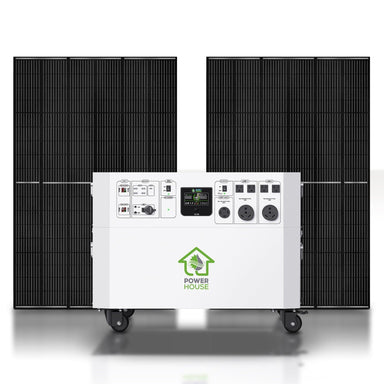
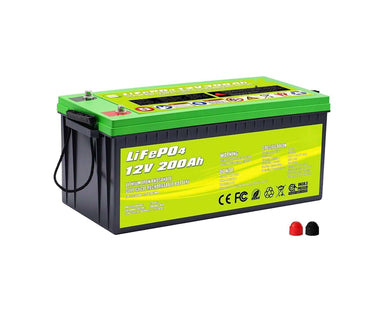
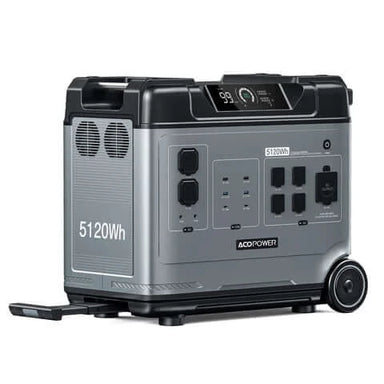
When the power goes out, having reliable backup power isn't just convenient—it's essential for protecting food, maintaining comfort, powering medical equipment, and staying connected during emergencies. Lithium batteries, specifically LiFePO4 (Lithium Iron Phosphate) technology, have revolutionized backup power with their exceptional cycle life, deep discharge capability, and maintenance-free operation. Unlike traditional lead-acid batteries that deliver only 50% usable capacity and require regular maintenance, modern lithium backup batteries provide 90-100% usable energy, last 10+ years, and weigh 60% less. Our curated collection features the best lithium batteries for backup power across every application—from compact 100Ah portable units perfect for keeping essential devices running during short outages, to powerful whole-home systems delivering 10,000+ watt-hours for multi-day backup capability. Whether you're protecting a few critical circuits or seeking complete home energy independence with solar integration, these premium LiFePO4 systems offer the reliability, longevity, and performance you need. Each battery features advanced Battery Management Systems (BMS) for safety, multiple charging options including solar compatibility, and the pure sine wave output required for sensitive electronics. Explore our selection to find the perfect backup power solution sized for your specific needs, budget, and future expansion plans.

Key Takeaways

  • LiFePO4 lithium batteries offer 3000-5000+ cycles compared to 300-500 for lead-acid, providing superior long-term value for backup power applications
  • Proper capacity sizing is critical: calculate your essential load wattage and desired runtime, then add 20-30% buffer for optimal battery longevity
  • Built-in Battery Management Systems (BMS) protect against overcharge, over-discharge, and temperature extremes, making modern lithium batteries safer than ever
  • Whole-home backup systems (5kWh+) can power essential circuits for 8-24 hours, while portable stations (1-5kWh) excel for targeted backup needs

What should you look for in a lithium battery for backup power?

When selecting a lithium battery for backup power, prioritize five critical factors. First, ensure it uses LiFePO4 (Lithium Iron Phosphate) chemistry, which offers superior safety, thermal stability, and cycle life compared to other lithium technologies. Second, verify the battery includes a quality Battery Management System (BMS) that protects against overcharging, deep discharge, short circuits, and temperature extremes. Third, calculate your actual capacity needs by listing essential devices, their wattage, and desired runtime—most households need between 3kWh-10kWh for meaningful backup. Fourth, consider the continuous and peak power output ratings; refrigerators, well pumps, and sump pumps require high surge capacity at startup. Finally, evaluate expandability options, as your backup needs may grow over time. Look for systems that allow battery bank expansion or modular configurations. Additional considerations include warranty length (10+ years is ideal), depth of discharge capability (lithium allows 80-100% DOD safely), charging speed, and whether the system integrates with solar panels for renewable backup power.

How do you choose the right lithium backup battery for your specific needs?

  • Assess your power requirements: Create an inventory of essential devices (refrigerator, medical equipment, lights, internet, sump pump) and calculate total wattage needed simultaneously, then multiply by desired hours of runtime
  • Match battery voltage to your application: 12V systems work best for RVs, boats, and small off-grid setups; 24V-48V systems are more efficient for larger home backup installations; 120V/240V units provide seamless whole-home integration
  • Consider portability versus capacity trade-offs: Portable power stations (under 100 lbs) offer flexibility for multiple uses but typically max out at 5kWh; stationary whole-home systems provide 7-15kWh+ capacity for extended outages
  • Evaluate charging options: Look for multiple input methods including AC wall charging, solar panel compatibility (MPPT controller preferred), and car charging for maximum flexibility during emergencies
  • Calculate cost per usable kWh over lifespan: A $1,200 LiFePO4 battery with 3,500 cycles at 90% DOD delivers 630kWh lifetime energy versus a $400 lead-acid battery with 500 cycles at 50% DOD providing just 125kWh—lithium costs less long-term
  • Check compatibility with existing systems: If adding solar later, ensure the battery supports solar input; if integrating with a generator, verify transfer switch compatibility and charging specifications

Frequently Asked Questions

Is it better to have 2 100Ah batteries or 1 200Ah battery?
For backup power applications, a single 200Ah battery is generally preferable to two 100Ah batteries for several reasons. First, it's more cost-effective—one 200Ah unit typically costs 10-20% less than purchasing two 100Ah batteries separately. Second, it simplifies your system with fewer connection points, reducing potential failure points and eliminating the need for parallel wiring with proper balancing. Third, a single battery requires only one BMS (Battery Management System), ensuring consistent protection and monitoring. However, two 100Ah batteries offer advantages in specific scenarios: they provide redundancy (if one fails, you still have backup power), allow for easier transportation and installation in tight spaces, and enable flexible configurations where you might use one battery for one application and another elsewhere. For stationary home backup systems, choose the single 200Ah battery. For mobile applications like RVs or boats where you might want to separate house and starter batteries, or for systems requiring physical redundancy, two 100Ah units make more sense. Additionally, if you're building capacity incrementally due to budget constraints, starting with one 100Ah and adding another later provides a practical upgrade path.
What is the 80 20 rule for lithium batteries?
The 80/20 rule for lithium batteries is a best practice guideline that recommends keeping your battery charge level between 20% and 80% for maximum cycle life and longevity. While LiFePO4 batteries can safely discharge to 0% and charge to 100% (unlike lead-acid batteries), maintaining this 20-80% range can extend cycle life from 3,000-4,000 cycles to 5,000-7,000+ cycles—potentially doubling your battery's usable lifespan. The science behind this rule relates to lithium-ion stress: charging above 80% increases voltage stress on the cathode, while discharging below 20% stresses the anode, both accelerating degradation at the microscopic level. For backup power applications, this rule requires balancing longevity with practical needs. During normal use, following the 80/20 rule makes sense—charge your backup battery to 80% and avoid depleting below 20% during routine testing. However, during actual power outages, use the full capacity you need; these emergency situations are exactly why you invested in backup power. Many modern lithium backup systems include programmable charge limits, allowing you to set an 80% daily maximum while retaining the ability to charge to 100% before severe weather or when extended outages are anticipated. This approach optimizes both battery life and backup power availability.
How long will a 100Ah lithium battery run a fridge?
A 100Ah lithium battery (approximately 1,280Wh at 12.8V) will typically run a modern refrigerator for 12-24 hours, depending on several variables. Standard household refrigerators consume 100-250 watts while running, but they cycle on and off, operating only 30-40% of the time when not frequently opened. This means actual consumption averages 40-100 watts per hour. A 100Ah LiFePO4 battery provides roughly 1,280 watt-hours of usable energy (12.8V × 100Ah), and with 90-95% inverter efficiency, you have approximately 1,150-1,200Wh available. For a typical Energy Star refrigerator consuming an average of 50 watts continuously (accounting for cycling), you'd get approximately 23 hours of runtime (1,200Wh ÷ 50W). However, older or larger refrigerators (20+ cubic feet) with ice makers and through-door dispensers may consume 150-200 watts average, reducing runtime to 6-8 hours. Important factors affecting actual runtime include: ambient temperature (hot garages increase compressor runtime), door opening frequency (each opening adds 50-100Wh of cooling load), refrigerator age and efficiency rating, freezer temperature settings, and how full the unit is (fuller refrigerators maintain temperature better). For critical backup situations, a 200Ah battery or larger is recommended for refrigerator backup, providing 24-48 hours of runtime and ensuring food safety during extended outages without depleting the battery below healthy levels.
How many hours will a 100Ah lithium battery last?
The runtime of a 100Ah lithium battery depends entirely on your power consumption, but you can calculate it precisely using this formula: Runtime (hours) = (Battery Capacity in Wh × Usable DOD) ÷ Load Wattage. A 100Ah 12V LiFePO4 battery provides 1,280 watt-hours of energy (12.8V × 100Ah). With lithium's 90-100% usable depth of discharge, you have approximately 1,150-1,200Wh available after accounting for inverter efficiency losses. Here are real-world runtime examples: LED lighting (20W) will run for 60 hours; a laptop (50W) for 24 hours; a CPAP machine (40W) for 30 hours; a small TV (80W) for 15 hours; a coffee maker (1,000W) for 1.2 hours; a microwave (1,200W) for 1 hour; a portable heater (1,500W) for 48 minutes. For combined loads, add up all simultaneously operating devices. For example, running LED lights (20W) + laptop (50W) + internet router (15W) + phone charging (10W) = 95W total, providing approximately 12.6 hours of runtime. Important considerations: high-wattage appliances with heating elements (coffee makers, toasters, hair dryers, space heaters) will drain batteries quickly and may exceed the battery's continuous discharge rating. Always check both the watt-hour capacity and the continuous power output rating (often 1,000-1,200W for 100Ah portable units). For backup power planning, calculate your essential load, desired runtime, and add 20-30% capacity buffer to avoid deep discharges that reduce cycle life.
Can lithium backup batteries be charged while in use?
Yes, lithium backup batteries can absolutely be charged while simultaneously powering devices—this is called 'pass-through charging' and is a standard feature in quality backup power systems. This capability is particularly valuable during extended outages when you're using solar panels or a generator to recharge while maintaining power to essential loads. Most LiFePO4 backup systems include intelligent charging circuits that prioritize power distribution: incoming power first supplies connected devices, with excess energy directed to battery charging. This means if you're drawing 500W from the battery while receiving 800W from solar panels, the system supplies your 500W load while charging the battery with the remaining 300W. Pass-through charging offers several practical advantages: you can keep critical medical equipment running continuously while recharging from solar, use the battery as a UPS (Uninterruptible Power Supply) for sensitive electronics, and run a generator for just a few hours daily to recharge while maintaining 24/7 power availability. However, be aware of these limitations: simultaneous charging and discharging generates more heat, so ensure adequate ventilation; the combined load (output + charging) must not exceed the system's maximum power handling capacity; and charging speed may be reduced when under heavy load. For optimal battery longevity, when possible, reduce loads during charging periods to allow faster, cooler charging cycles. Most modern systems display real-time input/output power on LCD screens, making it easy to monitor and optimize your backup power usage.

Sources

  • 4 Best Lithium-ion Backup Batteries [2024 Updated] - Jackery — www.jackery.com
  • All about the Best Lithium Batteries in 2025 — outbax.com.au
  • Lithium Battery for Solar: A Comprehensive Guide for Homeowners in 2025 — www.docanpower.com
  • The best home battery and backup systems of 2025: Expert tested — www.zdnet.com
  • SOLAR ENERGY SERVICES | Im trying to buy lithium battery, which company is reliable and is it worth to buy | Facebook — www.facebook.com
close
close
close
I have a question
sparkles
close
product
Hello! I am very interested in this product.
gift
Special Deal!
sparkles