

Skip to content

Best Lithium Battery for RV - Premium Power Solutions

Upgrade your RV power system with the best lithium batteries designed specifically for mobile living and off-grid adventures. Our curated collection features premium LiFePO4 (Lithium Iron Phosphate) batteries and solar generator systems that deliver unmatched performance, safety, and longevity compared to traditional lead-acid batteries. Whether you're a weekend warrior seeking reliable power for short trips or a full-time RVer demanding complete energy independence, these lithium battery solutions provide the capacity, durability, and advanced features you need. From compact 100Ah deep cycle batteries perfect for smaller trailers to massive 7200W whole-house solar generator systems capable of running multiple air conditioners, our selection covers every RV power requirement. Each product features integrated Battery Management Systems (BMS) for comprehensive protection, delivers 3000-5000+ charge cycles for 10+ years of service, and weighs 50-60% less than lead-acid equivalents—preserving your valuable payload capacity. Experience faster charging, deeper discharge capability (80-100% usable capacity), maintenance-free operation, and the freedom to boondock longer without compromising comfort. Invest in lithium battery technology and transform your RV into a truly self-sufficient home on wheels with power solutions engineered for the demands of mobile living.

Key Takeaways

  • LiFePO4 batteries offer 3000-5000+ cycles compared to 300-500 for lead-acid, providing 10x longer lifespan for RV applications
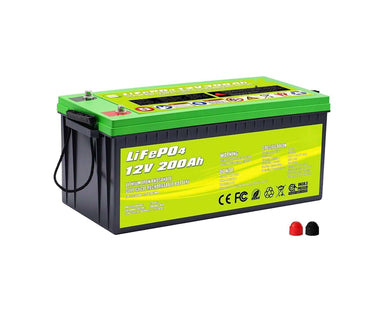
  • A 200Ah lithium battery weighs 50-60% less than equivalent lead-acid, improving fuel efficiency and payload capacity
  • Built-in Battery Management Systems (BMS) protect against overcharging, deep discharge, and temperature extremes for safe operation
  • Solar generator systems provide expandable power solutions from 2200W to 7200W for complete off-grid RV independence

What should you look for in an RV lithium battery?

When selecting the best lithium battery for your RV, prioritize LiFePO4 (Lithium Iron Phosphate) chemistry for superior safety, longevity, and performance. Look for batteries with integrated Battery Management Systems (BMS) that provide essential protections against overcharging, over-discharging, short circuits, and temperature extremes. Capacity is crucial—calculate your daily power consumption to determine whether you need 100Ah, 200Ah, or larger configurations. Weight matters significantly in RV applications, as lithium batteries typically weigh 50-60% less than lead-acid equivalents, preserving your vehicle's payload capacity. Verify the battery offers deep discharge capability (80-100% usable capacity versus 50% for lead-acid), operates efficiently in various temperature ranges, and includes proper certifications. For serious boondockers and full-time RVers, consider expandable solar generator systems that combine battery storage with inverter capabilities, offering 2200W to 7200W of power with capacities ranging from 2kWh to over 16kWh for complete energy independence.

How do you choose the right lithium battery capacity for your RV needs?

  • Calculate daily power consumption: List all devices (refrigerator, lights, water pump, electronics) and multiply their wattage by hours used daily, then divide by 12V to determine amp-hour requirements
  • Consider your camping style: Weekend warriors may suffice with 100-200Ah, while full-time boondockers typically need 300-600Ah or whole-house solar generator systems for extended off-grid capability
  • Factor in solar charging capacity: Match battery size to your solar panel output—a 200Ah battery pairs well with 300-400W of solar panels for daily recharging without shore power
  • Plan for expandability: Choose systems that allow parallel connections or modular expansion, enabling you to start with basic capacity and add more as needs grow
  • Account for inverter requirements: If running AC appliances, ensure your battery system can deliver sufficient continuous power—2200W for basic needs, 6500-7200W for whole-house backup with air conditioning

Frequently Asked Questions

How long will a 12V fridge run on a 100Ah lithium battery?
A typical 12V RV refrigerator draws 3-5 amps when running, but only operates 30-50% of the time due to thermostat cycling. On average, an RV fridge consumes approximately 40-60Ah per 24-hour period. With a 100Ah LiFePO4 battery offering 80-100Ah of usable capacity (compared to only 50Ah from lead-acid), you can expect to run your refrigerator for 24-30 hours on a single charge under normal conditions. However, actual runtime varies based on ambient temperature, insulation quality, how frequently the door opens, and initial food temperature. In hot weather (90°F+), the compressor runs more frequently and may consume 60-80Ah daily, reducing runtime to 15-20 hours. For extended boondocking, pair your 100Ah battery with solar panels or upgrade to a 200Ah system for multi-day operation without recharging.
Is it worth switching to an RV lithium battery?
Switching to lithium batteries for your RV is absolutely worth the investment for most RVers, especially those who boondock regularly or live full-time in their rigs. While the upfront cost is 2-3x higher than lead-acid, lithium batteries deliver 3000-5000+ charge cycles compared to 300-500 for lead-acid, providing a 10-year lifespan versus 2-3 years. The weight savings alone—50-60% lighter—can be transformative, recovering 100-200 pounds of payload capacity. Lithium batteries charge 4-5x faster, offer 80-100% usable capacity (versus 50% for lead-acid), maintain consistent voltage throughout discharge, require zero maintenance, and perform well in cold weather. You'll experience dramatically improved solar charging efficiency, the ability to run appliances longer, and freedom from the constant monitoring lead-acid requires. The break-even point typically occurs within 3-5 years when factoring in replacement costs, improved fuel efficiency, and enhanced camping capability. For weekend warriors on a tight budget, lead-acid may suffice, but for serious RVers, lithium represents a game-changing upgrade.
Which is better, LiFePO4 or Lithium battery?
LiFePO4 (Lithium Iron Phosphate) IS a type of lithium battery, and it's specifically the best lithium chemistry for RV applications. When people compare 'LiFePO4 vs lithium,' they're typically contrasting LiFePO4 with other lithium chemistries like NMC (Nickel Manganese Cobalt) or NCA (Nickel Cobalt Aluminum) found in electronics and electric vehicles. For RVs, LiFePO4 is definitively superior due to its exceptional thermal stability and safety—it won't catch fire or experience thermal runaway even under abuse. LiFePO4 batteries deliver 3000-5000+ charge cycles (versus 1000-2000 for NMC), making them far more cost-effective long-term. They operate safely across wider temperature ranges, tolerate higher charge/discharge rates, and contain no toxic heavy metals. While NMC batteries offer slightly higher energy density (important for weight-critical applications like drones), this advantage is minimal and irrelevant for RV use where LiFePO4's superior safety, longevity, and stability make it the industry standard. All quality RV lithium batteries use LiFePO4 chemistry—if a product doesn't specify, verify before purchasing.
How big of a lithium battery do I need for RV?
The ideal lithium battery size for your RV depends on your power consumption, camping style, and available charging sources. Start by calculating your daily amp-hour usage: a typical RV with LED lights, water pump, furnace fan, and refrigerator consumes 50-100Ah daily. For basic weekend camping with shore power access, a single 100Ah LiFePO4 battery provides adequate capacity. Frequent boondockers should consider 200-300Ah to ensure 2-3 days of autonomy between charging. Full-time RVers running inverters for microwaves, coffee makers, and laptops typically need 300-600Ah, often achieved through parallel batteries or integrated solar generator systems. If you operate air conditioning or other high-draw appliances, consider whole-house solar generator systems offering 6500-7200W continuous power with 9600-16384Wh (800-1365Ah at 12V) of storage capacity. A practical approach: start with 200Ah as a baseline, add 50-100Ah for each high-draw appliance, and multiply by 1.5 if you lack solar panels. Remember that lithium batteries provide 80-100% usable capacity, so 200Ah lithium equals approximately 400Ah of lead-acid capacity.
Can I replace my RV lead-acid batteries with lithium batteries directly?
Yes, you can replace lead-acid batteries with lithium in most RVs, but it's not always a simple drop-in swap. The physical dimensions of 100Ah and 200Ah lithium batteries often match standard Group 24, 27, or 31 lead-acid sizes, making installation straightforward. However, you must verify your RV's charging system compatibility. Most modern RVs (2015+) with smart converters can be reprogrammed for lithium charging profiles (14.4-14.6V bulk, 13.6-13.8V float). Older converters may require replacement with lithium-compatible models. Solar charge controllers must support lithium charging—MPPT controllers are easily reconfigured, but older PWM controllers may need upgrading. Disconnect any battery disconnect switches during charging, as lithium batteries' low internal resistance can trip some models. The Battery Management System (BMS) in quality lithium batteries handles cell balancing and protection, but your charging sources must respect BMS disconnect signals. Most importantly, ensure your inverter/charger can deliver appropriate charging current—lithium batteries accept 0.5C to 1C charge rates (50-100A for a 100Ah battery), much faster than lead-acid. Professional installation is recommended if you're uncertain about electrical system compatibility.

Sources

  • The 6 Best Lithium Batteries for RV - Upgrade to Enjoy - LiTime — www.litime.com
  • The Most Affordable (Quality) Lithium RV Batteries on the Market — www.youtube.com
  • 6 Best 12v Batteries for RV and Dry Camping | Trakkit GPS — trakkitgps.com
  • RV Battery Buyers Guide – All About RVs — allaboutrvsinfo.com
  • Log in or sign up to view — www.facebook.com
close
close
close
I have a question
sparkles
close
product
Hello! I am very interested in this product.
gift
Special Deal!
sparkles