
Skip to content

Best Lithium Battery for Trolling Motor - Premium Marine Power

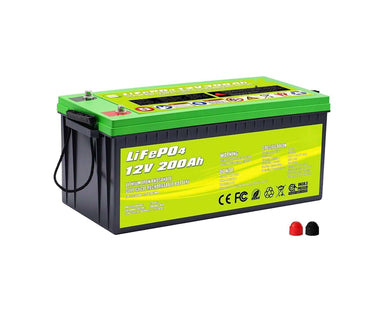
Upgrade your trolling motor performance with premium LiFePO4 lithium batteries engineered specifically for demanding marine applications. Our curated collection features advanced deep cycle lithium batteries that deliver exceptional power density, extended runtime, and industry-leading longevity compared to traditional lead-acid alternatives. Each battery incorporates sophisticated Battery Management System (BMS) technology providing comprehensive protection against overcharge, over-discharge, short circuits, and temperature extremes—critical safeguards for the harsh marine environment. Whether you're powering a compact kayak motor or a high-thrust bass boat trolling system, these lightweight lithium solutions reduce boat weight by 60-70% while providing 3-5x longer lifespan with 3000-5000 charge cycles. From portable 100Ah configurations perfect for weekend anglers to robust 200Ah powerhouses for tournament professionals, our selection includes waterproof designs with multiple connectivity options including Anderson connectors and standard terminal posts. Pair your lithium battery with our compatible solar charging systems for sustainable off-grid power, or choose complete backup generator solutions for comprehensive energy independence. Experience consistent voltage delivery throughout the discharge cycle, faster recharge times, and maintenance-free operation that keeps you fishing longer and worrying less about power management.

Key Takeaways

  • LiFePO4 lithium batteries offer 3-5x longer lifespan than lead-acid, with 3000-5000 charge cycles and 10+ year operational life
  • 100Ah lithium provides equivalent runtime to 200Ah lead-acid due to deeper discharge capability (80-100% vs 50% usable capacity)
  • Weight savings of 60-70% compared to traditional batteries improves boat performance and reduces fuel consumption
  • Advanced Battery Management Systems (BMS) protect against overcharge, over-discharge, and temperature extremes for safe marine operation

What should you look for in a lithium battery for trolling motors?

When selecting a lithium battery for your trolling motor, prioritize LiFePO4 (Lithium Iron Phosphate) chemistry specifically designed for deep cycle marine applications. The most critical feature is an integrated Battery Management System (BMS) that provides overcharge protection, over-discharge prevention, short circuit protection, and temperature monitoring to ensure safe operation in demanding marine environments. Look for batteries with waterproof or water-resistant ratings (IP65 or higher) to withstand splashing, humidity, and occasional submersion. Capacity is measured in amp-hours (Ah), with 100Ah-200Ah being ideal for most trolling motor applications. Verify the continuous discharge rating matches or exceeds your motor's maximum amp draw—most trolling motors pull 30-60 amps at full throttle. Quality lithium batteries should offer 3000-5000 charge cycles at 80% depth of discharge, warranty coverage of 5-10 years, and weigh 60-70% less than equivalent lead-acid batteries. Additional considerations include built-in Bluetooth monitoring, multiple connection options (Anderson connectors, terminal posts), and compatibility with standard marine battery chargers.

How do you choose the right lithium battery capacity for your trolling motor needs?

  • Calculate your motor's amp draw at typical operating speeds (usually 20-40% throttle for most fishing), then multiply by your desired runtime in hours to determine minimum amp-hour capacity needed
  • Consider a 100Ah lithium battery for motors 55lbs thrust or less with 4-6 hours runtime, while 200Ah batteries suit 80-112lbs thrust motors or extended all-day fishing trips of 8+ hours
  • Account for fishing style—aggressive tournament anglers covering large water bodies need more capacity than stationary anglers making short positional adjustments
  • Factor in additional onboard electronics (fish finders, GPS, livewell aerators) that draw from the same battery, adding 20-30% capacity buffer for simultaneous device usage
  • Remember that lithium batteries can safely discharge to 20% capacity (80% usable) versus only 50% for lead-acid, meaning 100Ah lithium equals 200Ah lead-acid in practical runtime
  • Choose 12V configurations for most trolling motors, though 24V and 36V systems require series-connected batteries with matched capacity and charge cycles for balanced performance

Frequently Asked Questions

Are lithium batteries worth it for a trolling motor?
Absolutely—lithium batteries are worth the investment for trolling motors due to their superior performance and long-term cost savings. While the initial purchase price is 2-3x higher than lead-acid batteries, lithium batteries last 3000-5000 charge cycles compared to 300-500 for lead-acid, resulting in 6-10x longer operational life. The weight savings alone (60-70% lighter) significantly improves boat performance, handling, and fuel efficiency. Lithium batteries maintain consistent voltage throughout discharge, providing steady trolling motor power until nearly depleted, whereas lead-acid batteries experience voltage sag that reduces motor performance as they discharge. You can safely use 80-100% of lithium capacity versus only 50% of lead-acid without damage, effectively doubling runtime for equivalent amp-hour ratings. Faster recharge times (2-4 hours vs 8-12 hours), zero maintenance requirements, and superior cold-weather performance make lithium batteries the professional choice. Most anglers recoup the cost difference within 3-5 years through battery longevity alone, while enjoying better on-water performance throughout ownership.
How big of a lithium battery do I need for my trolling motor?
The right lithium battery size depends on your trolling motor's thrust rating, typical usage patterns, and desired runtime. For motors 40-55lbs thrust, a 100Ah 12V lithium battery provides 6-8 hours of runtime at 30-40% throttle (typical fishing speeds). Motors rated 70-80lbs thrust perform well with 100Ah for half-day trips (4-6 hours) or 200Ah for full-day fishing (8-10 hours). High-thrust motors (100-112lbs) should be paired with 200Ah minimum for adequate all-day performance. To calculate precisely, determine your motor's amp draw at your typical operating speed (check manufacturer specifications), then multiply by desired hours of runtime. For example, a motor drawing 30 amps at cruising speed needs 120Ah for 4 hours of continuous operation (30A × 4hrs = 120Ah). Add a 20% safety margin for accessories and reserve capacity. Remember that 24V and 36V systems require multiple 12V batteries connected in series, so a 24V system with two 100Ah batteries provides 100Ah total capacity at 24V, not 200Ah.
Is 100Ah lithium enough for a trolling motor?
Yes, a 100Ah lithium battery is sufficient for most recreational trolling motor applications, particularly for motors rated 55lbs thrust or less and fishing trips lasting 4-8 hours. The key advantage of lithium technology is that 100Ah lithium delivers equivalent runtime to 200Ah lead-acid because you can safely discharge lithium to 20% capacity (using 80Ah of the 100Ah) versus only 50% for lead-acid (using 100Ah of 200Ah capacity). For typical fishing scenarios where you operate at 30-40% throttle—drawing 20-30 amps—a 100Ah lithium battery provides 6-8 hours of runtime with reserve capacity. Tournament anglers running at higher speeds, covering extensive water, or using motors above 70lbs thrust may find 100Ah limiting for all-day competitions and should consider 200Ah batteries. The 100Ah capacity is ideal for kayak trolling motors, small jon boats, pontoon boats with modest power needs, and anglers who fish shorter sessions or have mid-day charging access. If you consistently return to dock with 40-50% capacity remaining, 100Ah is more than adequate; if you frequently deplete below 20%, upgrade to 200Ah for comfort and battery longevity.
What is the longest lasting battery for a trolling motor?
LiFePO4 (Lithium Iron Phosphate) batteries are definitively the longest-lasting battery technology for trolling motors, offering 3000-5000 charge cycles compared to 300-500 cycles for traditional lead-acid batteries. Quality LiFePO4 batteries like the 12V 200Ah models with advanced Battery Management Systems can last 10-15 years with proper care, versus 2-4 years for flooded lead-acid and 3-5 years for AGM batteries. The superior cycle life means if you charge weekly during a 6-month fishing season (26 cycles per year), a lithium battery rated for 4000 cycles will last over 15 years before reaching 80% capacity, while lead-acid batteries require replacement every 2-3 years under identical usage. LiFePO4 chemistry is inherently more stable than other lithium types (like lithium-ion), with better thermal stability, no risk of thermal runaway, and excellent performance across temperature ranges from -4°F to 140°F. The built-in BMS protection prevents the damaging over-discharge and overcharge conditions that prematurely kill lead-acid batteries. Additionally, lithium batteries can sit unused for months without the sulfation damage that destroys lead-acid batteries during storage, and they maintain 95%+ capacity even after years of seasonal use.
Can I use a solar panel to charge my trolling motor lithium battery?
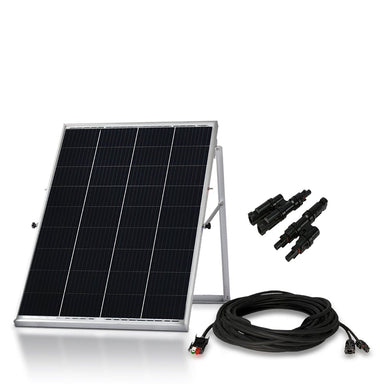
Yes, solar panels are an excellent way to charge lithium trolling motor batteries, providing sustainable off-grid power for extended fishing trips and remote locations. A 100W monocrystalline solar panel can deliver approximately 5-6 amps in optimal sunlight conditions, providing 30-40 amp-hours of charge during a full sunny day—enough to replenish half of a 100Ah battery's capacity or maintain charge between fishing sessions. For complete daily recharging of 100Ah batteries, consider 200-300W of solar capacity, while 200Ah batteries benefit from 300-400W panels for full-day recharge capability. Ensure your solar charge controller is compatible with LiFePO4 chemistry, as lithium batteries require different charging profiles than lead-acid (typically 14.4-14.6V bulk/absorption and 13.6V float voltage). Many modern lithium batteries with BMS can accept charge rates up to 50A, making them ideal for solar charging which typically delivers 5-20A depending on panel size. The combination of solar panels and lithium batteries creates a virtually maintenance-free system perfect for boat docks, fish camps, and extended camping trips where traditional charging infrastructure isn't available, while reducing long-term operating costs and environmental impact.

Sources

  • Best Marine, Lithium and Trolling Motor Batteries - Wired2Fish — www.wired2fish.com
  • Best Lithium Battery for Trolling Motor: A Complete Guide - OKMOTech — okmotech.com
  • Stop Overpaying for Trolling Motor Batteries (Lithium Battery Review) — www.youtube.com
  • Caymas Boat Owners | Best trolling motor lithium batteries for the price | Facebook — www.facebook.com
  • What is the Best Lithium Battery for Trolling Motor? — www.redodopower.com
close
close
close
I have a question
sparkles
close
product
Hello! I am very interested in this product.
gift
Special Deal!
sparkles