

Skip to content

Best Solar Panels for Home Backup Power - Nature's Generator

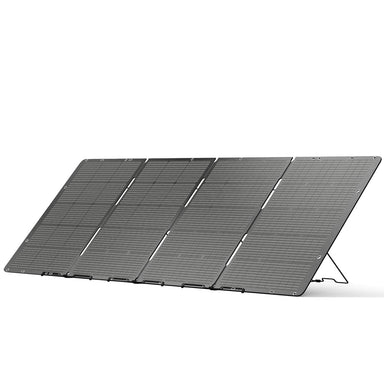
When the power grid fails, having reliable home backup power isn't just convenient—it's essential for safety, comfort, and peace of mind. Our curated collection of the best solar panels for home backup power combines cutting-edge monocrystalline technology with weather-resistant construction to ensure your family stays powered through any emergency. Whether you're looking for portable 400W folding panels for flexible deployment, efficient 410W PERC half-cell panels for rooftop installation, or complete whole-home backup systems delivering 6,500-7,200W of reliable power, we offer solutions for every backup power need and budget. Each solar panel in this collection features premium monocrystalline cells with 20-22% efficiency ratings, IP67 or IP68 weatherproof protection, and compatibility with advanced LiFePO4 battery systems for maintenance-free operation lasting 10+ years. From single-panel solutions for charging small backup batteries to 10-pack systems with mounting hardware for comprehensive home coverage, these solar panels transform sunlight into dependable emergency power while reducing your everyday electricity costs. Discover why thousands of homeowners trust Nature's Generator solar panels to keep their lights on, refrigerators running, and families safe when it matters most.

Key Takeaways

  • Monocrystalline PERC solar panels offer 20-22% efficiency, making them ideal for maximizing backup power generation in limited roof space
  • A typical 2000 sq ft home needs 20-25 solar panels (400W each) to fully cover energy needs, but backup systems can start with as few as 2-4 panels
  • IP67 and IP68 ratings ensure solar panels withstand extreme weather conditions, critical for reliable emergency backup power during storms
  • Pairing high-wattage solar panels (400W+) with LiFePO4 battery systems provides 10+ years of maintenance-free home backup power

What should you look for in solar panels for home backup power?

When selecting solar panels for home backup power, prioritize efficiency, durability, and compatibility with your energy storage system. Monocrystalline PERC (Passivated Emitter and Rear Cell) technology delivers the highest efficiency ratings (20-22%), converting more sunlight into usable electricity even during cloudy conditions—essential for reliable backup power. Look for panels rated at 400W or higher to minimize the number of panels needed while maximizing output. Weather resistance is critical; IP67 or IP68 ratings protect against water, dust, and extreme temperatures. Half-cell technology reduces power loss and improves performance in partial shade. Finally, ensure your panels are compatible with your backup battery system's voltage requirements and charge controller specifications. Quality certifications like TUV, CE, and UL indicate the panels meet rigorous safety and performance standards for residential installations.

How do you choose the right solar panel system for home backup needs?

  • Calculate your essential load requirements: Identify which appliances you need during outages (refrigerator, lights, medical equipment, HVAC) and their combined wattage to determine minimum system size
  • Consider your available installation space: Rooftop systems require mounting hardware and proper orientation, while portable folding panels offer flexibility for ground deployment or emergency relocation
  • Match panel capacity to battery storage: A 10080Wh battery system pairs well with 4000W+ solar arrays for same-day recharging, while smaller 2000-3000Wh systems work efficiently with 800-1600W panel configurations
  • Evaluate scalability options: Multi-pack systems (2-pack, 10-pack) with expansion capabilities allow you to start small and grow your backup capacity as budget and needs evolve
  • Assess portability versus permanent installation: Folding panels with ETFE coating offer grab-and-go convenience for emergencies, while mounted systems with aluminum racks provide set-it-and-forget-it reliability

Frequently Asked Questions

What is the 33% rule in solar panels?
The 33% rule in solar panels refers to a guideline that your solar array's wattage should be approximately 33% (or one-third) of your battery bank's amp-hour capacity when converted to watts. This ensures optimal charging speed without overloading the system. For example, if you have a 10,080Wh (10.08kWh) battery system at 48V, that's 210 amp-hours. Applying the 33% rule suggests around 3,360W of solar panels for ideal performance. However, this is a general guideline rather than a strict requirement. For home backup systems, you may want more solar capacity (40-50%) to ensure faster recharging during shorter daylight hours or cloudy conditions. Modern charge controllers with MPPT technology can handle higher solar input ratios safely, allowing for more aggressive charging when sunlight is available. The key is balancing recharge speed with your backup power needs—if you need daily full recharges, err on the higher side of solar capacity.
What is the best backup power for a house?
The best backup power for a house combines solar panels with lithium iron phosphate (LiFePO4) battery storage systems, offering superior performance over traditional generators. Solar battery backup systems provide silent operation, zero emissions, no fuel costs, and minimal maintenance compared to gas or diesel generators. LiFePO4 batteries deliver 3,000-5,000+ charge cycles, 10-15 year lifespans, and can discharge 80-90% of their capacity safely. For whole-home backup, systems ranging from 6,500W to 7,200W with 9,600-10,080Wh capacity can power essential appliances for 8-12 hours or longer with solar recharging. These systems handle refrigerators, lights, computers, medical equipment, and even HVAC systems during outages. The optimal solution depends on your specific needs: partial home backup (3,000-5,000W) for essentials only, or whole-home systems (6,000W+) for maintaining normal lifestyle during extended outages. Solar-powered backup also provides energy independence, reducing reliance on the grid and lowering electricity bills during normal operation, making it both an emergency solution and a long-term investment.
Why is my electric bill so high when I have solar panels?
High electric bills despite having solar panels typically result from several factors: undersized systems, increased consumption, unfavorable net metering policies, or system performance issues. If your solar array only covers 50-70% of your energy needs, you'll still purchase significant power from the grid, especially during evening peak hours when solar isn't producing. Many homeowners underestimate their actual consumption or add new appliances (electric vehicles, hot tubs, additional HVAC) after installation. Time-of-use (TOU) rates charge premium prices for evening electricity when solar panels aren't generating, potentially offsetting daytime savings. Some utilities have reduced net metering credits, paying less for excess solar energy than they charge for grid power. System issues like shading from tree growth, panel soiling, inverter problems, or degraded connections reduce output. Additionally, most grid-tied systems without battery backup shut down during outages for safety, providing no benefit during those periods. For backup power applications, pairing solar panels with battery storage allows you to store excess daytime generation for evening use, maximizing self-consumption and minimizing grid dependence, which directly reduces bills while providing emergency power capability.
How many solar panels does a 2000 sq ft house need?
A typical 2,000 square foot house needs 20-25 solar panels (400W each) to cover average energy consumption, though actual requirements vary significantly based on location, energy efficiency, and lifestyle. The average 2,000 sq ft home uses 10,000-12,000 kWh annually (830-1,000 kWh monthly). In areas with good sun exposure (4-5 peak sun hours daily), twenty 400W panels (8,000W total system) can generate approximately 11,000-13,000 kWh annually, covering most homes' needs. However, southern states with more sunshine may need fewer panels (15-18), while northern regions might require more (25-30). For backup power purposes, you don't necessarily need to cover 100% of consumption—many homeowners install 8-12 panels (3,200-4,800W) specifically for charging backup battery systems that power essential loads during outages. This partial system approach is more affordable while still providing critical emergency power. Calculate your specific needs by reviewing 12 months of electric bills to find your average daily kWh usage, then divide by your location's peak sun hours and panel wattage. A 10-pack of 410W panels (4,100W total) provides an excellent starting point for meaningful backup power or can be combined with additional packs for whole-home coverage.
Can solar panels provide backup power during a blackout?
Solar panels alone cannot provide backup power during a blackout—they require a battery storage system and appropriate inverter to function when the grid is down. Standard grid-tied solar systems automatically shut off during outages to protect utility workers repairing power lines, a safety feature required by electrical codes. To have backup power during blackouts, you need a solar-plus-storage system that includes: solar panels to generate electricity, a battery bank (preferably LiFePO4) to store energy, and a hybrid inverter or power station that can disconnect from the grid and create an independent power island for your home. When the grid fails, the system automatically switches to battery power, and solar panels continue charging the batteries during daylight hours, potentially providing indefinite backup power. The 6,500W and 7,200W whole home backup systems with 9,600-10,080Wh capacity can power essential appliances for extended periods, with solar panels recharging batteries daily. Portable folding solar panels offer additional flexibility, allowing you to position them optimally for maximum sun exposure during emergencies. This integrated approach ensures true energy independence and reliable backup power, unlike grid-tied-only systems that go dark when you need them most.

Sources

  • Top 3 Home Solar Battery Backup Systems of 2025: HONEST Review (No Sponsors!) — www.youtube.com
  • Batteries or Generators: Choosing the Best Home Backup Power Solution — www.cnet.com
  • Going Off-Grid? Read This Solar Battery Storage System Buying Guide First — www.ecoflow.com
  • How to Pick a Solar Panel and Battery Backup System — www.nytimes.com
  • Homeowner’s Guide to Solar — www.energy.gov
close
close
close
I have a question
sparkles
close
product
Hello! I am very interested in this product.
gift
Special Deal!
sparkles