

Last updated: April 17, 2026
Quick Answer
The best affordable portable generator for home use in 2026 is the MG Power 4500W Dual Fuel Inverter (DB5041C) for most households, which pairs a built-in CO alert with propane and gasoline flexibility for under $600. If you only need to run a fridge, lights, and a few chargers, the 2500W MG Power Inverter (HB5020C) is a quieter, lighter pick for about half the price. Focus on matching running watts to your real load, confirming CO detection, and choosing fuel based on how long you need power after an outage.
A power outage does not have to leave your family in the dark. The right portable generator keeps your refrigerator running, your phones charged, and your sump pump working until the grid comes back. The challenge? Finding a reliable unit that fits a normal household budget.
We tested and compared affordable portable generators under $600 to find the models that deliver the best combination of power output, fuel efficiency, and safety features. Every pick on this list includes CO detection technology, which the U.S. Consumer Product Safety Commission now strongly recommends for all portable generators[1].
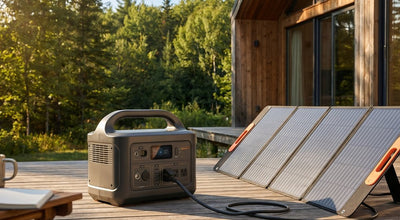
Whether you need backup power for storm season, a portable unit for camping trips, or a reliable generator for light construction work, this guide covers the options worth your money in 2026. We also compare these gas generators to portable power stations so you can find the right type of generator for your situation. Whether you want an affordable home generator for storm season or a dual-fuel portable generator for off-grid use, this guide helps you buy a generator with confidence.
Key Takeaways
- Every generator on this list costs under $600 and includes built-in CO detection for safer home use
- A 2,500W inverter generator handles most essential appliances during a power outage (refrigerator, lights, phone chargers, Wi-Fi router)
- Dual fuel generators let you switch between gasoline and propane, which matters when gas stations lose power during storms
- Inverter generators produce clean power safe for laptops, phones, and other sensitive electronics
- Fuel efficiency varies significantly between models. The most efficient units run 8+ hours on a single tank at 25% load
- CARB-compliant models meet California emissions standards and can be sold in all 50 states
Who This Guide Is For
- Homeowners who need backup power for outages but cannot justify a $5,000+ standby system
- Renters and apartment dwellers who want portable emergency power
- Campers, tailgaters, and RV owners looking for a versatile portable unit
- First-time generator buyers who want clear, jargon-free guidance on what to look for
What to Look for in an Affordable Portable Generator
Not every cheap generator is a good deal. The features below separate generators that protect your family and your electronics from the ones that end up on the curb after one season.
Running Watts vs. Starting Watts
Running watts tell you how much continuous power the generator supplies. Starting watts (also called peak watts) cover the extra surge appliances like refrigerators and air conditioners need when their motors kick on. A refrigerator may use 600 running watts but demand 1,800 watts for that first half-second. If you want to power essential appliances, you need to power them within your generator's rated capacity. A generator may struggle or overheat if pushed past its running-watt limit. The generator must have enough starting watts for motor-driven loads. Always size your generator based on running watts first, then confirm the starting watts can handle your largest motor-driven appliance.
Inverter Technology vs. Open Frame
Inverter generators produce clean power with less than 3% total harmonic distortion (THD). This makes them safe for laptops, phones, and medical equipment. Open-frame generators cost less and often deliver more watts per dollar, but they run louder and produce rougher power. Enclosed inverter models run quieter. A super quiet inverter generator operates at conversational noise levels, making it the best choice for a portable home backup. These sized generators provide plenty of power without disturbing your neighbors. For home backup where you will charge electronics, an inverter model is worth the small premium.
CO Detection and Auto-Shutoff
Carbon monoxide poisoning from portable generators causes roughly 70 deaths per year in the United States, according to the CPSC. Modern generators with built-in CO sensors monitor the air around the unit and shut down automatically if dangerous levels build up. This feature is non-negotiable for home use.
Fuel Type and Efficiency
Gasoline generators are the most common and usually the cheapest. Dual fuel generators run on gasoline or propane, giving you a backup fuel source (gas or propane) when gas stations close during extended outages. Either fuel type provides power during an outage that can last days. Propane stores indefinitely without stabilizer, which makes dual fuel models practical for emergency preparedness. Some larger standby systems run on natural gas, but portable models typically use gasoline or propane. Check the U.S. Department of Energy guidelines on fuel efficiency ratings when comparing models[3].

How to Size a Generator for Your Home
Buying a generator with too little power leaves your essential appliances offline. Buying too much wastes money. Here is how to calculate the right size for your household.
Add up the running watts of every appliance you plan to power at the same time. Then identify which motor-driven appliance has the highest starting watt requirement and add that surge to your total. The result is the minimum generator size you need.
| Appliance | Running Watts | Starting Watts |
|---|---|---|
| Refrigerator | 150-400 | 1,200-2,400 |
| Sump Pump (1/2 HP) | 800 | 1,300 |
| Window AC (10,000 BTU) | 1,200 | 3,600 |
| LED Lighting (10 bulbs) | 100 | 100 |
| Phone/Laptop Chargers | 50-150 | 50-150 |
| Wi-Fi Router + Modem | 20-50 | 20-50 |
| Space Heater (1,500W) | 1,500 | 1,500 |
For a basic outage setup (refrigerator, lights, chargers, Wi-Fi), a 2,500W generator handles the load comfortably. If you want to add a sump pump or window AC unit, step up to a 3,500W-4,500W model.
Affordable Portable Generators Compared
Here is how our top picks stack up on the specs that matter most for home backup use.
| Generator | Peak/Running W | Fuel Type | CO Alert | Type | Price |
|---|---|---|---|---|---|
| HB5020C 2500W | 2,500/2,000 | Gas | Yes | Inverter | $349.99 |
| DB5041 4300W | 4,300/3,500 | Gas | No | Open Frame Inverter | $299.99 |
| DB5041C 4500W | 4,500/3,700 | Gas | Yes | Open Frame Inverter | $349.99 |
| HB5040DC 3800W | 3,800/3,100 | Gas/Propane | Yes | Inverter | $469.99 |
| HB5046C 4800W | 4,800/3,800 | Gas | Yes | Inverter | $569.99 |
| Simpson SPG3640 | 3,600/3,000 | Gas | No | Portable | $399.00 |
Decision Factor Scorecard
We rated each generator on the six factors that matter most when buying a portable generator for home backup. Green dots indicate strong performance, amber dots mean average.
| Factor | HB5020C | DB5041 | DB5041C | HB5040DC | HB5046C | SPG3640 |
|---|---|---|---|---|---|---|
| Power Output | ● | ● | ● | ● | ● | ● |
| Fuel Efficiency | ● | ● | ● | ● | ● | ● |
| Noise Level | ● | ● | ● | ● | ● | ● |
| Portability | ● | ● | ● | ● | ● | ● |
| Price Value | ● | ● | ● | ● | ● | ● |
| Safety Features | ● | ● | ● | ● | ● | ● |
Our Top Picks for Affordable Portable Generators
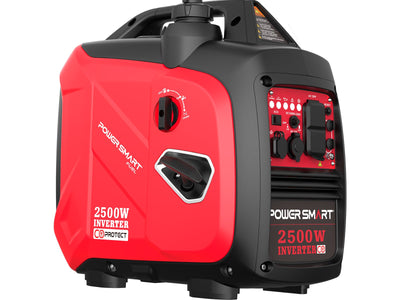
Best Compact Inverter: 2500W Inverter Gas Generator HB5020C
This 2,500-watt inverter generator fits the needs of most households during a standard power outage. At 2,000 running watts, it powers a refrigerator, LED lights, phone chargers, and a Wi-Fi router at the same time. The built-in CO alert sensor shuts the unit down if carbon monoxide levels reach unsafe territory.
Inverter technology keeps total harmonic distortion below 3%, so you can safely charge laptops and run sensitive electronics without a separate surge protector. The compact design makes it easy to store in a garage or shed between uses.

2500W Inverter Gas Generator w/ CO Alert HB5020C
2500W peak / 2000W running | Gasoline
Best for: Small home backup, camping, tailgating
$349.99 $399.99
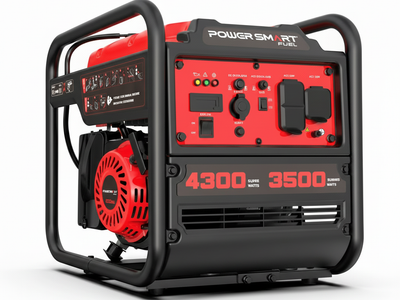
View GeneratorBest Budget Open Frame: 4300W Open Frame Gas Inverter Generator DB5041
At $299.99, the DB5041 delivers 4,300 peak watts and 3,500 running watts for less money than most 2,500W inverter units. Open-frame construction means it runs louder than enclosed models, but the trade-off gives you a generator that can handle a refrigerator, sump pump, and several lights at once. The AC power output provides enough power for your needs in most outage scenarios.
The inverter-regulated output still provides cleaner power than a conventional generator. This makes it a practical option if you need more watts per dollar and can tolerate extra noise during an outage.

4300W Open Frame Gas Inverter Generator DB5041
4300W peak / 3500W running | Gasoline
Best for: Budget-conscious buyers who need more power
$299.99 $349.99
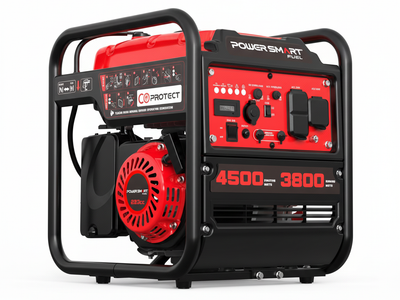
View GeneratorBest Value with CO Safety: 4500W Open Frame Inverter Generator DB5041C
The DB5041C adds a built-in CO alert system to the open-frame platform, giving you 4,500 peak watts with automatic carbon monoxide shutoff. At $349.99, it costs $50 more than the DB5041 and adds the safety feature that every home-use generator should include.
With 3,700 running watts, this unit handles a window air conditioner, refrigerator, and basic lighting at the same time. If you want more power than a compact inverter but still need CO protection, this model fills that gap.

4500W Open Frame Inverter Generator w/ CO Alert DB5041C
4500W peak / 3700W running | Gasoline
Best for: Home backup with CO safety priority
$349.99 $379.99
View GeneratorScenario: Summer Storm, Power Out for 8 Hours
Your neighborhood loses power at 6 PM during a July thunderstorm. The HB5040DC dual fuel generator runs on the propane tank from your gas grill. You power your refrigerator (400W), a box fan (100W), LED lights (80W), phone chargers (50W), and your Wi-Fi router (30W) for a total of 660 running watts. At that load, the generator sips fuel in eco mode and runs through the night without a refill. When the power comes back at 2 AM, you shut it down and go back to sleep knowing nothing in your freezer thawed.
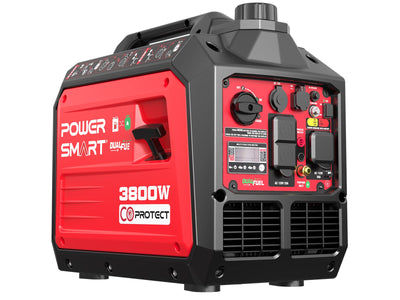
Best Dual Fuel: 3800W/3500W Dual Fuel Inverter Generator HB5040DC
The HB5040DC is one of the best models in the dual-fuel inverter category. This dual-fuel portable generator runs on gasoline (3,800W peak) or propane (3,500W peak), which solves the biggest problem with gas-only generators during extended outages: fuel availability. When gas stations lose power and cannot pump fuel, a 20-pound propane tank from your gas grill keeps this generator running.
Propane burns cleaner than gasoline and stores indefinitely without fuel stabilizer. The built-in CO alert sensor adds another layer of safety. At $469.99, it costs more than single-fuel options, but the fuel flexibility pays for itself the first time you face a multi-day outage.

3800W/3500W Gas/Propane Dual Fuel Inverter Generator w/ CO Alert HB5040DC
3800W peak gas / 3500W peak propane | Dual Fuel (Gas/Propane)
Best for: Flexible fuel options and emergency preparedness
$469.99 $499.99
View Generator
Best Job Site Crossover: Simpson PowerShot 3600W SPG3640
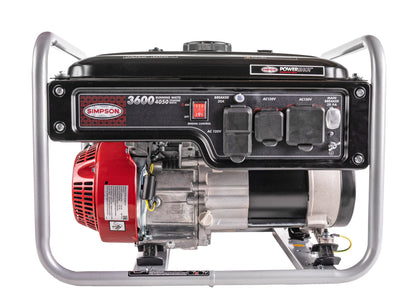
Simpson builds pressure washers and industrial power equipment, and the PowerShot SPG3640 reflects that job-site durability. With 3,600 peak watts and 3,000 running watts, it handles both home backup and construction power tools. These generators are built for durability, so if you plan to use one regularly, the heavier construction pays off.
At $399.00, this gas powered portable generator falls between the compact inverter generator models and the dual fuel option. It delivers a lot of power and features for the price. The conventional generator design means it runs louder than inverter units, but it delivers reliable power at a competitive price point.

Simpson PowerShot 3600W Portable Generator SPG3640
3600W peak / 3000W running | Gasoline
Best for: Job site and home use with proven reliability
$399.00 $499.00
View GeneratorGenerator Safety Essentials for Home Use
A portable generator can protect your household during an outage, but only if you follow basic safety rules. Carbon monoxide is odorless and colorless, which makes it especially dangerous.
- Always run generators outdoors, at least 20 feet from windows, doors, and vents. Never operate one in a garage, even with the door open.
- Point the exhaust away from your home. Wind can carry CO back toward open windows if the exhaust faces the house.
- Install battery-operated CO detectors on every level of your home, especially near sleeping areas.
- Use heavy-duty outdoor extension cords rated for the wattage you need. Indoor cords overheat and create fire risks.
- Never refuel a hot generator. Shut it down and let it cool for 5-10 minutes before adding gasoline.
- Keep fuel stored safely. Store gasoline in approved containers away from the generator and any ignition sources.
The American Red Cross recommends having your generator tested and maintained before storm season starts[4]. A 30-minute monthly run keeps your backup generator ready. Monitor your power usage during outages. A well-maintained generator can keep your essential appliances running whenever you need to power your home.
Maintenance and Long-Term Care
A well-maintained generator starts when you need it and lasts for years. Here is the maintenance schedule that keeps your investment running reliably.
- Oil changes: Change the oil after the first 20 hours of use, then every 100 hours or once per year.
- Fuel stabilizer: Add fuel stabilizer to your gasoline if the generator will sit for more than 30 days. Stale fuel clogs carburetors and prevents starting.
- Air filter: Clean or replace the air filter every 50 hours of use. A dirty filter reduces power output and increases fuel consumption.
- Electric start battery: If your generator has electric start or remote start, check the battery charge before storm season. A dead starter battery means you are back to pull-start only.
- Spark plug: Inspect and replace the spark plug annually or every 100 hours.
- Monthly run: Start the generator and let it run for 20-30 minutes each month. This circulates oil, burns off moisture, and confirms the unit is ready for an emergency.
- Long-term storage: Drain the fuel tank and carburetor if you will not use the generator for more than 3 months. Alternatively, fill the tank completely and add stabilizer.
Emissions and Compliance: CARB and EPA Standards
If you live in California (or plan to resell your generator), CARB compliance matters. The California Air Resources Board sets stricter emissions standards than federal EPA rules, and non-compliant generators cannot legally be sold or used in the state[2].
CARB-compliant generators produce fewer hydrocarbons and nitrogen oxides, which means cleaner air around your home while the unit runs. All generators on this list meet EPA emission standards, and most are CARB-compliant as well. Check the product specs before purchasing if CARB compliance is required in your area.
The Bottom Line
You do not need to spend thousands of dollars to keep your household powered during an outage. Every generator on this list costs under $600, includes inverter or inverter-regulated technology, and delivers enough wattage to run essential home appliances.
For most households, the 2500W Inverter Generator HB5020C at $349.99 covers the basics: refrigerator, lights, chargers, and Wi-Fi. If you need to add a sump pump or window AC unit, step up to the 4500W DB5041C at $349.99 for more watts with CO protection. And if fuel flexibility matters, the 3800W Dual Fuel HB5040DC at $469.99 keeps you powered even when gas stations are closed.
Whichever model you choose, invest in proper maintenance, follow all safety guidelines, and test your generator before you actually need it. Each generator can provide reliable backup when the power goes out. A $300-$570 generator that delivers 2,000-4,800 watts of power and starts on the first pull during a power outage is worth every penny.
References
- U.S. Consumer Product Safety Commission. "Portable Generator Safety." cpsc.gov
- U.S. Environmental Protection Agency. "Small Engine Emissions Standards." epa.gov
- U.S. Department of Energy. "Fuel Efficiency in Small Engines." energy.gov
- American Red Cross. "Power Outage Safety Guide." redcross.org
- Federal Emergency Management Agency. "Emergency Preparedness for Home Power Outages." fema.gov
- National Fire Protection Association. "NFPA 70 Electrical Code for Portable Generators." nfpa.org