

Last updated: May 28, 2026
Quick Answer
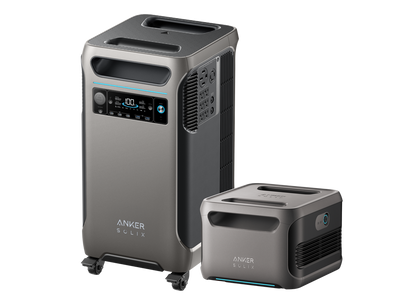
The best solar generator for most people is the Jackery Explorer 2000 Plus paired with SolarSaga solar panels. It packs 2,042Wh, a 3,000W inverter, and expands to 12kWh, so it covers RV trips and home backup in one unit. For whole-home backup, the Anker SOLIX F3800 ($4,098) delivers 6,000W and 120V/240V split-phase power. Budget shoppers can start at $699 with the BLUETTI AC180P.
Who this is for:
- Homeowners who want quiet, fume-free backup power for a refrigerator, lights, and a furnace fan when the grid goes down.
- RV and van-life travelers who need portable power for a road trip without running a noisy gas generator.
- Emergency preppers building an off-grid power plan that can recharge from the sun during a long outage.
How Does a Solar Generator Work?
A solar generator stores energy in a battery, then sends it out as usable power. It is really three parts working together. A solar panel collects sunlight, a battery holds the charge, and an inverter turns that stored power into the AC power your appliances use [1].
A solar generator pairs solar panels with a battery and an inverter. The panels feed DC power to the battery. The inverter turns that into household AC through the 120-volt AC outlets. A built-in battery management system protects the cells and reports battery capacity. Charge time drops as you add watts of solar, since a larger solar array speeds up every solar charge.
There is no engine and no fuel. The "generator" name is a bit of a misnomer. It does not burn anything, so it makes no fumes and almost no noise.
Most modern units use a LiFePO4 battery, short for lithium iron phosphate. This battery type is safe, stable, and lasts thousands of cycles [2]. You plug in solar panels to recharge, or you can top off from a wall outlet when the sun is hiding.
Solar input is measured in watts. A panel rated at 400W feeds power into the battery on a sunny day. The bigger the solar input, the faster the recharge. That matters most during a multi-day power outage, when your only way to refill the battery is the sun.

Can a Solar Generator Power a House?
Yes, the right solar generator can power a house, but capacity is everything. To run a full home with a 240V well pump or central AC, you need a unit with 6,000W output and split-phase 120V/240V power [3]. Smaller units run essentials only.
Ease of use is easy to overlook. A bright LED light, a simple display, and a one-touch solar charge make these units friendly for anyone. Always check the output voltage matches your gear before a long outage.
Here is what that means in practice. A 1,000Wh power station keeps your phone, lights, and a CPAP going for a night. A 2,000Wh unit can run a refrigerator through most of a day. A whole-home setup needs 3,800Wh or more, plus expansion batteries.
The Anker SOLIX F3800 starts at 3,840Wh and expands to 26.9kWh, or up to 53.8kWh with two units. That is enough to run a house for days. The Nature's Generator Powerhouse pushes 6,500W and 10,080Wh, and it is whole-home capable out of the box.
Common mistake: buyers look only at watt-hours and forget about output. A battery can be huge, but if the inverter maxes out at 2,000W, it cannot start a 240V air conditioner. Match both numbers to your loads.
How Do You Size a Solar Generator?
To size a solar generator, add up the watts of everything you want to run, then add up the watt-hours you need over time. Watts tell you if the unit can power a device. Watt-hours tell you how long it will last.
Most solar generators feature a mix of outlets. You get AC outlets, a 12-volt port, plus two USB-A and two USB-C ports, so you can run several appliances at the same time. The bigger solar panels offer enough input to refill the battery in a few hours to fully charge.
Check two numbers when you size a unit. Continuous power is what it runs all day. Surge power is the extra burst a fridge or pump needs to start. Match the voltage to your loads, and treat the unit as your main backup power source. Using solar panels with extra batteries turns it into true off-grid portable power.
Start by listing your loads. Here are common appliances and roughly what they draw:
- Refrigerator: ~150W running (with surge spikes when the compressor kicks on)
- CPAP machine: ~50W
- LED lights (whole room): ~60W
- Wi-Fi router and modem: ~20W
- Laptop: ~60W
- Space heater: ~1,500W (a heavy load that drains a battery fast)
- Power tools (circular saw): ~1,400W with a high surge on startup
- Microwave: ~1,000W
Add a buffer for surge. Motors in a fridge or power tools draw extra watts for a split second when they start. That is why output and surge ratings matter as much as the running wattage.
For a quick rule: a fridge plus lights, Wi-Fi, and phone charging draws around 250W. A 2,000Wh battery runs that load for roughly 7 to 8 hours before recharge. Add a 400W solar panel and you stretch that into the next day.
Solar Generator Sizing Guide
Add up the watts of what you want to run at the same time, then match your total to a unit below.
Common appliance watts
| Refrigerator | 150 W | Microwave | 1,000 W |
| Chest freezer | 100 W | Coffee maker | 1,000 W |
| LED lights (whole home) | 100 W | Space heater | 1,500 W |
| CPAP machine | 50 W | Window AC unit | 1,200 W |
| Wi-Fi and modem | 20 W | Sump or well pump | 1,000 W |
| TV | 100 W | Power tools | 1,400 W |
Match your total to a unit
| Your total | Best pick | Why it fits |
|---|---|---|
| Up to 1,000 W | BLUETTI AC180P | 1,800W AC, 1,152Wh, portable, $699 |
| 1,000 to 2,000 W | Jackery 1000 Plus or ACOPOWER BP2000 | 2,000 to 2,200W AC, expandable |
| 2,000 to 3,000 W | Jackery 2000 Plus | 3,000W AC, expands to 12kWh |
| 3,000 to 4,000 W | EcoFlow DELTA Pro | 3,600W AC, 4,500W with X-Boost |
| 4,000 to 6,000 W | Anker SOLIX F3800 | 6,000W AC, 120V/240V split-phase |
| Whole home, 6,000+ W | Nature’s Generator Powerhouse 6500W | 10,080Wh, expandable, solar + wind |
Are Solar Generators Worth It?
Solar generators are worth it for clean, silent backup power you can run indoors. They cost more upfront than a gas generator, but they have no fuel cost, no fumes, and almost no maintenance. For most homeowners and RV owners, the trade is worth it [4].
A solar generator works as a clean backup system that generates power from the sun. Portable solar generators suit RV trips and small power needs. Bigger units cover a whole home, so match the size to your power needs and use portable solar to stay charged off-grid.
Portability counts too. A small unit acts like a giant power bank you carry anywhere. Larger models add wheels and telescoping handles. Ease of use matters in a blackout, so a clear readout and simple buttons make a solar generator easy to use under stress.
Think about a gas generator during a blackout. You need to store fuel, run it outside, and listen to it roar all night. Carbon monoxide from gas generators is a real danger, and it kills people every year [5].
A solar generator runs in your kitchen with zero exhaust. The fuel falls from the sky for free. The downside is recharge speed. A gas generator refills in two minutes at the pump, while solar depends on daylight.
Here is the honest contrast. Gas wins on raw runtime during a week-long outage if you have fuel. Solar wins on safety, noise, and indoor use every single time. Many preppers keep both.

The 7 Best Solar Generators for 2026
We picked these seven based on output, battery capacity, solar input, expandability, and real-world value. Each one earns a specific role, from whole-home backup to a budget grab-and-go unit. All are in stock and ready to ship.
You will see big names like EcoFlow Delta, Bluetti, and Goal Zero Yeti in most solar generator roundups. Our picks include EcoFlow and Bluetti, plus brands that give you more power for the price. Most use rigid panels or foldable ones, and adding two panels shortens charge time.
Anker SOLIX F3800: Best for Whole-Home Backup

The Anker SOLIX F3800 is built to run a house, not just a campsite. It delivers 6,000W of AC output with true 120V/240V split-phase power, so it can drive a well pump, central AC, or an electric range [3].
The base capacity is 3,840Wh, and it expands to 26.9kWh with batteries. Pair two units and you reach 53.8kWh, which is days of off-grid power. Its 2,400W max solar input means a fast recharge from panels during an outage.
The LiFePO4 battery is rated for about 3,000 cycles, and it hits 80% charge in roughly 1.5 hours. This is the unit for the homeowner who wants real whole-home protection without a permanent standby system.
EcoFlow DELTA Pro Ultra: Best Premium Expandable

EcoFlow DELTA Pro Ultra (Inverter + 1 Battery) + 400W Portable Solar Panel
$4,599.00
Shop NowThe EcoFlow DELTA Pro Ultra is the upgrade pick for buyers who want whole-home capacity that grows with them. One battery holds 6,144Wh, and the system expands to 90kWh as you add batteries.
Its 7,200W inverter runs 120V/240V split-phase circuits, so it can carry a well pump or central AC. You can link up to three inverters for 21.6kW of output.
It accepts up to 5,600W of solar input, which refills a battery quickly on a sunny day. This unit suits the buyer who wants a permanent home battery instead of a fuel-burning standby generator.
Nature's Generator Powerhouse 6500W: Best for Whole-Home + Wind

The Nature's Generator Powerhouse 6500W stands out for one reason: it charges from solar AND wind. If you live somewhere breezy, you can refill the battery even on a cloudy day [1].
It puts out 6,500W with a 7,200W surge, and it holds 10,080Wh in a 48V LiFePO4 battery. That is whole-home capable power, and the system expands as your needs grow. It charges with 410W solar panels or a wind turbine.
This is the pick for the off-grid homeowner or the prepper who wants two ways to harvest free energy. When one source is weak, the other can carry the load.
Jackery Explorer 2000 Plus: Best High-Capacity Portable

Jackery Explorer 2000 v2 Portable Power Station - 2042Wh LiFePO4
$864.00
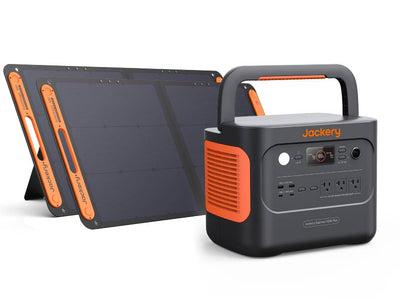
Shop NowThe Jackery Explorer 2000 Plus is our top overall value pick. Pair it with Jackery SolarSaga panels and it becomes a solar generator that blends serious capacity with true portability. The base unit holds 2,042Wh and expands to a massive 12kWh with extra batteries [2].
The 3,000W inverter and 6,000W surge run most home appliances, including a refrigerator and power tools. Its LiFePO4 battery is rated for 4,000 cycles, which is years of regular use. It fast-charges in about 2 hours.
This unit does double duty. Take it on an RV trip this weekend, then keep it home for the next storm. For homeowners and travelers who want one device that does it all, this is the sweet spot.
Jackery Solar Generator 1000 Plus: Best for RV & Van Life

The Jackery Solar Generator 1000 Plus is the road-trip favorite. It is lightweight and easy to carry, yet it still expands to 5kWh when you need more runtime off-grid [2].
The base capacity is 1,264Wh, with a 2,000W AC output that runs a portable fridge, lights, a fan, and your devices. The LiFePO4 battery handles 4,000 cycles, so it ages well over years of camping.
For van life and weekend RV trips, this portable power station hits the right balance of size, weight, and capacity. It recharges from a 100W panel or a wall outlet, so you stay topped off on the move.
ACOPOWER BP2000: Best Expandable Mid-Range

The ACOPOWER BP2000 is the value-packed middle ground. It starts at 2,048Wh and a 2,200W inverter, but its real story is expansion. You can stack up to 8 batteries to reach 16,384Wh [2].
That means you can buy small now and grow into whole-home territory later. The LiFePO4 battery fast-charges in about 1.5 hours, so you spend less time waiting and more time powered.
This is the smart pick for the buyer on a budget who still wants a clear upgrade path. Start with home essentials, then scale up as your needs and budget grow.
BLUETTI AC180P: Best Budget Pick

The BLUETTI AC180P is the easiest way to start with solar power. At $699, it is the lowest-cost unit on this list, yet it still uses a long-life LiFePO4 battery [2].
It holds 1,152Wh and pushes 1,800W of AC output, with a 2,700W surge in power-lifting mode for tougher loads. The 500W max solar input recharges it well, and it hits 80% in about 1.8 hours.
At around 35 pounds, it is light enough to carry one-handed. This portable power station is ideal for emergency preparedness, short outages, and camping where weight and price matter most.
How Do the 7 Solar Generators Compare?
Here is every pick side by side. Use this table to match capacity, output, and expandability to your needs at a glance.
| Model | Capacity (Wh) | AC Output | Max Solar Input | Expandable To | Best For |
|---|---|---|---|---|---|
| Anker SOLIX F3800 | 3,840 | 6,000W | 2,400W | 53.8kWh | Whole-home backup |
| EcoFlow DELTA Pro Ultra | 6,144 | 7,200W | 5,600W | ~90kWh | Premium expandable |
| Nature's Generator Powerhouse | 10,080 | 6,500W | 410W panels | Expandable | Whole-home + wind |
| Jackery 2000 Plus | 2,042 | 3,000W | 200W panels | 12kWh | High-capacity portable |
| Jackery 1000 Plus | 1,264 | 2,000W | 100W panel | 5kWh | RV & van life |
| ACOPOWER BP2000 | 2,048 | 2,200W | Solar ready | 16,384Wh | Expandable mid-range |
| BLUETTI AC180P | 1,152 | 1,800W | 500W | Single unit | Budget pick |
Scenario: Summer Blackout, Day 2
A heat wave knocked out the grid Monday night. It is now Wednesday morning, and the forecast says power returns Thursday. Your refrigerator is full of groceries. Your CPAP cannot skip a night. The temperature outside is climbing.
With the BLUETTI AC180P (1,152Wh): it runs your fridge and CPAP through the night, but the battery is near empty by morning. You need full sun to recharge before the next evening.
With the Jackery 2000 Plus (2,042Wh): it carries the same loads with room to spare, and a 400W solar panel tops it back up by midday. You also run a fan and charge phones.
With the Anker SOLIX F3800 (3,840Wh): it runs the fridge, CPAP, fans, lights, and even a window AC unit, then recharges fast on its 2,400W solar input. You barely notice the outage.
That capacity gap is not just a number on a spec sheet. During a real blackout, it is the line between rationing power and living normally.
How Do the Price Tiers Compare?
Solar generators range from $699 to over $4,000. The right tier depends on what you are protecting. Here is how the value breaks down across budget, mid-range, and whole-home picks.
| Tier | Price Range | Models | Best Use |
|---|---|---|---|
| Budget | $699 | BLUETTI AC180P | Short outages, camping, essentials |
| Mid-range | $1,499 to $2,099 | ACOPOWER BP2000, Jackery 1000 Plus | RV, van life, expandable essentials |
| High-capacity | $3,099 | Jackery 2000 Plus | All-in-one portable + home backup |
| Whole-home | $3,500 to $4,600 | Nature's Powerhouse, EcoFlow DELTA Pro Ultra, Anker F3800 | Full home backup, off-grid power |
Remember the gas-versus-solar contrast from earlier? Here is where solar pays you back. A solar generator has no fuel cost and almost no maintenance. Over years of use, the free solar recharge offsets a big chunk of the higher sticker price.

The Bottom Line
The best solar generator is the one sized for your real loads. For most buyers, the Jackery 2000 Plus is the smartest all-around pick. It bridges portable and home backup in one expandable unit.
If you want true whole-home backup, the Anker SOLIX F3800 and Nature's Generator Powerhouse deliver the output and capacity to carry a house for days. For RV and van life, the Jackery 1000 Plus is light and capable. On a tight budget, the BLUETTI AC180P gets you started for $699.
Every pick here uses a long-life LiFePO4 battery, runs silent, and recharges from the sun. The trade-off is simple: you pay more upfront than gas, but you gain clean, safe, indoor power with no fuel runs.
Here are your next steps:
- Add up the watts of the appliances you must keep running during a power outage.
- Add up the watt-hours you need to cover a full day before solar recharge.
- Match both numbers to a unit in the comparison table above.
- Decide if you need 120V/240V split-phase output for a well pump or central AC.
- Browse our solar generators and portable power stations to order the right size today.
Power that shows up when it counts starts with picking the unit that fits your home. Order now and be ready before the next blackout.
Frequently Asked Questions
Here are the most common questions buyers ask before choosing a solar generator.
Can a solar generator power a whole house?
Yes, with the right capacity. You need 6,000W output and 120V/240V split-phase power to run a full home with a well pump or central AC. The Anker SOLIX F3800 and Nature's Generator Powerhouse are built for this. Smaller units run essentials only.
What size solar generator runs a house?
For whole-home backup, plan on at least 3,800Wh of battery and 6,000W of output, then add expansion batteries. The Anker F3800 expands to 53.8kWh with two units. For essentials only (fridge, lights, Wi-Fi), a 2,000Wh unit like the Jackery 2000 Plus is enough.
How long will a solar generator last on a charge?
It depends on your load. A 2,000Wh unit running a fridge plus lights and Wi-Fi (around 250W) lasts roughly 7 to 8 hours. Add a 400W solar panel and you can stretch that into the next day. Heavy loads like a space heater drain the battery much faster.
How do I size a solar generator for a refrigerator?
A typical fridge draws about 150W running, with a brief surge when the compressor starts. Over 24 hours it uses roughly 1,200 to 1,500Wh. A 2,000Wh unit runs a fridge for most of a day. Pair it with a solar panel to run the fridge indefinitely during an outage.
How does a solar generator work?
A solar panel collects sunlight and feeds power into a battery. An inverter then turns that stored power into the AC power your appliances use. There is no engine and no fuel, so it makes no fumes and almost no noise. You recharge from solar panels or a wall outlet.
How long do solar generators last?
Most modern units use a LiFePO4 (lithium iron phosphate) battery rated for thousands of charge cycles. The Jackery 2000 Plus is rated for 4,000 cycles, and the Anker F3800 for about 3,000. That translates to many years of regular use before the battery loses noticeable capacity.
Are solar generators safe to use indoors?
Yes. A solar generator burns no fuel, so it produces zero carbon monoxide and no exhaust. That makes it safe to run inside your home, unlike a gas generator, which must always run outdoors. LiFePO4 batteries are also among the most stable lithium battery types.
How long does a solar generator take to recharge?
From a wall outlet, many units hit 80% in 1.5 to 2 hours. The Anker F3800 reaches 80% in about 1.5 hours, and the BLUETTI AC180P in about 1.8 hours. Solar recharge depends on panel wattage and sunlight, so a higher solar input rating means a faster top-off.
Are solar generators worth it compared to gas?
For most buyers, yes. Solar generators cost more upfront, but they have no fuel cost, no fumes, and almost no maintenance. Gas wins on raw runtime if you stockpile fuel. Solar wins on safety, silence, and indoor use. Many preppers keep both.
What is the best solar generator for RV and van life?
The Jackery Solar Generator 1000 Plus is our top RV pick. It is lightweight and portable, holds 1,264Wh, and puts out 2,000W. It expands to 5kWh for longer off-grid trips and recharges from a 100W panel or a wall outlet on the move.
Can a solar generator run power tools?
Yes, if the output and surge ratings are high enough. A circular saw can draw around 1,400W with a high startup surge. Units like the Jackery 2000 Plus (3,000W output, 6,000W surge) handle most power tools. Check the tool's rated and surge watts against the unit's specs.
What is the best budget solar generator?
The BLUETTI AC180P at $699 is our budget pick. It holds 1,152Wh, pushes 1,800W (2,700W surge), and uses a long-life LiFePO4 battery. At around 35 pounds, it is light enough to carry one-handed. It is ideal for short outages, camping, and emergency preparedness.
References
- U.S. Department of Energy, "Homeowner's Guide to Going Solar." energy.gov/eere/solar
- U.S. Department of Energy, "How Does a Lithium-Ion Battery Work?" energy.gov
- U.S. Department of Homeland Security (Ready.gov), "Power Outages." ready.gov/power-outages
- U.S. Environmental Protection Agency, "Green Power Partnership." epa.gov/greenpower
- U.S. Environmental Protection Agency, "Carbon Monoxide and Portable Generator Safety." epa.gov/indoor-air-quality-iaq