

Last updated: July 6, 2026
⚡Quick Answer
The best solar generator for camping is a portable power station sized to your trip. Pick 300 to 500Wh for a weekend of phones and lights. Choose about 1000Wh for a fridge and CPAP, or 2000Wh and up for an RV or multi-day trip. Pair any unit with a solar panel to add power on sunny days.
Who This Is For
This guide is for campers, RV owners, and outdoor users who want quiet, fuel-free power at the campsite. You want to charge your devices, run a cooler, and sleep near your gear without engine noise or fumes. If that sounds like your kind of trip, you are in the right place. We break down sizing, runtime, and the right pick for how you camp.
What Is a Solar Generator?
A solar generator is a battery and inverter in one box, paired with a solar panel. The portable power station stores solar energy, and the inverter turns it into normal wall power. Think of it as a giant power bank that refills from the sun.
There is no gas, no engine, and no exhaust. That is the big difference from a gas generator. A solar-powered generator runs silent, so it will not wake the whole campsite at dawn.
Most quality units today use LiFePO4 cells. This battery type is lighter, safer, and lasts a long time. A good LiFePO4 pack handles thousands of charge cycles before it fades, so it lasts many camping seasons. Solar power keeps that pack full, which is why campers love the pairing.

Why Does a Solar Generator Beat a Gas Generator for Camping?
A solar generator beats a gas generator for camping on safety and quiet. Gas engines make carbon monoxide, a poison you cannot see or smell. The CDC warns to never run a fuel-burning generator inside a tent, RV, or cabin, since deadly levels can build up fast [1].
A solar-powered unit makes zero exhaust. That means you can keep it right by your tent door and still breathe easy. The CPSC reports that gas generators kill about 100 people a year from carbon monoxide [2].
Here is the contrast. A gas generator roars and needs fuel you have to haul and store. A solar generator sits quiet, refills from a solar panel, and uses clean energy. For a campsite, that trade is easy to make.
What Size Solar Generator Do You Need?
The size you need depends on your trip and your gear. Capacity is measured in watt-hours (Wh), which is how much energy the battery holds. More watt-hours means more runtime before you recharge.
For a weekend camping trip with phones, LED lights, and small devices, 300 to 500Wh is plenty. This is the highly portable tier, light enough to carry with one hand. It covers your essential devices without extra bulk.
Step up to about 1000Wh if you need to power a small fridge, a CPAP, and lights together. This mid tier is the sweet spot for most car campers. It gives you enough battery for a long weekend off-grid.
For an RV, multi-day base camp, or bigger loads, go 2000Wh and up. A large battery like this can run several appliances at the same time. It handles a rooftop AC startup, a full-size cooler, and charging gear.
| Capacity Tier | Best Use | Approx. Weight | What It Runs |
|---|---|---|---|
| 300 to 500Wh | Weekend camping, backpack-adjacent trips | 8 to 12 lbs | Phones, tablets, LED lights, small fans |
| ~1000Wh | Car camping, long weekends off-grid | ~24 lbs | 12V fridge, CPAP, lights, laptop |
| 2000Wh and up | RV, multi-day base camp, off-grid living | 55 to 65 lbs | Multiple appliances, RV outlet, coffee maker |
How Long Will a Solar Generator Run Your Gear?
Runtime depends on the battery capacity and how many watts your gear pulls. A simple formula gets you close. Multiply the capacity in Wh by 0.85, then divide by the device wattage.
That 0.85 covers normal power loss through the inverter. A phone sips about 10W, LED camp lights about 10W, and a 12V camp fridge averages near 50W. A CPAP without a humidifier draws about 40W.
The table below shows rough runtime hours by device and capacity. Use it to match the right power output to your trip. Real numbers vary with temperature and load.
| Device (avg draw) | 500Wh | 1000Wh | 2000Wh |
|---|---|---|---|
| Phone charge (~10W) | ~42 hrs | ~85 hrs | ~170 hrs |
| LED lights (~10W) | ~42 hrs | ~85 hrs | ~170 hrs |
| 12V camp fridge (~50W) | ~8 hrs | ~17 hrs | ~34 hrs |
| CPAP, no humidifier (~40W) | ~10 hrs | ~21 hrs | ~42 hrs |

How Do Solar Panels Extend Runtime?
A solar panel refills the battery while you camp, so your runtime is not fixed. On a clear day, a 100 to 200W portable solar panel adds roughly 0.5 to 1kWh back into the pack. That is the whole point of solar recharging.
This matters most on multi-day trips. Without solar, your power source drains and stays drained. With portable solar, the battery tops off each afternoon, so a weekend charge can stretch across a week.
Look for a unit with strong solar input and MPPT, which is a smart solar charge controller. This charge controller squeezes more from each panel. Adding two panels, or larger solar, speeds up the solar charge even more. More solar power in means a shorter wait before the battery is full again.
What Should You Look For in a Camping Solar Generator?
Focus on weight, ports, and battery chemistry. For camping, portability wins. A unit that lasts a long time but weighs 80 pounds is no fun to lift into a truck.
Check the ports next. You want enough AC outlets, a car port, and USB-C to charge your devices fast. More ports means you power more gear at once.
Pick LiFePO4 chemistry for the battery pack. It is lighter than older lithium, safer, and rated for far more cycles. A common mistake is buying on price alone and getting a heavy pack that dies in two seasons.
One more tip. A solar generator that is easy to use, with a clear screen and app, beats a fancy unit you cannot figure out at dusk. Simple wins in the field.
Which Solar Generator Should You Buy?
Here are three picks by trip type, all sold at Mighty Generators. Each is a proven, portable solar generator with real charging capabilities. We match the pick to how much power you actually need.
Compact Weekend Pick: Jackery Explorer E300v2
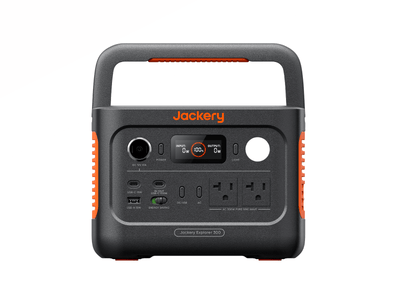
The Jackery Explorer E300v2 is the compact choice for weekend camping. It holds 288Wh in a LiFePO4 battery and weighs only about 8 pounds [3]. That is light enough to swing into your car with one hand.
It runs a phone, a tablet, LED lights, and a small fan with room to spare. Pair it with a portable solar panel and you can recharge it in a few hours of sun. For a quick weekend camping trip, this backup power fits the bill.

Jackery Explorer E300v2 Portable Power Station - 288Wh LiFePO4 Battery
$249.00
Shop NowMid 1000Wh Pick: Jackery Explorer 1000 v2
The Jackery Explorer 1000 v2 is the sweet-spot pick for car campers. It packs 1070Wh of battery storage and a 1500W inverter, with 3000W surge power for startup loads [4]. Yet it weighs about 24 pounds, so it stays portable.
This is enough battery to run a 12V fridge, a CPAP, and lights across a long weekend. It also has strong solar input, so panels keep it topped off. If you want one unit that does most jobs, start here.

RV and Multi-Day Pick: Bluetti AC200P L
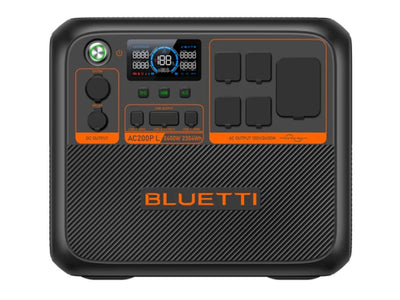
The Bluetti AC200P L is the large portable pick for RV and multi-day trips. It holds 2048Wh and pushes 2400W continuous power, with a 30A RV port built in [5]. That lets it power several appliances at the same time.
It weighs about 62 pounds, so this is a base-camp unit, not a backpack one. You can expand its battery capacity later for even longer off-grid power. For an RV or a family base camp, it is the workhorse of the group.

BLUETTI AC200P L 2048Wh LiFePO4 Portable Power Station 2400W
$1,399.00
Shop NowOther popular solar brands exist, like Goal Zero Yeti units and the Anker SOLIX line. The Anker SOLIX units are able to run the same camp gear, and they compete well on ports and weight. For bigger capacity, the larger EcoFlow Delta Pro line is another strong option. If you want a big jump in capacity, the EcoFlow Delta Pro 3 and EcoFlow Delta 3 Plus are worth a look for home backup too. For most campers, though, the three picks above cover the range from a weekend to full off-grid camping.
Picture this. It is Friday night at the lake, and the sky just turned pink. Your neighbor two sites over fires up a gas generator, and the roar drowns out the crickets.
You flip on your solar generator instead. The fridge hums, the string lights glow, and your CPAP is ready for bed. Saturday morning, a solar panel refills the pack while you drink coffee. That is the quiet payoff of fuel-free power.
The Bottom Line
A solar generator gives you quiet, safe, fuel-free power at camp. Size it to your trip, add a solar panel for multi-day runs, and pick LiFePO4 for the long haul. Do that, and you power your camping without noise, fumes, or gas runs.
Here is how to get started:
- Add up the watts of the gear you need to power, like a fridge, CPAP, and lights.
- Match that to a capacity tier: 300 to 500Wh for a weekend, ~1000Wh for a fridge trip, 2000Wh+ for an RV.
- Add a 100 to 200W portable solar panel if your trips run more than two days.
- Choose a LiFePO4 unit with the right ports and an easy screen.
- Browse the Mighty Generators solar generator lineup and pick your tier.
Frequently Asked Questions
What size solar generator do I need for camping?
Pick 300 to 500Wh for a weekend of phones and lights. Choose about 1000Wh for a fridge, CPAP, and lights. Go 2000Wh or more for an RV or a multi-day trip with bigger loads.
How long will a solar generator power a camp fridge?
A 12V camp fridge averages about 50W. A 500Wh unit runs it roughly 8 hours, a 1000Wh unit about 17 hours, and a 2000Wh unit near 34 hours. A solar panel extends that on sunny days.
Can a solar generator run a CPAP overnight?
Yes. A CPAP without a humidifier draws about 40W. Even a 500Wh portable power station runs it for roughly 10 hours, which covers a full night with power to spare.
How much power do I need for RV camping?
For RV camping, look at 2000Wh and up with a 30A RV port. That gives you enough battery to run a fridge, lights, and small appliances. Add solar panels for continuous power on longer stays.
How much power does a solar panel add per day?
A 100 to 200W portable solar panel adds roughly 0.5 to 1kWh on a clear day. Efficient panels and MPPT charge controllers help you get the most from the sun. Two panels add power even faster.
Do I need a solar panel to use a solar generator?
No. You can charge the battery pack at home from a wall outlet or the car before you leave. The solar panel matters most for multi-day trips where you cannot reach the grid to recharge.
What is a solar charge controller?
A solar charge controller manages power flowing from the panel into the battery. Most modern units use MPPT, which pulls more energy from each panel. It is built in, so you do not buy it separately.
How long does solar recharging take?
It depends on panel wattage and sun. A 200W panel can refill a 300Wh unit in a few hours of good sun. Larger solar arrays cut the time on bigger power stations.
Is a solar generator safe to use in a tent?
Yes. A solar generator makes no exhaust and no carbon monoxide, so it is safe near a tent. A gas generator is not. The CDC warns to never run a fuel-burning generator inside a tent or RV [1].
Why choose LiFePO4 for camping?
LiFePO4 batteries are lighter, safer, and last more cycles than older lithium. That means better portability and a pack that lasts many seasons. Almost every quality camping unit now uses it.
Can I use a camping solar generator for home backup?
Yes. A larger unit like a 2000Wh model works as a home backup system during a power outage. It keeps a fridge, lights, and phones running through a short outage. That makes it useful for emergency preparedness too.
References
- Centers for Disease Control and Prevention (CDC). "When the Power Goes Out, Keep Your Generator Outside." cdc.gov
- U.S. Consumer Product Safety Commission (CPSC). "Generators and Engine-Driven Tools: Carbon Monoxide." cpsc.gov
- Jackery. "Explorer E300v2 Portable Power Station" (specifications). jackery.com
- Jackery. "Explorer 1000 v2 Portable Power Station" (specifications). jackery.com
- BLUETTI. "AC200P L Portable Power Station | 2400W 2048Wh" (specifications). bluettipower.com