

Last updated: July 6, 2026
Quick Answer
For backup power and solar storage, lithium iron phosphate (LiFePO4) wins for most people. A lithium battery lasts 3,000 to 6,000+ cycles and gives you 80 to 100% usable capacity. Lead-acid costs less upfront, but you only get about 50% usable capacity and 300 to 500 cycles. Over its life, lithium is cheaper per usable kWh.
Who This Is For
This guide is for you if you are choosing a battery for backup power or solar energy storage.
- Homeowners sizing a battery bank for outages or whole-home backup.
- RV and van owners who need light, deep-cycle power that fits tight spaces.
- Off-grid and solar users pairing batteries with solar panels for daily energy storage.
We sell both battery types at Mighty Generators. This is a straight comparison to help you pick the right one.
What Is the Real Difference Between Lead-Acid and Lithium-Ion Batteries?
The difference between lithium-ion and lead-acid batteries comes down to what is inside. Lead acid batteries use lead plates, lead dioxide, and sulfuric acid to store energy. That chemistry is over 150 years old and reliable, but heavy.
Lithium-ion batteries use lithium compounds instead. For home and solar use, the most common lithium battery chemistry is lithium iron phosphate, often written as LiFePO4 or LFP. It is the same family of battery technology that powers most electric vehicles and modern power tools.
Think of it like an old truck engine versus a new one. Both get you there. One just does more work with less weight and less fuss. These two battery chemistries behave very differently once you put them to work.
How Long Does Each Battery Last?
A LiFePO4 battery lasts 3,000 to 6,000+ charge cycles versus just 300 to 500 for flooded or AGM lead-acid, roughly ten times the lifespan. Lithium lasts far longer. A LiFePO4 battery delivers 3,000 to 6,000+ charge cycles, while flooded and AGM lead-acid batteries manage only 300 to 500 cycles [1][2]. One cycle means one full charge and discharge.
Cycle life is the number one reason people switch. A lead-acid bank might need replacing in 2 to 4 years. A lithium pack can run 10 years or more on the same daily use.
Depth also matters. Lead-acid batteries wear out fast from deep discharges. Lithium handles deep discharges every day without losing much lifespan. That longer lifespan is what makes lithium-ion so appealing for daily solar cycling.
How Much Usable Capacity and Efficiency Do You Actually Get?
Lead-acid batteries safely deliver only about 50% of rated capacity, while lithium uses 80 to 100%, so a lithium bank stores nearly twice the real power per rated kWh. You get more real power from lithium. Usable capacity is the slice of the battery you can safely use before charging and discharging harms it. This is set by the depth of discharge, or DoD.
Lead-acid batteries give you only about 50% usable capacity. Draw past that and you shorten the lifespan fast. LiFePO4 gives you 80 to 100% usable capacity [1][3].
So a 100Ah lead-acid battery really offers about 50Ah. A 100Ah lithium battery offers 80Ah or more. In plain terms, you often need two lead-acid batteries to match one lithium battery.
Efficiency stacks the deck further. Round-trip efficiency measures how much energy you get back out. Lead-acid runs about 80 to 85%, while lithium runs 95 to 99% [1]. With solar panels, that gap means more of your sun turns into stored, usable power.
Lithium also wins on energy density. It packs more capacity into less space and roughly half to one-third the battery weight for the same usable energy. That matters most for RVs and boats.
What Does Each Battery Cost Over Time?
Lithium costs 2 to 4 times more upfront than lead-acid but wins on cost per usable kWh, because a lead-acid bank needs 3 or more replacements over the same 10 years. Lead-acid is cheaper to buy, but lithium is cheaper to own. The upfront cost of a lead-acid battery is lower. That sticker price is the trap most buyers fall into.
The smarter number is total cost of ownership, measured as cost per usable kWh over the full life of the system. Lithium delivers more cycles and more usable capacity per dollar [1]. Cost per cycle drops sharply.
A common mistake is buying the cheapest battery twice. If a lead-acid bank dies in 3 years and lithium lasts 10, you buy lead-acid three or four times over. That lower total cost of ownership is why lithium batteries cost less in the long run, even though they cost more today.
Lead-Acid vs Lithium-Ion: Head-to-Head Comparison
Here is the quick scan across eight factors to consider when choosing a battery.
| Factor | Lead-Acid (Flooded / AGM / VRLA) | Lithium (LiFePO4 / LFP) |
|---|---|---|
| Cycle life | 300 to 500 cycles | 3,000 to 6,000+ cycles |
| Usable DoD | ~50% | 80 to 100% |
| Round-trip efficiency | 80 to 85% | 95 to 99% |
| Battery weight | Heavy (baseline) | Half to one-third the weight |
| Upfront cost | Lower | Higher |
| Cost per usable kWh over life | Higher | Lower |
| Maintenance | Flooded needs water and venting; sealed is low-care | Maintenance-free with a BMS |
| Cold-weather charging | Charges in cold but loses capacity | Holds capacity; needs heater to charge below freezing |
Which Battery Is Best for Solar, RV, or Home Backup?
For most solar applications, lithium is the better choice. Solar energy means daily charging and discharging, and that is exactly where lithium cycle life and high usable capacity pay off. Lithium-ion batteries offer faster charging too, so you capture more midday sun.
For RVs and vans, lithium is close to a must. The lower battery weight frees up payload, and the deep usable capacity means fewer batteries. A single LiFePO4 battery pack can replace two heavy lead-acid units.
For home backup, it depends on your use case. If the battery mostly sits and waits for a rare outage, sealed lead-acid batteries can still make sense on a tight budget. If you cycle the battery daily or pair it with solar panels, lithium is the smarter battery system.
Standard lead-acid batteries also self-discharge faster while sitting. Lithium holds its charge longer, so it is ready when the power goes out.
How Do Maintenance and Safety Compare?
Lithium needs less care and runs cooler. Flooded lead-acid batteries require regular maintenance. You top up water, clean terminals, and give them ventilation for the gases they release.
Sealed lead acid and VRLA batteries (AGM and gel) skip the water top-ups. Still, these SLA batteries need correct voltage settings and careful charging to reach full life. Any lead-acid type rewards good battery monitoring.
LiFePO4 batteries are maintenance-free. A built-in battery management system, or BMS, handles the work. The BMS is the brain of battery management. It balances cells and guards against overcharge, over-discharge, high discharge rates, and short circuits.
On safety, lithium iron phosphate is very stable. Its chemistry strongly resists thermal runaway, unlike some other lithium compounds used in phones and laptops [2]. The reduced maintenance and safety are big benefits of lithium-ion batteries for indoor energy storage.
10-Year Ownership Cost: Lead-Acid vs LiFePO4
Numbers tell the story better than words. This shows why the cheaper battery can cost more over ten years of daily cycling.
| Over 10 Years | Lead-Acid (AGM) | Lithium (LiFePO4) |
|---|---|---|
| Upfront battery cost | Low | High (2 to 4x lead-acid) |
| Replacements needed | 3 to 4 replacements | 0 to 1 replacement |
| Usable capacity per unit | ~50% | 80 to 100% |
| Wasted energy (efficiency loss) | 15 to 20% | 1 to 5% |
| Maintenance time | Ongoing | None |
| Cost per usable kWh over life | Higher | Lower |
The takeaway is simple. Lithium costs more on day one and less every year after.

Which LiFePO4 Battery Should You Buy?
We stock LiFePO4 options for two common jobs. Here is how to match the battery to your setup.
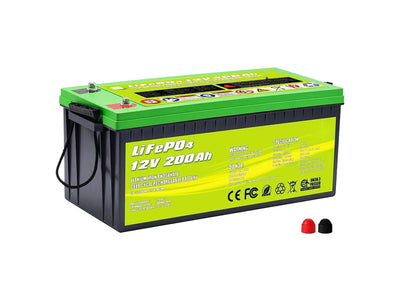
Best LiFePO4 Battery for Solar and RV Banks
Standalone LiFePO4 batteries drop straight into a solar or RV wiring setup. They replace lead-acid units at the same voltage with far more usable capacity. Pick these if you already own an inverter and charge controller.

12V 200Ah LiFePO4 Lithium Battery - Lightweight Deep Cycle BMS
$729.00
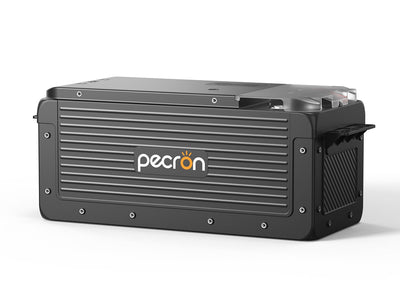
Shop NowBest All-in-One LiFePO4 Power Station for Home Backup
An all-in-one power station puts the lithium battery, inverter, and BMS in one box. You plug in and go, with solar input ready. Pick this if you want backup power without wiring a custom battery system.

Real scenario: the off-grid cabin that kept dying at 3 a.m.
Picture a couple running a small off-grid cabin on four AGM lead-acid batteries. Every cold night the fridge quit around 3 a.m. The batteries read half full, but the cold and the 50% DoD limit left almost nothing usable.
They swapped to one LiFePO4 battery pack of the same rating. Now they pull 90% of the capacity, the fridge runs till dawn, and the battery shrugged off winter. Same solar panels, far more real power.
The Bottom Line
Lead-acid still has a place for rare-use, budget backup. For anything you cycle often, lithium iron phosphate wins on lifespan, usable capacity, efficiency, weight, and cost of ownership. You pay more once instead of a little many times.
Here are your next steps to choose the right battery:
- Add up the watt-hours your gear needs per outage or per day.
- Double that number for lead-acid to cover the 50% usable limit.
- Decide if the battery will cycle daily (pick lithium) or just wait for outages (lead-acid can work).
- Check your climate; add a self-heating LiFePO4 battery if you charge below freezing.
- Match the voltage to your inverter or choose an all-in-one power station.
- Browse our LiFePO4 batteries and power stations above, or reach out and we will size it with you.
Frequently Asked Questions
What is the main difference between lead-acid and lithium-ion batteries?
Lead-acid batteries store energy using lead plates and sulfuric acid. Lithium-ion batteries use lithium compounds, most often lithium iron phosphate for home use. Lithium lasts longer, weighs less, and gives more usable capacity.
What does LiFePO4 mean?
LiFePO4 stands for lithium iron phosphate, also called LFP. It is a lithium battery chemistry known for a long cycle life and strong safety. It resists thermal runaway better than the lithium compounds in phones.
What are VRLA and SLA batteries?
VRLA means valve-regulated lead-acid, and SLA means sealed lead acid. Both are lead-acid battery types like AGM and gel. They skip water top-ups but still follow the 50% depth of discharge rule.
How many cycles does a lithium battery last versus lead-acid?
A LiFePO4 battery lasts 3,000 to 6,000+ cycles. Flooded and AGM lead-acid batteries last 300 to 500 cycles. That is why lithium often outlives several lead-acid banks.
Is lithium really cheaper than lead-acid?
Not on day one. Lead-acid has a lower upfront cost. But lithium has a lower total cost of ownership because it lasts longer and gives more usable capacity. Cost per cycle is far lower.
How much more usable capacity does lithium give?
Lead-acid gives about 50% usable capacity. Lithium gives 80 to 100%. So one lithium battery can replace two lead-acid batteries of the same rating.
Which battery charges faster?
Lithium supports faster charging and higher discharge rates. It also has higher round-trip efficiency, near 95 to 99%. That means less wasted energy from your solar panels.
Which battery is best for solar energy storage?
Lithium is best for most solar applications. Daily charging and discharging rewards its long cycle life and high usable capacity. Lead-acid can still work for rare-use backup on a tight budget.
Do lithium batteries work in cold weather?
Yes, and they hold capacity better than lead-acid in the cold. But you should not charge a standard LiFePO4 battery below freezing. Use a self-heating model if you charge in sub-freezing temperatures.
Do lithium batteries need maintenance?
No. LiFePO4 batteries are maintenance-free thanks to a built-in battery management system. Flooded lead-acid batteries require regular maintenance like water top-ups and venting. Sealed lead acid needs less care but still watches voltage.
References
- National Renewable Energy Laboratory (NREL). "Economics of Lithium-Ion and Lead-Acid Batteries in Micro-grids." U.S. Department of Energy. docs.nrel.gov/docs/fy19osti/73238.pdf
- Battery University. "BU-808: How to Prolong Lithium-Based Batteries." batteryuniversity.com
- Battery University. "BU-201a: Absorbent Glass Mat (AGM)." batteryuniversity.com
- U.S. Department of Energy, Office of Electricity. "Energy Storage." energy.gov/oe/energy-storage-0