

Last updated: July 5, 2026
Quick Answer
A commercial natural gas generator gives your business backup power straight from the utility gas line. Most small businesses need a 30 to 80 kW unit sized for continuous operation at about 75% load. Natural gas connects to a near-endless fuel supply, burns cleaner than diesel, and often costs less per unit of energy.
Who This Is For
This guide is for you if you run a restaurant, clinic, retail shop, or small facility.
You need power that stays on when the grid does not. You want to compare natural gas power solutions against diesel generators. And you want the right size without paying for capacity you will never use.

Why do businesses choose natural gas generators?
Natural gas generators run on fuel piped in from the utility. That means no storage tanks, no refueling trucks, and no fuel to babysit during a long outage.
A diesel unit needs an on-site tank and emergency deliveries. A natural gas generator taps a supply line that keeps flowing on its own. For a small business, that is one less thing to manage on a bad day.
These units are built for continuous power, not the odd weekend camping trip. Their robust engines are designed for continuous duty, which makes them versatile and reliable for commercial applications. That reliable power is why so many owners pick natural gas for both standby and prime power roles.
Natural gas vs diesel: which fuel fits your business?
Natural gas wins on convenience and clean burn. Diesel wins when you need guaranteed on-site fuel during a disaster. Your building and your risk tolerance decide the answer.
Natural gas is often cheaper per unit of energy, and it produces fewer emissions than diesel fuel. But diesel stores energy on-site, so it keeps running even if a pipeline goes down. Here is the honest trade-off, side by side.
| Factor | Natural Gas Generator | Diesel Generator |
|---|---|---|
| Fuel supply | Utility pipeline, virtually unlimited | On-site tank, needs refills |
| Fuel costs | Lower fuel costs in most regions [2] | Higher per unit of energy |
| Emissions | Lower emissions, less NOx [3] | More NOx and particulates |
| Disaster resilience | Depends on intact gas line | Runs on stored fuel [1] |
| Load pickup | Large sets may step up slower | Fast full-load pickup |
Think of it like a coffee shop water line versus bottled water. The pipe never runs dry, but it depends on the city main staying open. Bottled water is yours to keep, yet someone has to haul more when you run low.
How do you size a commercial natural gas generator?
Size for the load you must keep running, then add headroom. Most light commercial buildings size a standby generator for continuous operation at 70 to 80% load. That range gives you efficiency and a long service life.
A common mistake is buying the biggest unit on the lot. Oversizing wastes money and can make the engine run cold and wet-stack. Match the generator set to your real power requirements, not a guess.
| Business Type | Approx. Power Output | Notes |
|---|---|---|
| Small retail or office | 25kW to 30kW | Lights, POS, HVAC blower, coolers |
| Restaurant or cafe | 40 to 60 kW | Walk-in coolers, hoods, kitchen loads |
| Clinic, dental, or vet | 45 to 80 kW | Critical applications, refrigerated meds |
| Grocery or convenience | 60 to 100 kW | Heavy refrigeration and freezer banks |
| Small facility or light industrial | 100 to 400 kW | Whole-building backup power or primary power |
Larger industrial sites scale well past this chart. Industrial natural gas generators reach 400 kW, and heavy industrial power jobs run up to 1300 kW and beyond. Some plants even use these engines for cogeneration, capturing waste heat for extra savings.
Every install pairs the generator with a transfer switch. An automatic transfer switch senses the outage and starts your unit within seconds. That handoff is what turns a parked engine into real uptime.
What does a commercial natural gas generator cost to run?
Fuel is the biggest operating cost after the purchase. A 100 kW unit at 75% load burns roughly 900 to 1,200 cubic feet of natural gas per hour. At typical gas prices, that lands near $9 to $18 per hour.
The cost of the generator itself is only part of the math. Factor in fuel costs, routine maintenance, and the transfer switch install. Even so, lower fuel costs make natural gas a strong long-term power solution for continuous power [2].
Routine maintenance is light and predictable. You change oil and filters, test the automatic transfer switch, and run a monthly exercise cycle. A clean-burning natural gas engine keeps that upkeep simple.
What codes apply? NFPA 110, permitting, and 2026 standards
NFPA 110 is the governing standard for emergency and standby power systems. For Level 1 systems, it targets about 96 hours of on-site fuel, which tends to favor diesel for that class [1]. Your engineer will confirm which level your building needs.
Gaseous-fueled systems have a key rule. The gas line must connect on the supply side of the building's main gas shutoff valve. It must be marked as feeding an emergency generator, so firefighters shutting the main gas do not also kill your power supply [1].
One honest limit: large natural gas gensets may not meet the 10-second transfer window for Level 1 Type 10 systems. They can step up to full-rated load a touch slower than diesel. Your designer will weigh that against your critical applications.
Permitting moved faster in 2026. NFPA 30 and 37 now push secondary containment on sub-base tanks. And "non-emissions" pre-construction, like the concrete pad, conduit trenching, and ATS install, is now allowed before the final air permit. That change can shave months off deployment.
Do natural gas generators produce fewer emissions?
Yes. Natural gas power generation burns cleaner than diesel fuel and releases less NOx and fewer particulates [2][3]. That makes it a more sustainable power source for stores in tight urban zoning.
Lower emissions can also ease your air permit. Cleaner exhaust often means fewer controls to bolt on. For commercial and industrial owners near homes or schools, that matters.

Which commercial natural gas generators should you buy?
For light commercial use, look for a standby generator sized 30 to 100 kW with a weatherproof enclosure and a matched automatic transfer switch. Below are two proven lines we carry for small-business power needs.
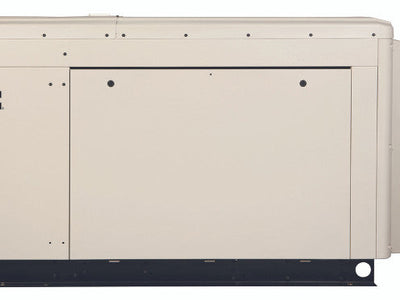
Cummins Quiet Connect
Cummins builds some of the most trusted natural gas engines in the trade. The Quiet Connect line delivers consistent power in a quiet, low-profile enclosure. Generators by Cummins pair a robust engine with a clean control package, so they are versatile and reliable for restaurants, clinics, and retail.

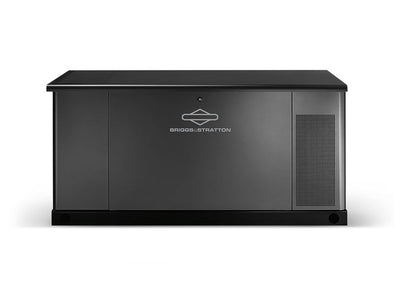
Briggs Fortress
The Briggs Fortress line is built for small commercial and light industrial sites. These liquid-cooled units bring solid power output in a compact footprint. They fit tight lots where a large industrial set will not go.

How to pick between them
Start with your load sizing, then match fuel type and enclosure. Cummins scales higher for growing facilities and prime power applications. Briggs fits smaller sites that want reliable backup power without extra bulk.
Picture a three-day outage in July.
You own a small grocery. A storm drops the grid, and it stays dark for 72 hours. Your neighbor with a diesel unit spends day two hunting for a fuel delivery.
Your natural gas generator never blinks. It pulls fuel from the pipeline the whole time, and your freezers stay cold. That is the difference between a lost weekend and business as usual.
The Bottom Line
A commercial natural gas generator is a smart, clean, low-hassle way to protect a small business. It offers reliable power, lower fuel costs, and fewer emissions than diesel. The one caveat is fuel supply during a major disaster, which your engineer can plan around.
Here is how to move forward.
- Add up your must-run loads, then size for 70 to 80% continuous load.
- Match your kW target to a Cummins or Briggs unit from the table above.
- Confirm NFPA 110 level and gas-line placement with a local engineer.
- Order the generator with a matched automatic transfer switch.
- Schedule the concrete pad and conduit early to shave weeks off install.
Frequently Asked Questions
What size natural gas generator does a small business need?
Most small businesses need a 30 to 80 kW standby generator. Restaurants and clinics often land near 45 to 60 kW. Size for your must-run loads at about 75% continuous load.
Can a natural gas generator run my whole business?
Yes, if you size it for the full building load. Many owners choose a smaller unit to cover only critical applications. Both approaches work with the right transfer switch.
How do I size for future growth?
Add 20 to 25% headroom above today's load. That covers a new cooler or added HVAC. Cummins units scale up well for growing power needs.
Is natural gas cheaper than diesel for a generator?
In most regions, yes. Natural gas is often cheaper per unit of energy compared to diesel. You also skip the cost and hassle of on-site fuel storage.
How much natural gas does a 100 kW generator use per hour?
A 100 kW unit at 75% load burns about 900 to 1,200 cubic feet per hour. At typical gas prices, that is roughly $9 to $18 per hour of runtime.
Do natural gas generators produce fewer emissions than diesel?
Yes. Natural gas burns cleaner and produces fewer emissions, including less NOx and fewer particulates. That can make air permits easier in tight zoning areas.
What does routine maintenance cost?
Upkeep is light and predictable. You handle oil, filters, and a monthly exercise cycle. A clean natural gas engine keeps routine maintenance simple and low-cost.
Does a natural gas generator meet NFPA 110?
It can, depending on your system level. Level 1 systems target about 96 hours of on-site fuel, which often favors diesel. Your engineer confirms the right path for your building.
Will my generator work if the gas line goes down?
Natural gas depends on an intact supply line. A major disaster that cuts the pipeline also cuts fuel. Diesel keeps its own fuel on-site, which is the key trade-off.
How long does installation take?
It varies by permit and site work. In 2026, you can pour the pad and run conduit before the final air permit. That change can shave months off the full timeline.
References
- National Fire Protection Association. "NFPA 110: Standard for Emergency and Standby Power Systems." nfpa.org.
- U.S. Energy Information Administration. "Diesel fuel and the environment" and "June 2026 Short-Term Energy Outlook." eia.gov.
- U.S. Environmental Protection Agency. "Nitrogen Oxides (NOx) and Criteria Air Pollutants under the Clean Air Act." epa.gov.
- Cummins Inc. "Commercial Standby and Quiet Connect Generators." cummins.com.