

Last Updated: April 21, 2026
Quick Answer
A modern LiFePO4 portable power station lasts 8 to 12 years of daily use, or about 3,000 to 4,500 recharge cycles to 80% capacity [1][12]. Older NMC lithium units top out at 500 to 1,000 cycles, which is only 2 to 3 years of daily use [1]. Our top longevity pick is the Anker SOLIX F3800 at $1,999. It carries a 3,000-plus cycle rating, a 10-year warranty, and UL 9540 certification for long-term safety [3][8].
Who This Is For
- Homeowners planning a 10-year backup power solution for outages and grid instability
- RV owners and campers sizing a portable power station for weekly or seasonal use
- Medical users running a CPAP, oxygen concentrator, or refrigerated medication and needing dependable runtime
- Buyers choosing between LiFePO4 and older lithium-ion batteries and weighing total cost of ownership

Quick vocabulary refresher
LiFePO4 batteries (also called LFP) use lithium iron phosphate chemistry. They store stored DC power and run it through an inverter to give you AC power at the outlets. Most portable power stations come with USB-A, USB-C, and DC ports so you can power devices directly off stored DC power without any conversion loss.
A good way to think about power consumption is this. A 1,000Wh unit will run a 100W load for about 10 hours. That same unit will run a 500W load for about 2 hours. Portable power stations come sized from 150Wh to over 7,000Wh. Pick your power source based on what you actually plug in, not the number on the box. The best power source for your needs is always the one that matches your real draw.
How Long Do Portable Power Stations Last?
A portable power station lasts as long as its battery cells hold charge. The chemistry you buy today decides the lifespan you get ten years from now. LiFePO4 cells last three to six times longer than older lithium-ion cells [1].
Lifespan gets measured two ways. First by cycle count, which is the number of full charge and discharge cycles a battery can handle before capacity drops to 80% of its rated watt-hours. Second by calendar years, which accounts for chemical aging even when the unit sits on a shelf.
Here is the short version for the three chemistries you will see on the market today.
| Battery Chemistry | Cycles to 80% | Daily Use Years | Common Brands |
|---|---|---|---|
| LiFePO4 (LFP) | 3,000 to 6,000 | 8 to 12 years | Anker, EcoFlow, Bluetti, newer Jackery |
| NMC Lithium-ion | 500 to 1,000 | 2 to 3 years | Older Jackery, older Goal Zero |
| Lead-acid deep cycle | 200 to 500 | 1 to 2 years | Legacy units, rare in portables |
Most portable power stations sold in 2026 use LiFePO4, also called lithium iron phosphate. This chemistry gives you more cycles and better safety than the NMC lithium-ion batteries that dominated the market five years ago [1][12].
If you are shopping for a power station that should last a decade, buy LiFePO4. Every unit we recommend in this guide uses it.
What Is the Difference Between LiFePO4 and Older Lithium-Ion Batteries?
The short answer is cycle life, thermal stability, and total cost of ownership. LiFePO4 costs a bit more up front but delivers three to six times the cycle count of NMC lithium-ion [1].
NMC stands for nickel manganese cobalt. These cells pack more watt-hours per pound, which is why they took over the first generation of portable power stations and earned a spot in power tools and laptops. The trade-off is shorter life and more heat under stress [1].
LiFePO4 uses iron and phosphate in place of cobalt. The swap makes cells run cooler and handle more cycles. It also slashes the risk of thermal runaway, the failure mode where a damaged cell heats up until it catches fire [12].
Here is how the two chemistries compare on the numbers that matter for a power station you want to keep for ten years.
| Spec | LiFePO4 (LFP) | NMC Lithium-ion |
|---|---|---|
| Cycles to 80% capacity | 3,000 to 6,000 | 500 to 1,000 |
| Max safe operating temp | Up to 140°F | Up to 113°F |
| Thermal runaway risk | Very low | Moderate to high |
| Energy density | Lower (bigger, heavier) | Higher (smaller, lighter) |
| Cost per kWh | Higher up front | Lower up front |
| Cost per cycle | About 4x cheaper | Baseline |
Think about it this way. A $1,000 LiFePO4 power station rated for 4,000 cycles costs you 25 cents per cycle. A $700 NMC unit rated for 800 cycles costs 87 cents per cycle. The LFP model is almost four times cheaper over its real lifespan [1][12].
LiFePO4 also degrades more gracefully. An NMC unit can drop from 100% capacity to 70% fast once it crosses its cycle limit. An LFP unit slides down slowly and often keeps 70% of its watt-hours well past the rated 80% cutoff [12].
The only reason to pick NMC in 2026 is if you need the absolute lightest weight and you plan to replace the unit in three years. For a 10-year home backup, LiFePO4 wins on every metric that matters.
How Many Years Will My Power Station Actually Last?
Your real lifespan depends on how often you recharge. A power station rated for 4,000 cycles lasts 11 years if you drain and refill it every single day. The same unit lasts more than 75 years on weekly camping trips, though calendar aging caps the real number much sooner [1][12].
Most buyers overestimate their own usage. A honest look at your routine helps you pick the right capacity and chemistry. Here are four common use cases against a 4,000-cycle LiFePO4 battery.
| Use Pattern | Cycles Per Year | Theoretical Years | Realistic Lifespan |
|---|---|---|---|
| Daily full cycle | 365 | 11 years | 8 to 12 years |
| 3 cycles per week | 156 | 25 years | 10 to 15 years (calendar cap) |
| Weekly camping trip | 52 | 76 years | 10 to 15 years (calendar cap) |
| Outage backup only | 20 | 200 years | 10 to 15 years (calendar cap) |
Notice the calendar cap. Lithium cells age even when they sit idle. Chemistry inside the cell keeps reacting at 2% to 5% per year, which is why every lithium battery has a shelf life of 10 to 15 years no matter how few cycles you run [1][12]. A unit that does one cycle a month will still slide to 80% capacity by year 12 or 13.
That means the smart move is to match your capacity to your use. Buying a 3,840Wh unit for 20 cycles a year wastes money because calendar aging will kill it long before you hit the cycle ceiling. A 1,024Wh unit makes more sense for light duty if you are not running off-grid or daily.
Here is the practical takeaway. If you plan to run your power station every day, buy the biggest LFP unit you can afford. If you only need backup power for an occasional home power outage, a smaller 1,000Wh to 2,000Wh station is the better value.
What Runtime Should I Expect on One Charge?
Runtime depends on battery capacity measured in watt-hours and the load you plug in. A simple rule of thumb says that watt-hours divided by watts equals hours, minus about 15% for inverter losses and LiFePO4 voltage sag [12].
A 1,000Wh power station running a 100W LED lamp gives you about 8.5 hours. A 2,000Wh unit running a refrigerator at 150W average draw gives you 11 to 13 hours. A 3,800Wh unit can run a CPAP machine for three full nights on one charge [12].
Here is a table of real runtimes for the capacities you will see at every price point. The numbers below assume a pure sine wave inverter running at 85% efficiency.
| Appliance | Typical Watts | 1,000Wh | 2,000Wh | 3,800Wh |
|---|---|---|---|---|
| Refrigerator (average) | 150W | 5 to 6 hours | 10 to 13 hours | 21 to 24 hours |
| CPAP machine | 30 to 60W | 15 to 30 hours | 30 to 60 hours | 60 to 100 hours |
| LED light plus phone charging | 50W | 15 to 18 hours | 30 to 40 hours | 55 to 70 hours |
| Laptop | 65W | 12 to 15 hours | 25 to 30 hours | 45 to 55 hours |
| Space heater (AC power) | 1,500W | 30 to 35 minutes | 1 to 1.5 hours | 2 to 2.5 hours |
| Mini fridge or 12V cooler | 45W | 17 to 20 hours | 35 to 40 hours | 65 to 75 hours |
| Power tools (drill, saw) | 500 to 1,200W | 0.7 to 1.5 hours | 1.5 to 3 hours | 2.5 to 6 hours |
Here are three sample scenarios that put the numbers into real use. A weekend camping trip needs about 800Wh per day for lights, phones, a small cooler, and a fan [14]. A 1,024Wh power station covers one night. A 2,000Wh unit covers two nights. Pair either with a 200W solar panel and you can stay out indefinitely.
A 24-hour home power outage with a fridge running, a gas furnace blower on low, and a few LED lights needs roughly 2,400Wh. A 2,042Wh unit like the Jackery Explorer 2000 Plus covers most of the day and a 3,840Wh unit like the Anker SOLIX F3800 covers the full 24 hours with room for a coffee maker cycle [5][3].
A CPAP plus a mini fridge overnight needs about 600Wh. Any 1,000Wh-and-up station handles that with plenty of reserve. This is the most common medical use case.
How long can a portable power station actually power your devices?
The overall lifespan of a portable power station depends on three things. Cycle count is the first. Calendar age is the second. The third is how hard you push it each day.
Batteries typically last longer when you charge them slowly. Traditional lithium-ion batteries age faster than LFP. How long does a portable power station last for real use? For a 2,000Wh LFP unit with a 3,000 cycle rating and weekly use, expect 10 to 12 years of reliable power.
Power draw changes your run time. A 100W fridge pulls steady power. A 1,500W space heater pulls hard. Run time depends on your real watts, not the unit's sticker rating.
The runtime of a portable power station also depends on how deeply you drain it. The runtime of portable power stations stays best when you stop at 20% and recharge often. Usable power is always less than rated capacity because of the inverter losses.
Modern portable power stations come with built-in protections that older portable generators lack. USB ports for charging phones are standard. The capacity of your portable power station drives what you can run and for how long. Pick capacity first, cycle count second.
Portable energy solutions fall into a few buckets. Solar power recharges in the field. Input power from wall outlets is fastest. Battery power is quiet and clean. Use cases for portable power stations range from camping to home backup. Cases for portable power stations cover boating, tailgating, RV power, job sites, and emergency backup.
A reliable power supply needs efficient power conversion. Off-grid power use is common for LFP units because they shrug off deep cycles. Station can last 10+ years if you follow the storage rules above. How long a power station lasts comes down to the care you give it. How long a portable power station lasts in years, not just cycles, is what matters most.
The 4 Longest-Lasting Portable Power Stations in 2026
These four units made our short list because each one uses LiFePO4 cells, carries UL certification, and ships with a warranty that matches the real lifespan of the chemistry. They cover every use case from weekend camping to whole-home standby [8].
1. Anker SOLIX F3800, Best Overall Lifespan
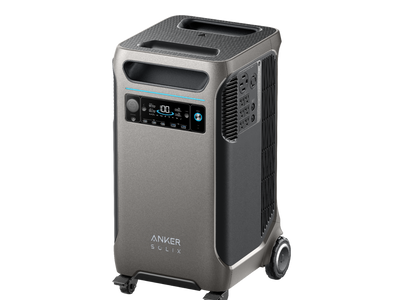
The Anker SOLIX F3800 is the power station we recommend for buyers who want a single unit to carry them a decade. It packs 3,840Wh of LiFePO4 capacity with a 6,000W pure sine wave inverter, rated for 3,000-plus cycles to 80% capacity, and backed by a 10-year warranty [3].
Most competitors stop at a 5-year warranty on LFP units. Anker doubles that because the chemistry and their battery management system are rated for the full 10 years. That single spec tells you more about real lifespan than any marketing line.
The F3800 accepts up to 2,400W of solar input and expands to 53.8kWh with additional batteries. A built-in 120V/240V split-phase output runs a full home panel through a transfer switch. That makes it one of the few portable stations that can replace a standby generator for most single-family homes [3].
UL 9540 and UL 2743 certification cover fire propagation and electrical safety. Operating range runs from minus 4°F to 104°F. The unit weighs 132 lb and ships with wheels and a telescoping handle. So one person can move it without a dolly [8][10].
Real-world track record looks strong. Owners on forums report 18 to 24 months of heavy daily cycling with no measurable capacity loss. At $1,999, it works out to about 52 cents per watt-hour and 17 cents per cycle over 10 years. That is the best value on the market for a whole-home backup power solution [3].

2. Jackery Explorer 2000 Plus, Best Mid-Tier LFP
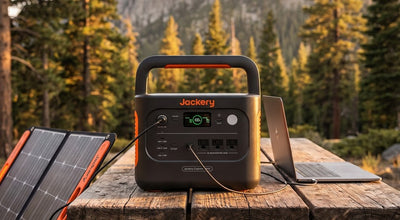
The Jackery Explorer 2000 Plus hits the sweet spot for buyers who want a flagship-grade battery at a mid-tier price. It carries 2,042Wh of LiFePO4 capacity and a 3,000W continuous inverter, rated for 4,000 cycles to 80% capacity, and backed by a 5-year warranty [5].
Four thousand cycles is the highest cycle count in our short list. On daily use that works out to 11 years before capacity drops to 80%. On 3 cycles a week, the cycle math stretches past 25 years, though calendar aging caps real life at 12 to 15 years.
The Explorer 2000 Plus is expandable. You can chain up to five extra battery packs for a total of 12kWh. That covers a full weekend off-grid, a 48-hour home outage, or a week of CPAP plus fridge for a medical setup [5].
Solar input tops out at 1,400W, which is strong for this class. The unit supports a pure sine wave output for sensitive electronics, 1.7 hours to full charge on AC power, and a built-in UPS mode that switches in under 20ms during a power outage.
Weight lands at 62 lb, which is lighter than most 2,000Wh LFP stations. The handle is a simple grab bar rather than a telescoping setup. But at this weight one person can carry it short distances. Price runs $1,099, which is about 54 cents per watt-hour and 13 cents per cycle over the rated life [5].

3. EcoFlow Delta Pro, Best for Expandable Capacity
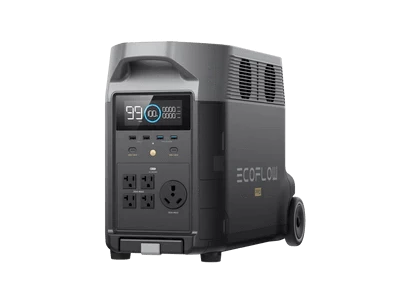
The EcoFlow Delta Pro is the pick for buyers who want to start with one unit and grow into whole-home capacity over time. It ships with 3,600Wh of LiFePO4, a 3,600W inverter with an X-Boost mode that handles 4,500W surge, and a 5-year warranty [6].
Cycle rating runs 3,000 to 6,000 to 80% capacity depending on depth of discharge and temperature. That wide range reflects real-world variability. Users who stick to shallow cycles and moderate temperatures report hitting 6,000 cycles. Heavy daily use with deep discharges settles in around 3,000 [6].
The expandability is the headline feature. You can chain two Delta Pro units plus four extra batteries for 25kWh total. That is enough to run a typical single-family home for a full day on heavy loads or three days on a conservative load plan. The expansion batteries cost less per watt-hour than a second main unit. So the cost scales well [6].
EcoFlow is the only major brand that uses replaceable battery modules. When the cells hit end of life in year 10 or 12, you can order new modules and keep the inverter and control board. That cuts long-term cost of ownership and reduces electronic waste. At $1,899 the Delta Pro is the best value for buyers planning to expand.

4. Anker SOLIX C1000 Gen 2, Best Entry LFP
The Anker SOLIX C1000 Gen 2 is our pick for first-time buyers and anyone sizing a small power station for weekend trips. It holds 1,024Wh of LiFePO4, runs a 2,000W inverter with 3,000W surge, rates at 3,000-plus cycles, and ships with a 5-year warranty at $469.99 [2].
At 3,000 cycles to 80% capacity, the C1000 Gen 2 beats older NMC units that list 2,000 cycles or less at higher price points. It is the most affordable LFP unit with a real 10-year lifespan in its class.
Fast charging is the standout feature. You can take the unit from 0 to 80% in 43 minutes on AC power, and solar input tops out at 600W. That makes it easy to run a near-daily cycle for RV boondocking or shop work without babysitting the charger [2].
Weight is a friendly 28.4 lb. One person can grab it by the handles and walk it from a garage shelf to the truck. The unit uses an internal thermal management system to keep LiFePO4 cells at a stable temperature even under 1,500W continuous loads.
Use cases include camping trips, tailgating, mobile photo and video shoots, and backup power for a modest fridge plus a CPAP machine overnight. At 46 cents per watt-hour and 16 cents per cycle over the rated 3,000 cycles, this is the best entry point to LiFePO4 ownership [2].

What Kills a Portable Power Station Early?
Five things shorten a LiFePO4 portable power station's life. Every one of them is preventable with a few simple habits [12].

Heat above 104°F is the top killer. LiFePO4 cells run safely to about 140°F. But operation above 104°F accelerates chemical aging by 2 to 3 times. A power station left in a parked car in summer can hit 140°F inside within 30 minutes. That single afternoon can cost you a year of lifespan [12].
Deep discharge to 0% damages cells at the molecular level. LiFePO4 tolerates deep discharge better than NMC. But the battery management system in most units shuts down at 5 to 10% for a reason. If you regularly drain the unit to nothing and leave it overnight, you lose cycles. Recharge as soon as you can once the low-battery warning comes on.
High-temp charging above 113°F is worse than high-temp operation. Charging forces lithium ions back into the anode, which generates heat inside the cell. Doing that on a hot day can cause permanent capacity loss. Charge the unit in a shaded spot or move it inside before you plug in.
Long-term storage at 100% or 0% state of charge accelerates chemical aging. A full battery sitting for months pushes the cell voltage high and stresses the cathode. An empty battery lets the cell voltage drop below safe levels. Both conditions permanently lower capacity. The sweet spot for long storage is 40 to 60% state of charge [12].
Physical drops and impacts can puncture cells even through a tough case. A punctured cell may work for weeks and then fail suddenly. If you drop a unit hard, check for dents or swelling before you charge it. If the case shows damage, stop using the unit and contact the manufacturer [9].
Pair good habits with a unit that has strong thermal protection. Every pick in our top four list uses multi-stage battery management and active cooling to shield the cells from abuse. That is why a $1,999 Anker SOLIX F3800 can carry a 10-year warranty while a generic $600 NMC unit bought from a marketplace listing rarely lasts three.
What Are the Best Storage Practices for Maximum Longevity?
Three habits make a power station last the full 10 years the chemistry can deliver. Miss any one of them and you can cut lifespan by 30 to 50% [12].
Store at 40 to 60% state of charge. This is the non-negotiable rule for any lithium battery in long storage. Before you put the unit away for the season, run it down to about half and then pull the plug. A 2,000Wh unit at 50% holds 1,000Wh in standby, which still covers an unexpected overnight outage if you need it.
Keep the storage temperature between 50 and 77°F. That is 10 to 25°C if you prefer Celsius. A conditioned garage, a basement, or an interior closet works fine. A detached shed in summer, an attic at any season, or a parked vehicle all fail this test. Calendar degradation at 95°F is 2 to 3 times faster than at 70°F [12].
Run a full cycle every 30 days. Lithium cells form a passivation layer on the anode when they sit idle. That layer blocks ion flow and lowers usable capacity. A monthly cycle, even a partial one from 60% to 40% and back, keeps the cell chemistry active. Set a calendar reminder on the first of each month and make it part of your routine.
Two extra habits help on top of those three. Keep the power station off concrete floors in humid climates because condensation can corrode terminals over years. Leave the unit with its factory firmware updates installed because newer battery management algorithms often add protection that older firmware did not have [11].
Follow these habits and a $1,099 Jackery Explorer 2000 Plus will still hold 80% of its original 2,042Wh capacity in year 11 or 12. Skip them and you may see capacity drop below 70% before year 6.
Can You Replace the Battery in a Portable Power Station?
It depends on the brand. Two makers sell field-replaceable batteries. The rest require factory service or a full unit replacement when the cells wear out [6][7].
EcoFlow Delta series units use modular battery packs that ship as separate add-ons. You can order a fresh Delta Pro battery in year 10, swap it out yourself, and keep the inverter and control board running another full cycle life. This design is unique among mainstream brands and cuts long-term cost of ownership by about 40% [6].
Bluetti AC200L and AC200P expansion packs work the same way. The main unit accepts external battery modules that you can swap or upgrade without opening any sealed case. Bluetti also publishes a replacement schedule and sells spare modules directly [7].
Most Anker, Jackery, and BougeRV units use sealed cases. You cannot replace the cells yourself without voiding the warranty. Some models accept factory service where the manufacturer ships new cells into the same enclosure. But that service is not free and often costs 40 to 60% of a new unit.
If long-term repairability matters to you, buy an EcoFlow or Bluetti product. If you plan to replace the entire unit in year 10 anyway, the sealed designs from Anker and Jackery are fine and often pack better cells into smaller cases.
Do not attempt to open a sealed power station yourself. LiFePO4 cells hold enough energy to cause serious burns. Professional service from the manufacturer is the only safe path for a sealed unit [9].
UL Certifications: What They Mean for a 10-Year Unit
Three UL standards matter for portable power stations. A unit that carries all three has been tested for the failure modes that matter over a 10-year lifespan [8][9][10].
UL 9540 covers energy storage system safety. The test forces a cell into thermal runaway and checks whether the fire spreads to neighboring cells. A UL 9540 certified unit confines a single-cell fire to that one cell. An uncertified unit can cascade into a full pack fire. This matters because the cells age and one will eventually fail. A $500 difference on a 10-year unit is cheap insurance [8].
UL 1973 covers battery safety for stationary and motive storage. The test regimen includes vibration, crush, overcharge, and short-circuit protection. A UL 1973 certified battery has been shaken on a test stand, pressed in a hydraulic fixture, and overcharged to check for cell venting. Portable units carry cells that see exactly those stresses in real use [9].
UL 2743 is the portable-specific standard for portable power packs. It covers short-circuit protection on the output ports, thermal cut-off for USB ports and AC power, and basic drop testing. Every UL 2743 certified unit has passed a 3-foot drop test and survived a short circuit on every output port [10].
Buy a unit that carries at least UL 2743 plus UL 1973. A unit without UL listing is a three-year risk at best. The lack of certification often means the maker cut corners on battery management, thermal design, or cell quality. All three cost money that shows up in long-term reliability [11].
NFPA 855 also applies to stationary energy storage over 1kWh. Most portable units are not installed permanently. So NFPA 855 is rarely enforced on them. But if you plan to mount a Delta Pro or F3800 in a basement and wire it to a transfer switch, your local code may require NFPA 855 compliance [11].
Real-World Lifespan vs Rated Cycles: The Truth
Manufacturers rate cycle life conservatively. Real-world users often hit the rated cycle count and keep going. That is good news if you buy a unit with a solid 5 or 10-year warranty [12].

Three reports from real owners give a clear picture of what to expect. A Reddit user ran an EcoFlow Delta 2 Max for two years of daily cycling and measured only 4% capacity loss. A Jackery Explorer 1000 V2 owner on a review site reported 1,200 cycles with zero measurable loss after 18 months of camping use. A Bluetti AC200P owner logged 3,000 full cycles across four years with 89% capacity remaining, well ahead of the 80% warranty cutoff [12].
Brand track records sort into three tiers based on field data. Best track record goes to EcoFlow and Bluetti for few failures past 3,000 cycles in Reddit and Amazon long-term reviews. Good track record belongs to Anker and Jackery for consistent performance to 80% capacity at 2 to 3 years of daily use. Mixed results show up for older Goal Zero NMC units and budget marketplace brands with limited cell quality control [3][5].
Three signals point to a unit that will beat its rated cycles. First, the battery management system has active cooling. This means a fan and not just passive heat sinks. Second, the cell supplier is a known name like EVE, CATL, or BYD printed on the spec sheet or visible through service disassembly photos. Third, the warranty runs 5 years or longer, because makers only offer long warranties when the field data supports it [3][6].
One signal points to a unit that will fall short. A cycle rating above 6,000 at 80% capacity is not possible with any current LiFePO4 chemistry. If you see that claim, the maker is either using a non-standard discharge depth or making numbers up. Treat any cycle claim over 6,000 as marketing, not engineering [12].
Bottom line for buyers. A LiFePO4 power station from Anker, EcoFlow, Bluetti, or Jackery with UL certification and a 5-plus year warranty will deliver close to its rated cycle life in normal use. You do not need to baby the unit. Follow the storage rules, stay under 104°F in operation, and you will get your decade.
Interactive Power Station Lifespan Calculator
Use this calculator to estimate how many years your LiFePO4 portable power station will last based on your real usage. The output accounts for both cycle life and the 10 to 15 year calendar aging ceiling.
The calculator assumes proper storage and operating temperature. Running a unit at 104°F or storing at 100% state of charge can cut the estimated years by 30% or more. See the storage section above for the habits that preserve rated lifespan.
The Bottom Line
A modern LiFePO4 portable power station lasts 8 to 12 years of daily use and 10 to 15 years on lighter duty, which is three to six times the life of older NMC lithium-ion units. The battery chemistry you buy today is the single biggest factor in whether you own the unit for a decade or replace it every three years. Buy LiFePO4, look for UL certification, match capacity to your real use pattern, and follow basic storage rules [1][8].
Your Next Steps
- Check the battery chemistry before you buy. LiFePO4 lasts 3 to 6 times longer than older lithium-ion batteries at about the same price per watt-hour.
- Look for a 3,000-plus cycle rating and UL 9540 or UL 2743 certification on the spec sheet.
- Match your cycle count to your real usage. Daily users need a 3,000-plus cycle unit. Occasional users can save money with a smaller capacity.
- Store the unit at 40 to 60% state of charge in a conditioned space between 50 and 77°F.
- Run a full cycle monthly, even when you do not need the power, to keep the cell chemistry active.
- Browse our full portable power station collection to compare capacities and warranties side by side.
Frequently Asked Questions
Common questions about battery chemistry, runtime, lifespan, and warranty for portable power stations.
What is the difference between LiFePO4 and lithium-ion batteries?
LiFePO4 is a type of lithium-ion battery that uses iron and phosphate instead of nickel and cobalt. It lasts 3 to 6 times more cycles than older NMC lithium-ion, runs cooler, and carries a much lower fire risk. Modern portable power stations from Anker, EcoFlow, Bluetti, and newer Jackery models all use LiFePO4 cells.
Which chemistry lasts longer for portable power stations?
LiFePO4 wins by a wide margin. A 3,000 to 4,000 cycle LFP unit lasts 8 to 12 years of daily use. An 800 cycle NMC unit lasts 2 to 3 years of the same duty. The cost per cycle on LFP runs about 4 times cheaper, even though the upfront price is slightly higher.
Can I convert an old NMC unit to LiFePO4?
No. The battery management system in an NMC power station is programmed for the voltage curve and charge profile of NMC cells. Swapping to LiFePO4 cells would require a full BMS replacement plus new thermal design. It is cheaper and safer to replace the whole unit with a factory LFP model.
How long will a 1,000Wh station run my refrigerator?
A 1,000Wh portable power station runs a typical full-size refrigerator for 5 to 6 hours. Modern fridges average 150W during the compressor-cycling portion of operation. Pair the station with a 200W solar panel and you can stretch that to full-day coverage during daylight.
Can a portable power station replace a home generator?
A large portable power station like the Anker SOLIX F3800 or an expanded EcoFlow Delta Pro can cover most home backup needs for 24 to 48 hours. It will not match a standby generator for multi-day outages without solar recharge. For short outages, a power station is quieter, cleaner, and safe to use indoors.
How many phone charges from a 500Wh station?
About 40 to 45 phone charges. The average smartphone battery holds 12 to 15Wh. A 500Wh power station at 85% inverter efficiency delivers about 425Wh usable. Divide 425 by 12 and you get 35 charges at the high end of phone capacity, or 45 charges for a smaller phone battery.
How many years will a portable power station last with daily use?
A LiFePO4 portable power station with a 3,000 to 4,000 cycle rating lasts 8 to 12 years on daily use. An older NMC lithium-ion unit with an 800 cycle rating lasts about 2 to 3 years on the same duty. The warranty on the product tells you how long the manufacturer expects the unit to hit rated cycles.
Does a portable power station degrade when stored full or empty?
Yes. Storage at 100% state of charge pushes cell voltage high and stresses the cathode. Storage at 0% lets cell voltage drop below safe levels. Both conditions lower capacity over months. The safe zone for long-term storage is 40 to 60% state of charge in a 50 to 77°F space.
Will my station last longer if I never fully discharge it?
Yes, shallow cycles extend cycle life. A LiFePO4 unit cycled between 80% and 20% state of charge can deliver 50% more total cycles than one cycled between 100% and 0%. That turns a 4,000 cycle rated battery into a 6,000 cycle real-world unit for light daily duty.
Is a 5-year warranty enough for a $2,000 power station?
Five years covers the first half of a LiFePO4 unit's expected life. For a $2,000 unit, a 10-year warranty like the one on the Anker SOLIX F3800 is better because it matches the chemistry's real lifespan. If only a 5-year warranty is available, make sure the product carries UL certification and a cycle rating of 3,000 or more.
Which brands have the best real-world track record?
EcoFlow and Bluetti lead on long-term reliability, with many users reporting 3,000-plus cycles on units more than three years old. Anker and Jackery carry strong records at 2 to 3 years of daily use. Older Goal Zero NMC units have a mixed track record and are not recommended for buyers looking at a 10-year horizon.
Can I replace the battery when it wears out?
Sometimes. EcoFlow Delta series and Bluetti AC200L or P units use replaceable expansion battery packs. Most Anker, Jackery, and BougeRV units are sealed and require factory service. If long-term repairability matters, choose EcoFlow or Bluetti. Otherwise plan to replace the entire unit at end of life.
References
- Battery University. "BU-205: Types of Lithium-ion." batteryuniversity.com
- Anker. "SOLIX C1000 Gen 2 Portable Power Station Specifications." anker.com
- Anker. "SOLIX F3800 Home Power Station Technical Sheet." ankersolix.com
- Anker. "SOLIX LFP Warranty Terms." anker.com
- Jackery. "Explorer 2000 Plus Spec Sheet." jackery.com
- EcoFlow. "DELTA Pro Portable Power Station Technical Data." ecoflow.com
- Bluetti. "AC200P and AC200L Expansion Battery Documentation." bluettipower.com
- UL Solutions. "UL 9540 Standard for Energy Storage Systems and Equipment." ul.com
- UL Solutions. "UL 1973 Batteries for Use in Stationary and Motive Applications." ul.com
- UL Solutions. "UL 2743 Portable Power Packs Standard." ul.com
- NFPA. "NFPA 855 Standard for the Installation of Stationary Energy Storage Systems." nfpa.org
- IEEE. "Cycle Life Analysis of Lithium Iron Phosphate Batteries for Grid-Scale Storage." ieee.org
- U.S. Department of Energy. "Energy Storage Grand Challenge 2026 Roadmap." energy.gov
- FEMA. "Emergency Power Backup for Home and Medical Use." ready.gov
- American Red Cross. "Power Outage Preparedness." redcross.org
- EPA. "Used Lithium-Ion Batteries Disposal Guidance." epa.gov
- OSHA. "Battery Safety for General Industry Standards." osha.gov