

Last updated: April 23, 2026
Quick Answer
A manual transfer switch lets you safely connect a portable generator to your home's electrical panel. It costs $400–600 installed, covers 6–16 circuits, and requires a licensed electrician to wire [1]. A 30A switch handles most portables; step up to 50A if your generator has a 50A outlet or you need to power a well pump or small A/C.
This guide is for you if:
- You own or are buying a portable generator and want to power your home safely
- You're tired of running extension cords room to room during outages
- You want to know which circuits are worth powering and which to skip
- You're comparing manual vs. automatic vs. smart transfer switches
- You have no electrical background and need plain-English guidance
Which Transfer Switch Type Is Right for You?
Each type trades cost for convenience. Here is how they stack up before you spend a dollar.
| Factor | Manual Switch | Auto 30A | Auto 50A+ | Smart/App Panel |
|---|---|---|---|---|
| Installation Difficulty | ●●●○○ | ●●●○○ | ●●●●○ | ●●●●● |
| Cost (switch + install) | ●●○○○ | ●●●○○ | ●●●●○ | ●●●●● |
| Response Speed | ●○○○○ | ●●○○○ | ●●●○○ | ●●●●● |
| Circuit Coverage | ●●●●○ | ●●●○○ | ●●●●○ | ●●●○○ |
| Smart Home Integration | ●○○○○ | ●○○○○ | ●○○○○ | ●●●●● |
●●●●● = highest | ●○○○○ = lowest
How Does a Manual Transfer Switch Work?
Think of a transfer switch as a traffic cop for electricity. It sits between your main panel and your generator, and it makes sure those two power sources never shake hands at the same time [1].
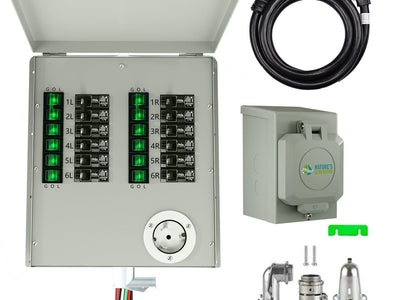
Here is what happens during an outage. You start your generator outside, at least 20 feet from any door or window [5]. You plug a four-wire generator cord into a weatherproof inlet box on your home's exterior. Then you walk to your transfer switch panel, usually mounted right next to the main breaker box, and flip each circuit breaker from the GRID position to the GENERATOR position.
That physical flip is the whole secret. The breaker can only point one direction at a time. Your refrigerator is now drawing power from the generator, not the utility line. No electricity can sneak backward onto the power grid. When utility power returns, you reverse the process.
Storm Scenario: Friday night, Category 1 hurricane
Power cuts out at 7 PM. You have a 5,500-watt portable generator. With a manual transfer switch: you start the generator, plug in the 30A cord, flip the breakers for your fridge, sump pump, and two light circuits. Your garage freezer stays running and your basement stays dry, total time from outage to backup power: about 8 minutes. With no transfer switch, you would be running extension cords in the rain, your sump pump would have no way to connect, and your fridge cord would snake across the kitchen floor.
Manual vs. Automatic Transfer Switch: What's the Difference?
The core difference is whether a human or a relay does the switching. A manual transfer switch requires you to flip the breakers yourself [2]. An upgrade to an automatic transfer switch (ATS) detects the outage, signals the generator to start, and connects the load without you touching anything.
Automatic switches are standard on standby generators, those permanently installed natural-gas units that kick on within 10 to 30 seconds. They are also available for portable generator owners who want less involvement during an outage.
The important caveat: even an ATS designed for a portable generator usually requires you to start the generator manually first. The switch detects grid voltage loss, opens the utility side, and waits. But a portable generator does not start itself. You still need to go outside, start it, and plug in the cord. At that point, the ATS finishes the job automatically.
A true hands-off automatic experience requires a standby generator hardwired to the panel, a different product category with different price points. [2]
What Makes a Smart Transfer Switch Different?
Smart panels go further than automatic switching. They give you app control, per-circuit monitoring, and programmable priorities [3].
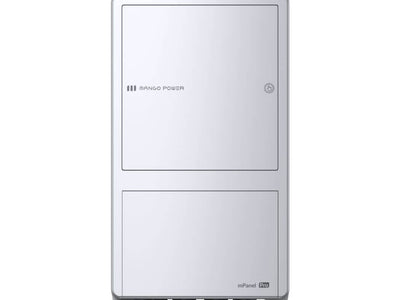
The Mango Power mPanel Pro manages four circuits and works with battery backup systems. It switches between grid and generator automatically and shows real-time power draw in the app. At $749, it works best paired with a compatible battery system for whole-circuit coverage.
The MyGrid 10K goes further, it is a full 10kW LiFePO4 home battery system with an integrated transfer switch. This is a whole-home solution. At $5,879.99, it replaces the need for a generator entirely during most outages.
Smart panels are not for everyone. They require compatible equipment, professional installation, and ongoing app maintenance. If you want to power six circuits during the occasional storm outage, a simple 30A manual switch at $399.99 will do the job without the complexity.
What Size Transfer Switch Do I Need?
Match your transfer switch to your generator's output rating. Then verify you're not trying to run more watts than the generator can deliver at once.
Amperage Load Calculator
Check the appliances you need to run during an outage. We'll calculate your running wattage and recommend a transfer switch size.
Essentials
350W 800W 600W 120WKitchen
1,200W 150WComfort
1,200W 1,000WMedical / Office
45W 30WRunning watts only. Add 20% headroom for starting surges. Verify against your specific generator's rated output.
Which Circuits Should You Transfer?
Most portable generators produce 5,000 to 7,500 running watts. That is enough for the essentials, but not everything. Pick circuits that protect your home or your family's health first.
Start with these five: refrigerator, sump pump, furnace fan, lights (one or two zones), phone charging outlet. That package runs around 2,000 watts in most homes. It keeps food safe, prevents flooding, keeps you warm, and keeps you connected.
Add these if you have capacity left: chest freezer (150W), CPAP (45W), internet router (30W), a single TV circuit (150W). These bring your total to roughly 2,400 watts. A 5,500-watt generator handles this easily with room to spare.
Skip these unless you have a 10kW+ generator: electric water heater (4,500W), electric dryer (5,500W), central air conditioning (3,500W running, 7,000W starting surge). One of these alone can max out a portable generator.
Best Transfer Switches for Portable Generators
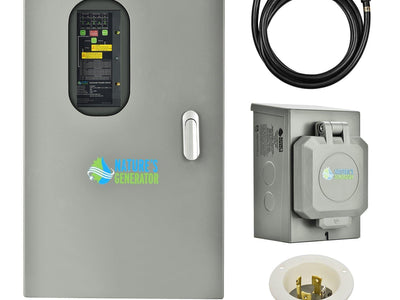
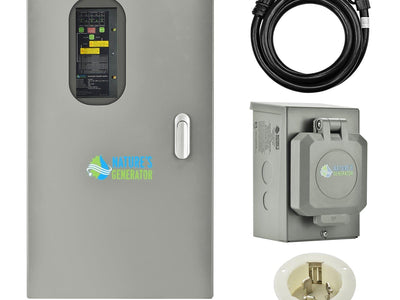
All four products below ship ready for professional installation. Prices are current as of April 2026.


What Are the Legal Requirements for a Manual Transfer Switch?
In the United States, transfer switch installations fall under NEC Article 702, Optional Standby Systems [1]. The key rule is in Section 702.5: no transfer switch can let a generator and the utility grid feed the same circuit at the same time. That is what prevents backfeed, the condition that kills utility workers.
Practically, this means:
- An electrical permit is required in most jurisdictions before work begins
- A licensed electrician handles all wiring. must do or supervise the panel work
- The transfer switch must be UL listed (UL 1008) or listed by an equivalent nationally recognized testing laboratory [4]
- A local inspection is typically required after installation
Skipping the permit is not just an administrative problem. If a fire or flood occurs during an outage and your homeowner's insurance discovers an unpermitted generator connection, your claim can be denied. Pull the permit.
For generator placement, the CPSC recommends positioning portable generators at least 20 feet from doors, windows, and vents, with the exhaust pointing away from the house [5]. Carbon monoxide is colorless and odorless. A CO detector inside the home is a non-negotiable safety device when running any generator.
How Is a Transfer Switch Installed?
The process takes a licensed electrician 3 to 5 hours in a typical home. Here is what to expect so you can have an informed conversation with your electrician.
Check the manufacturer specification sheet before installing any wiring. The breaker panel location determines the best indoor mounting spot for your new switch. Every wiring upgrade from extension cord power to a transfer switch requires a permit.
- Pull the permit. Your electrician should handle this, but confirm it before work starts.
- Choose your circuits. Decide which 6–16 circuits you want to transfer before the electrician arrives. This saves time and money.
- Install the exterior inlet box. A weatherproof L14-30 or L14-50 receptacle gets mounted on the outside wall, connected by conduit to the transfer switch location.
- Mount the transfer switch panel. Usually placed within 3–5 feet of the main panel, often right beside it.
- Move selected breaker circuits. The electrician moves the chosen breakers from your main panel into the transfer switch panel and wires them through.
- Schedule the inspection. Most jurisdictions require a final inspection before the system can be used.
- Test with the generator running. Before the inspector leaves, confirm each circuit transfers correctly.
Common installer mistakes: using undersized wire between the inlet box and the panel, not grounding the inlet box properly, and skipping the inspection step. All three can create safety hazards or fail at the worst possible moment.
Transfer Switch Cost Comparison by Tier
| Tier | Switch Cost | Install Est. | Total | Best For |
|---|---|---|---|---|
| 30A Manual (6-circuit) | $200–400 | $400–800 | $600–1,200 | Budget-conscious, occasional outages |
| 30A–50A Manual (12-16 circuit) | $400–500 | $500–1,000 | $900–1,500 | Most homeowners with portable generators |
| Smart ATS (4-circuit) | $749 | $500–1,000 | $1,250–1,750 | Tech-forward, want app monitoring |
| Whole-Home ATS (125A) | $600–700 | $1,500–3,000 | $2,100–3,700 | Standby generator owners |
Installation estimates for a mid-complexity residential job. Costs vary by region and electrician rates.
A power outage tests your entire backup system. Choose accessory or accessories like a weatherproof inlet box and load-shed kit to complete the installation.
The Bottom Line
A transfer switch is the piece that turns a generator into a real home backup system. Without it, you have an expensive machine sitting outside connected to nothing useful. With it, your refrigerator, sump pump, and furnace fan stay on during any outage, and your family and the utility workers stay safe [1][2].
For most portable generator owners, a 30A or 50A manual switch in the $400–500 range is the right call. It covers the circuits that matter, costs less than one service call from a restoration company, and lasts 20+ years with zero maintenance. If you want automatic switching without the manual breaker-flip, step up to an ATS. If you want app control and battery integration, the Mango Power mPanel Pro is the entry point worth considering.
The single biggest mistake people make: buying the generator and never setting up the transfer switch. Then the first real outage arrives, and they're running extension cords in the dark wondering why they didn't set this up last year.
Next Steps:
- Count your circuits, decide which 8–12 matter most to you
- Check your generator's outlet (L14-30 = 30A switch; L14-50 = 50A switch)
- Get two quotes from licensed electricians with transfer switch experience
- Purchase your switch and schedule the permit + installation together
- Test the full system before storm season, not during it
Frequently Asked Questions
Use a plug-in wattmeter or whole-home wattmeters to verify real-world circuit loads before sizing your transfer switch. Nameplate ratings often run higher than actual draw.
References
- National Fire Protection Association. NFPA 70: National Electrical Code (NEC), Article 702, Optional Standby Systems. 2023 edition. https://www.nfpa.org/codes-and-standards/7/0/2
- National Fire Protection Association. NFPA 110: Standard for Emergency and Standby Power Systems. 2022 edition. https://www.nfpa.org/codes-and-standards/1/1/0
- Mango Power. mPanel Pro Product Page. https://mangopower.com/products/mango-power-mpanel-pro
- Underwriters Laboratories. UL 1008: Standard for Transfer Switch Equipment. https://www.ul.com/resources/transfer-switch-standards
- U.S. Consumer Product Safety Commission. Generator Safety. https://www.cpsc.gov/Safety-Education/Safety-Education-Centers/Carbon-Monoxide
- U.S. Department of Energy. Backup Power Basics for Homeowners. https://www.energy.gov/articles/backup-power-basics