
Skip to content

Best Lithium Battery for Off Grid Solar - Premium LiFePO4 Solutions

Transitioning to off-grid solar power requires a reliable, high-performance energy storage solution that can withstand daily charge-discharge cycles while providing decades of dependable service. Our curated collection of premium lithium batteries represents the pinnacle of off-grid energy storage technology, featuring advanced LiFePO4 (Lithium Iron Phosphate) chemistry that delivers unmatched safety, longevity, and performance. Whether you're powering a remote cabin, building a whole-home backup system, outfitting an RV for extended boondocking, or creating a sustainable off-grid homestead, these batteries provide the foundation for energy independence. From compact 100Ah deep cycle batteries perfect for starter systems to massive 10080Wh whole-house generators capable of running every appliance during extended outages, each solution includes integrated Battery Management Systems (BMS) for optimal protection and performance. These aren't just batteries - they're complete energy ecosystems designed specifically for the demanding requirements of off-grid solar applications, offering 3000-5000+ charge cycles, 10-15 year lifespans, and the peace of mind that comes with true energy autonomy.

Key Takeaways

  • LiFePO4 (Lithium Iron Phosphate) batteries are the gold standard for off-grid solar, offering 3000-5000+ cycles and 10+ year lifespan
  • System sizing depends on daily energy consumption - 100Ah suits basic needs while 200Ah+ handles larger loads and extended autonomy
  • Built-in Battery Management Systems (BMS) protect against overcharge, over-discharge, and temperature extremes for maximum safety
  • Whole home systems (3000W-7200W) provide seamless backup power with 120V/240V output for running all appliances during outages

What should you look for in a lithium battery for off-grid solar?

When selecting a lithium battery for off-grid solar applications, prioritize LiFePO4 (Lithium Iron Phosphate) chemistry for its superior safety profile, thermal stability, and longevity. Look for batteries with integrated Battery Management Systems (BMS) that provide overcharge protection, over-discharge protection, short circuit protection, and temperature monitoring. Capacity is crucial - calculate your daily energy consumption in watt-hours and choose a battery bank that provides 2-3 days of autonomy for weather contingencies. Consider the depth of discharge (DoD) rating; quality LiFePO4 batteries safely handle 80-100% DoD compared to lead-acid's 50%. Check the continuous discharge rate to ensure it matches your peak power demands, especially if running high-wattage appliances like air conditioners or power tools. Weight and footprint matter in mobile applications or space-constrained installations - lithium batteries offer 3-4x the energy density of lead-acid alternatives. Finally, verify warranty coverage (typically 5-10 years for premium units) and cycle life ratings, with quality LiFePO4 batteries delivering 3000-5000+ cycles at 80% DoD.

How do you choose the right lithium battery capacity for your off-grid solar needs?

  • Calculate daily consumption: Audit all appliances and devices, multiply wattage by hours used daily, then add 20% buffer for inefficiencies and future expansion
  • Determine autonomy requirements: Multiply daily consumption by desired backup days (2-3 days typical for solar, 1-2 days for hybrid solar/wind systems)
  • Match inverter capacity: Ensure battery bank voltage and continuous discharge rating supports your inverter's power output (3000W, 6500W, or 7200W systems)
  • Consider scalability: Modular systems like expandable 4800Wh units allow starting smaller and adding capacity as needs grow without replacing equipment
  • Account for temperature derating: In extreme climates, add 10-15% extra capacity as cold temperatures temporarily reduce available power
  • Evaluate charging sources: Solar panel array size should recharge batteries within 4-6 peak sun hours while supporting simultaneous loads

Frequently Asked Questions

What is the best battery for off-grid solar system?
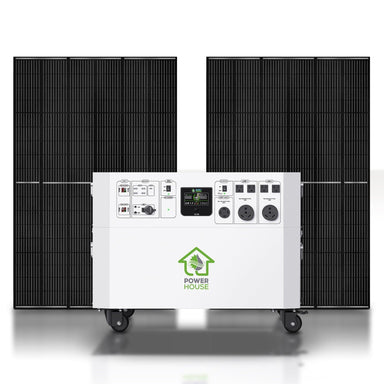
LiFePO4 (Lithium Iron Phosphate) batteries are unequivocally the best choice for off-grid solar systems in 2024. They outperform traditional lead-acid and AGM batteries across every critical metric: 3000-5000+ cycle lifespan (vs. 300-500 for lead-acid), 95-98% round-trip efficiency (vs. 80-85%), 100% usable depth of discharge, faster charging acceptance rates, and dramatically lighter weight. For residential off-grid applications, systems ranging from 3533Wh to 10080Wh with integrated inverters (3000W-7200W) provide whole-home backup capability with 120V/240V output. Smaller 100Ah-200Ah batteries work perfectly for RVs, boats, cabins, and modular solar setups. The higher upfront cost of LiFePO4 is offset by 3-4x longer lifespan and superior performance, resulting in lower total cost of ownership. Built-in BMS protection ensures safety and longevity, while maintenance-free operation eliminates the watering, equalization, and ventilation requirements of flooded lead-acid batteries.
What type of lithium battery is best for solar?
LiFePO4 (Lithium Iron Phosphate) is definitively the best lithium chemistry for solar energy storage. While other lithium variants like NMC (Nickel Manganese Cobalt) offer higher energy density, LiFePO4 excels in the parameters that matter most for stationary solar applications: thermal stability and safety (no thermal runaway risk), cycle longevity (5000+ cycles at 80% DoD), calendar life (15-20 years), temperature tolerance (-20°F to 140°F operating range), and environmental stability. LiFePO4's flat discharge curve maintains consistent voltage output as the battery depletes, ensuring appliances run at full efficiency throughout the discharge cycle. The chemistry is non-toxic and recyclable, with stable phosphate-based cathodes that don't degrade from partial state-of-charge operation - perfect for solar's daily charge/discharge cycling. For off-grid applications, choose LiFePO4 batteries with Grade-A prismatic cells, robust BMS with cell balancing, and IP65+ waterproof ratings for outdoor solar installations.
Is it better to have 2 100Ah batteries or 1 200Ah battery?
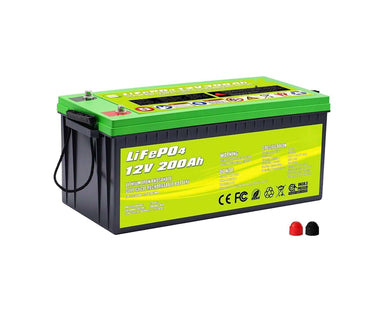
For most off-grid solar applications, a single 200Ah battery offers significant advantages over two 100Ah units. The integrated approach provides simpler installation with fewer connection points (reducing resistance and failure points), easier battery management with one BMS monitoring all cells, lower total cost (typically 10-20% less than buying two separate units), and reduced space requirements. However, two 100Ah batteries excel in specific scenarios: when you need redundancy (one battery fails, you still have backup power), for 24V systems (series connection of two 12V 100Ah batteries), when weight distribution matters (marine or RV applications where splitting weight across locations improves handling), or for phased investment (buy one now, add second later). From a performance standpoint, both configurations deliver identical 200Ah capacity. The single 200Ah unit simplifies monitoring and maintenance, while dual 100Ah batteries offer flexibility in configuration (series for higher voltage, parallel for more amp-hours) and incremental expansion. For stationary off-grid solar installations, the single 200Ah battery is generally the superior choice unless specific circumstances require the modularity of separate units.
How long will a 100Ah battery last off-grid?
A 12V 100Ah LiFePO4 battery stores 1,280 watt-hours (Wh) of usable energy, and runtime depends entirely on your power consumption. For reference: running a 60W laptop draws 47mA and would last approximately 21 hours; a 100W refrigerator (cycling 30% of the time) averages 30W continuous draw for roughly 42 hours runtime; five 10W LED lights (50W total) would run for 25+ hours; or a 400W microwave would operate for about 3 hours of actual use time. In practical off-grid scenarios, a 100Ah battery typically provides 1-2 days of power for minimal consumption (lighting, phone charging, small electronics), or 8-12 hours for moderate use including refrigeration and entertainment systems. To calculate your specific runtime: list all devices, multiply watts by hours of daily use, sum total watt-hours, then divide 1,280Wh by your daily consumption. For extended off-grid living, most users require 200-400Ah capacity to comfortably cover daily needs plus provide 1-2 days of autonomy for cloudy weather when solar charging is reduced. Always size your battery bank to avoid regularly discharging below 20% capacity, which maximizes cycle life and ensures power availability for unexpected needs.
How many solar panels do I need to charge a lithium battery off-grid?
The number of solar panels needed depends on battery capacity, daily energy consumption, and your location's peak sun hours. Use this formula: (Daily Wh consumption ÷ Peak sun hours) ÷ Panel wattage = Number of panels needed. For a 100Ah (1,280Wh) battery, you'd need approximately 300-400W of solar panels to fully recharge in 4-5 peak sun hours while supporting daytime loads. A 200Ah battery requires 600-800W of panels. Larger whole-home systems (3533Wh to 10080Wh) typically need 2000-4000W solar arrays for adequate daily charging. Factor in 25% efficiency losses from temperature, wiring, and charge controller conversion. Most locations receive 3-6 peak sun hours daily depending on season and latitude - southern regions with clear skies get more, northern areas or cloudy climates get less. For reliable off-grid operation, size your array to fully recharge batteries during the shortest winter days, ensuring year-round energy independence. MPPT charge controllers maximize panel efficiency and are essential for lithium battery charging, providing proper voltage regulation and multi-stage charging profiles that extend battery lifespan.

Sources

  • Best Lithium Battery for Off-Grid Solar: A Comprehensive Guide — hoolike.com
  • Best Solar Lithium Battery for Off-Grid Systems in 2025 — manlybattery.com
  • Off Grid DIY Solar | What brand of budget Li-FePO4 would you recommend for someone living in the USA | Facebook — www.facebook.com
  • Best 5 Lithium Batteries For Off-Grid Solar Power — www.vatrerpower.com
  • Homeowner’s Guide to Lithium Solar Batteries (2025) - EcoWatch — www.ecowatch.com
close
close
close
I have a question
sparkles
close
product
Hello! I am very interested in this product.
gift
Special Deal!
sparkles