

Skip to content

Best Lithium Battery for Solar Power System - Premium Solar Solutions

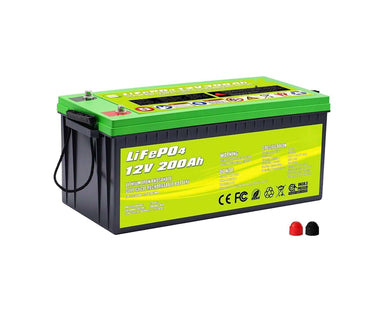
Powering your home, RV, or off-grid cabin with solar energy requires a reliable, high-performance battery system that can store energy efficiently and deliver power when you need it most. Our curated collection of lithium batteries for solar power systems features cutting-edge LiFePO4 (Lithium Iron Phosphate) technology—the gold standard for renewable energy storage. Unlike traditional lead-acid batteries that degrade quickly and require constant maintenance, these advanced lithium batteries offer 3,000-5,000+ charge cycles, 10-15 year lifespans, and maintenance-free operation. Each battery in this collection features integrated Battery Management Systems (BMS) that protect against overcharging, overheating, and short circuits while balancing cells for optimal performance. Whether you're building a compact 12V system for weekend adventures, upgrading to a 200Ah deep cycle battery for serious off-grid living, or installing a complete 9,600Wh whole-home backup solution with split-phase 240V capability, you'll find the perfect lithium battery solution here. These batteries charge faster from solar panels, discharge deeper without damage (80-90% vs. 50% for lead-acid), maintain consistent voltage output, and weigh 50-60% less than equivalent lead-acid systems. From waterproof designs for marine applications to expandable solar generators that grow with your needs, our selection represents the most reliable, efficient, and cost-effective lithium battery options for solar power systems available today.

Key Takeaways

  • LiFePO4 batteries offer 3000-5000+ cycles and 10+ year lifespan, far outlasting traditional lead-acid batteries
  • Built-in BMS (Battery Management System) protects against overcharging, overheating, and short circuits for safe operation
  • Lithium batteries maintain 95%+ efficiency and can discharge to 80-90% capacity without damage
  • Capacity requirements vary: 100Ah for small systems, 200Ah+ for medium loads, and 9600Wh+ whole-home systems for complete backup

What should you look for in a lithium battery for solar power systems?

When selecting a lithium battery for your solar power system, prioritize chemistry type, capacity, and safety features. LiFePO4 (Lithium Iron Phosphate) batteries are the gold standard for solar applications due to their exceptional thermal stability, longer cycle life (3000-5000+ cycles), and inherent safety compared to other lithium chemistries. Look for batteries with integrated Battery Management Systems (BMS) that provide overcharge protection, temperature monitoring, cell balancing, and short-circuit prevention. Capacity should match your daily energy consumption—calculate your watt-hours needed and add 20-30% buffer. Consider depth of discharge (DOD) ratings; quality lithium batteries safely handle 80-90% DOD compared to 50% for lead-acid. Additional factors include operating temperature range (-4°F to 140°F is ideal), warranty length (5-10 years typical), and whether the battery supports series/parallel expansion for future scaling.

How do you choose the right lithium battery capacity for your solar needs?

  • Calculate daily consumption: List all devices with their wattage and hours of use, then multiply to get total watt-hours (Wh) needed per day
  • Match voltage requirements: 12V systems work for RVs, boats, and small cabins; 24V/48V systems suit larger homes; whole-home systems require 240V split-phase capability
  • Consider autonomy days: Multiply daily consumption by desired backup days (typically 2-3 days) to determine minimum battery capacity needed
  • Account for efficiency losses: Add 20-25% to your calculated capacity to compensate for inverter efficiency, wire losses, and temperature effects
  • Plan for expansion: Choose systems with modular or expandable designs if you anticipate adding more solar panels or increasing energy needs
  • Evaluate discharge rates: Ensure the battery's continuous discharge rating exceeds your peak power draw, especially for high-wattage appliances like air conditioners

Frequently Asked Questions

What type of lithium battery is best for solar?
LiFePO4 (Lithium Iron Phosphate) batteries are universally regarded as the best lithium battery type for solar power systems. They offer superior safety with excellent thermal stability and no risk of thermal runaway, unlike other lithium chemistries. LiFePO4 batteries provide 3000-5000+ charge cycles at 80% depth of discharge, translating to 10-15 years of reliable service. They maintain consistent voltage output throughout the discharge cycle, operate efficiently in wide temperature ranges (-4°F to 140°F), and are environmentally friendly with non-toxic materials. Their flat discharge curve means your solar system delivers stable power until the battery is nearly depleted, unlike lead-acid batteries that experience voltage sag. Additionally, LiFePO4 batteries charge faster, accept higher charge currents from solar panels, and require zero maintenance—no watering, no equalization charges, and no corrosive acid.
How long will a 12V fridge run on a 100Ah lithium battery?
A 12V fridge typically consumes 30-60 watts depending on size, insulation quality, and ambient temperature, running intermittently with a 30-50% duty cycle. A 100Ah lithium battery provides 1,280 watt-hours of usable energy (12.8V × 100Ah × 90% DOD). For a standard 45-watt fridge with 40% duty cycle (running 9.6 hours per day of actual compressor operation), you'd consume approximately 432 watt-hours daily. This means a 100Ah lithium battery could run the fridge for approximately 2.5-3 days without recharging. However, in real-world solar applications with daily solar recharging, a 100Ah battery easily supports continuous fridge operation with capacity to spare for other devices. Factors affecting runtime include: ambient temperature (hot weather increases compressor runtime), how often the fridge is opened, initial food temperature, and battery age. For extended off-grid use without solar input, consider a 200Ah battery or dual 100Ah batteries in parallel for 5-6 days of refrigeration autonomy.
What is the 80 20 rule for lithium batteries?
The 80/20 rule for lithium batteries is a best practice guideline that recommends keeping your battery charge level between 20% and 80% for optimal longevity, though it's less critical for LiFePO4 chemistry than other lithium types. This practice maximizes cycle life by reducing stress on the battery cells during charging and discharging. While LiFePO4 batteries can safely handle 100% charges and discharge to 10-20% capacity without significant degradation, maintaining the 80/20 range can extend cycle life from 3,000 cycles to potentially 5,000+ cycles. However, for solar power systems, this rule is often relaxed because: (1) LiFePO4 chemistry is more tolerant of full charge cycles than lithium-ion, (2) daily solar charging naturally prevents deep discharge, and (3) modern BMS systems automatically protect against harmful charge states. Most solar users charge to 100% daily and discharge to 20-30% overnight without issues. The 80/20 rule becomes more relevant for seasonal or infrequently used systems—store batteries at 50-60% charge rather than full. For daily-use solar systems, focus instead on avoiding prolonged storage at 0% or 100% charge for weeks at a time.
Which is better, LiFePO4 or lithium battery?
LiFePO4 (Lithium Iron Phosphate) IS a type of lithium battery, but it's specifically the best lithium chemistry for solar power applications when compared to other lithium variants like lithium-ion (Li-ion) or lithium polymer. Here's why LiFePO4 excels: Safety is paramount—LiFePO4 has superior thermal stability and won't experience thermal runaway even under abuse conditions, while standard lithium-ion batteries can catch fire if damaged or overheated. Cycle life is exceptional with 3,000-5,000+ cycles for LiFePO4 versus 500-1,500 for standard lithium-ion. LiFePO4 operates safely across wider temperature ranges and tolerates higher discharge rates without degradation. While lithium-ion batteries offer higher energy density (lighter and more compact), this advantage matters less for stationary solar installations where weight isn't critical. LiFePO4's flat discharge curve provides consistent power output, and the chemistry contains no toxic heavy metals, making it environmentally superior. The trade-off is cost—LiFePO4 batteries have higher upfront prices than lithium-ion, but the longer lifespan (10-15 years vs. 3-5 years) and superior safety make them more cost-effective over time for solar energy storage. For solar power systems, LiFePO4 is unequivocally the better choice.
How many solar panels do I need to charge a 200Ah lithium battery?
To properly charge a 12V 200Ah lithium battery (2,560 watt-hours capacity), you typically need 400-600 watts of solar panels, depending on your location, season, and charging timeline. The general rule is to provide solar input equal to 20-30% of your battery capacity in amp-hours. For a 200Ah battery, this means 40-60 amps of charging current, which translates to 500-750 watts of solar panels at 12V. However, real-world conditions reduce panel output—you'll get peak production for only 4-6 hours daily, and efficiency losses from the charge controller, wiring, and temperature reduce effective output by 20-25%. A practical setup would be: 400W of panels for slow charging (6-8 hours of full sun to recharge from 20% to 100%), 600W for moderate charging (4-5 hours), or 800W for rapid charging (3-4 hours). Consider your daily energy consumption—if you use 1,000Wh daily, you need enough solar capacity to both replace that energy AND recharge the battery, suggesting 600-800W minimum. Location matters significantly: northern climates and winter conditions may require 30-40% more panel capacity than southern regions. Always use an appropriate MPPT charge controller rated for your total panel wattage to maximize charging efficiency.

Sources

  • Best Solar Lithium Battery for Off-Grid Systems in 2025 — manlybattery.com
  • Lithium Battery for Solar: A Comprehensive Guide for Homeowners in 2025 — www.docanpower.com
  • Best solar batteries for your home in 2025 — www.energysage.com
  • BC Cruising, Sailing And Liveaboard | Looking at speeding up the process of choosing what to go with for solar panels and lithium batteries | Facebook — www.facebook.com
  • Top 5 BEST Solar Batteries Going Into 2026 — www.youtube.com
close
close
close
I have a question
sparkles
close
product
Hello! I am very interested in this product.
gift
Special Deal!
sparkles