

Pick 01

Anodized Aluminum Solar Panel Mount Kit - 440W/10...
Corrosion-resistant aluminum mounting hardware for rooftop, RV, marine, and ground solar panel installations
FuelN a
$399.99View →
A solar generator pairs a battery with panels, so you make your own power and never buy fuel. Run the fridge, lights, and devices through an outage, or live off-grid. Silent, fume-free, safe indoors.
★ 4.86 Solar Generator HomePower 3600 PlusBest for whole-home outage backup3584Wh · 3600W · 347 reviews · from $1,709.00 →


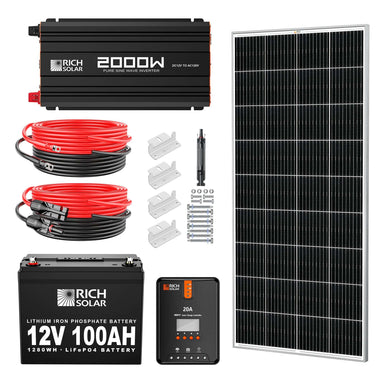
Our 200W 12V complete kit comes with all the products and components you need to start harnessing, storing and using the energy of the sun. This ki...
View full details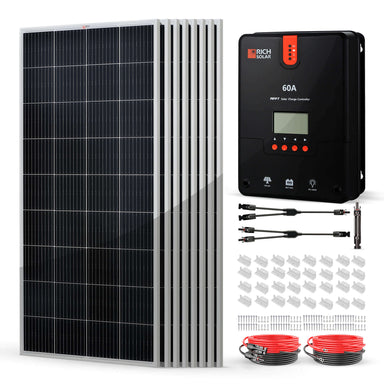
Our largest 24V kit contains 8 high-efficiency 200W Monocrystalline panels with 9 busbars and our 60A MPPT controller. This kit can be paired with ...
View full details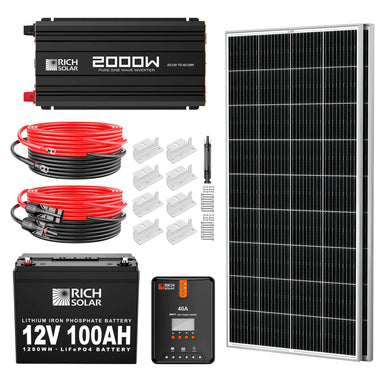
Our 400W 12V complete kit comes with all the products and components you need to start harnessing, storing and using the energy of the sun. This ki...
View full details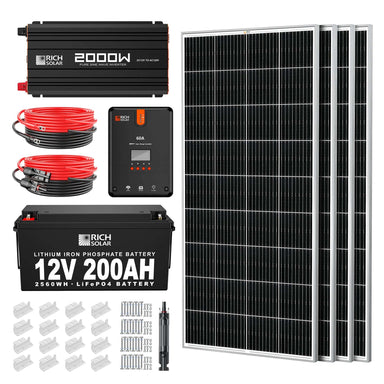
Our 800W 12V complete kit comes with all the products and components you need to start harnessing, storing and using the energy of the sun. This ki...
View full details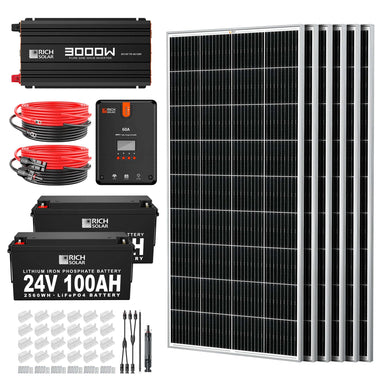
Our 1200W 24V complete kit comes with all the products and components you need to start harnessing, storing and using the energy of the sun. This k...
View full details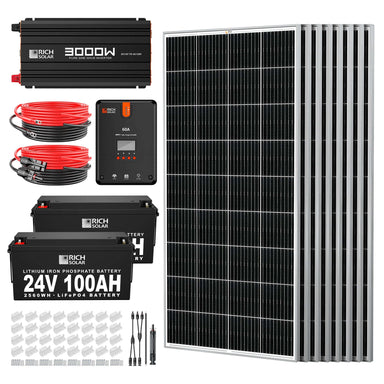
Want to have the best solar-powered travel trailer? Our 1600W 24V complete kit comes with all the products and components you need to start harness...
View full details Save $189.00
Sale
Save $189.00
SaleIs the EcoFlow RIVER 3 Max the Silent Power Solution You've Been Searching For?You've experienced the frustration firsthand. The camping trip where...
View full details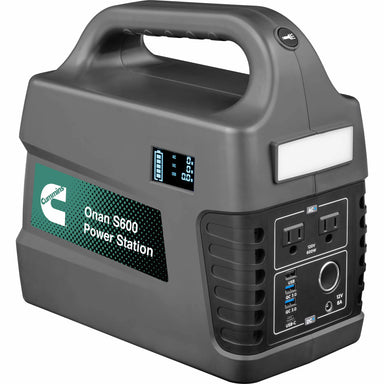 Save $60.01
Sale
Save $60.01
SaleCummins Onan PS600 Portable Power Station Overview The Cummins Onan PS600 Portable Power Station delivers 592 watt-hours of reliable portable powe...
View full details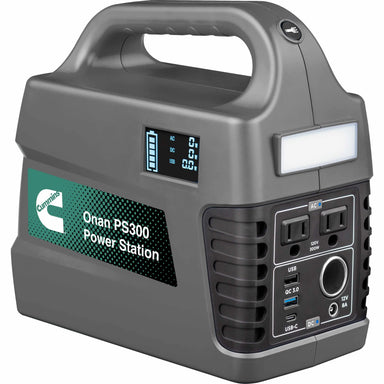 Save $55.01
Sale
Save $55.01
SaleCummins Onan PS300 Portable Power Station - A067W048 The Cummins Onan PS300 delivers 296 watt hours of clean, quiet power in a compact 6.5-pound p...
View full details Save $52.01
Sale
Save $52.01
SaleCummins Onan PS200 Portable Power Station - Model A067W047 The Cummins Onan PS200 portable power station delivers 194 watt hours of clean, quiet p...
View full details Save $10.00
Sale
Save $10.00
SaleCummins Onan PS160 Portable Power Station - A067W046 The Cummins Onan PS160 portable power station delivers 155 watt hours of clean, quiet power i...
View full details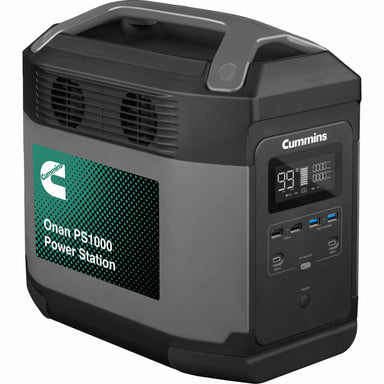 Save $100.00
Sale
Save $100.00
SaleCummins Onan PS1000 Portable Power Station The Cummins Onan PS1000 delivers reliable backup power for camping, emergencies, and off-grid applic...
View full details Sale
Sale
Sale
SaleStop settling for unreliable backup power when you could have all-day essential energy with the Jackery Explorer 2000 v2 Portable Power Station. Th...
View full details Save $10.00
Sale
Save $10.00
SaleThis is a DC power station. It has no AC outlet. The Explorer 300D powers devices through USB-C, USB-A and a 12V car socket. It has no inverter an...
View full details Save $100.00
Sale
Save $100.00
SaleCompact 288Wh Portable Power Station for Outdoor and Travel Use The EcoFlow TRAIL 300DC is a 288Wh portable power station built with LiFePO4 batter...
View full details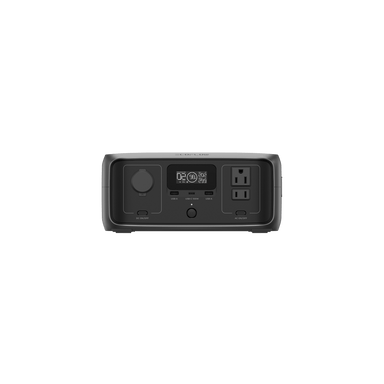 Save $40.00
Sale
Save $40.00
SaleIs the EcoFlow RIVER 3 the Perfect Compact Power Solution for Your Off-Grid Adventures?You've been stuck at a remote campsite with a dead phone and...
View full details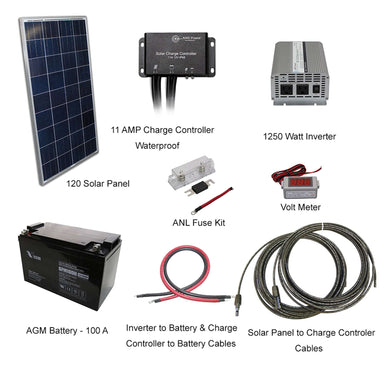 Save $274.00
Sale
Save $274.00
SaleComplete Off-Grid Solar Power Solution When power outages disrupt your life or remote work, the Aims Power KITB-B125012120 120 Watt Solar Kit with ...
View full details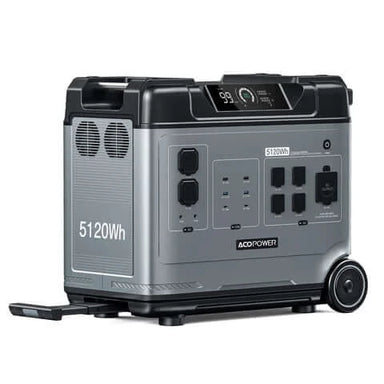 Save $1,000.00
Sale
Save $1,000.00
SaleDo you seek a life where your energy needs seamlessly blend with the rhythms of off-grid living? The ACOPOWER P5000 Portable Power Station is more ...
View full detailsA solar generator is a battery paired with solar panels. The panels turn sunlight into power, the battery stores it, and you run your gear from the outlets. You make your own electricity, so you never buy fuel and there is nothing to refill.
You can also recharge from a wall outlet or your car, so the battery is full before a storm and the panels keep it topped off after.
Capacity is measured in watt-hours (Wh). Add up the watts of what you want to run, then multiply by the hours you need. A 100-watt device for 10 hours needs about 1,000 Wh. Match the battery to your job:
Panel wattage sets how fast you recharge. A 200-watt panel refills a 1,000 Wh battery in roughly 5 to 8 hours of good sun. To stay ahead of daily use, match your panel wattage to how much you draw each day. More panels mean faster charging and true off-grid living.
Every unit we carry uses LiFePO4, or lithium iron phosphate, cells. They last 3,000 to 4,000 charge cycles, about 10 years of regular use, and stay safe under heavy load. Older lithium-ion fades after 500 to 800 cycles, so LiFePO4 is worth the small extra cost.
Yes, with the right size. A 2,000 to 3,000 Wh unit covers the essentials. Expandable flagships like the Jackery HomePower 3600 Plus grow to 21 kWh, enough to run a home for days when paired with panels and a transfer switch. Buy expandable if you plan to cut the cord.
A solar generator is the fuel-free way to stay powered. Homeowners keep the fridge and medical gear running through outages. Cabins and RVs live off-grid on sunlight. Anyone who wants quiet, clean backup that never needs gas starts here.
A solar generator is a battery paired with solar panels. The panels make power from sunlight, the battery stores it, and you run your devices from the outlets. There is no fuel, no fumes, and no noise.
Add up the watts of what you want to run, then multiply by the hours you need. A refrigerator uses about 1,000 to 2,000 watt-hours a day, so a 1,000 Wh unit keeps it cold for 10 to 24 hours. For multi-day or whole-home backup, choose 3,000 Wh or an expandable unit.
Panel wattage sets your recharge speed. A 200-watt panel refills a 1,000 Wh battery in about 5 to 8 hours of good sun. Match your panel wattage to your daily draw so you stay ahead of what you use.
It depends on panel wattage and sunlight. As a rule, a 200-watt panel adds about 1,000 Wh in 5 to 8 hours of strong sun. More panels recharge faster and let you run off-grid indefinitely.
It can run your essentials, and the biggest models can back up a whole home. A 2,000 to 3,000 Wh unit covers the fridge, WiFi, and lights. Expandable flagships like the Jackery HomePower 3600 Plus reach 21 kWh with a transfer switch for whole-home, multi-day power.
Yes. A solar generator produces no fumes and no carbon monoxide, so it is safe to run inside your home, unlike a gas generator. It also runs silently, which is ideal for bedrooms and medical equipment.
LiFePO4, or lithium iron phosphate, is the battery chemistry in every unit we carry. It lasts 3,000 to 4,000 charge cycles, roughly 10 years, and stays safe under heavy load. It costs a little more than older lithium-ion but lasts far longer.
A solar generator makes free power from the sun, runs silent, and is safe indoors. A gas generator runs as long as you have fuel and delivers more sustained power for heavy loads. Many people keep a solar generator for quiet, clean backup and a gas unit for long outages.
Yes, on expandable models. Units like the Jackery HomePower 3600 Plus and Anker SOLIX F3000 accept extra batteries and panels, so you can grow from essential backup to whole-home, off-grid power over time.
They still charge on cloudy days, just slower, often at 10 to 25 percent of rated panel output. That is why we suggest keeping the battery topped off from the wall before a storm and letting the panels extend your runtime after.
Use our free Generator Sizing Calculator. Match wattage, fuel, and runtime to your home or jobsite in 5 minutes.
No spam. Unsubscribe anytime.