

Cummins Standby Generators: The Complete 2025 Buyer’s Guide
Power outages are becoming more frequent and severe across the United States.
When the lights go out, you need backup power you can trust to keep your home running smoothly.
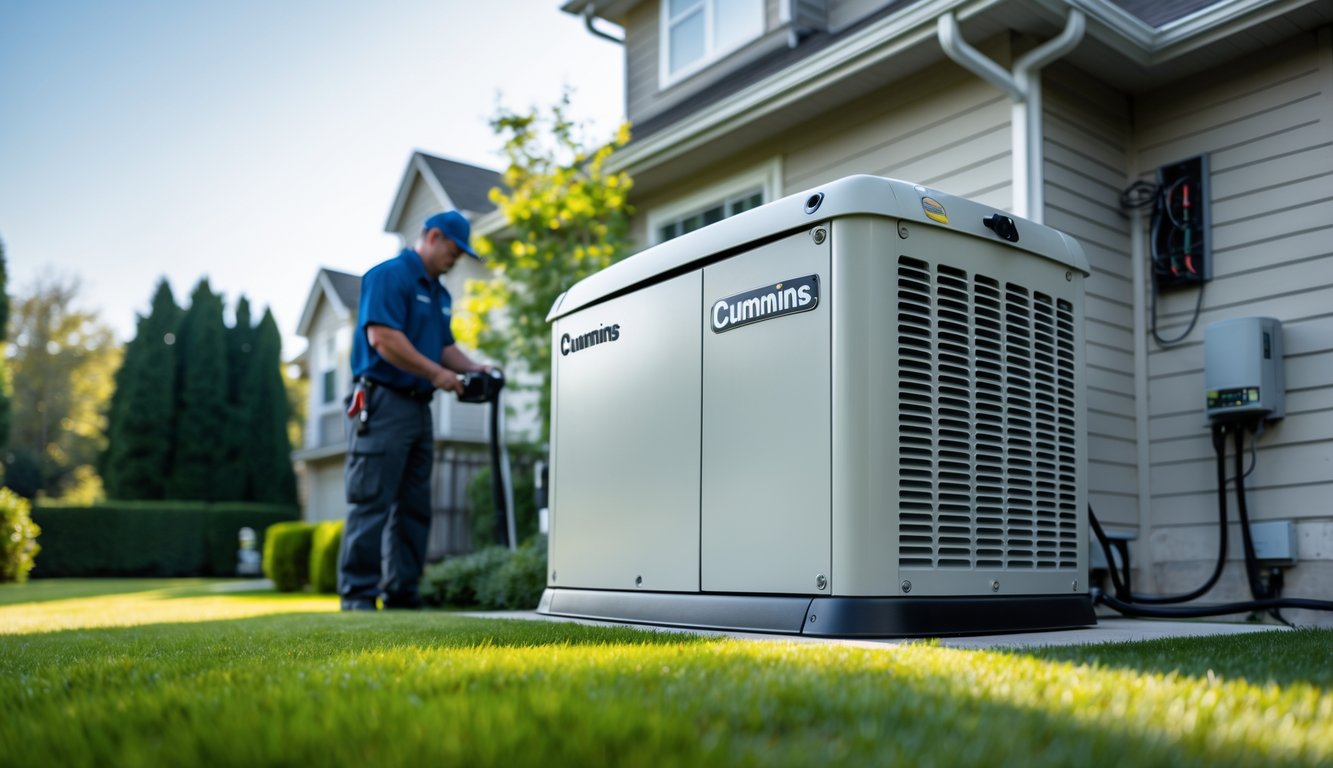
Cummins has made reliable generators since 1919.
Their 2025 lineup offers some of the most advanced standby generators available today.
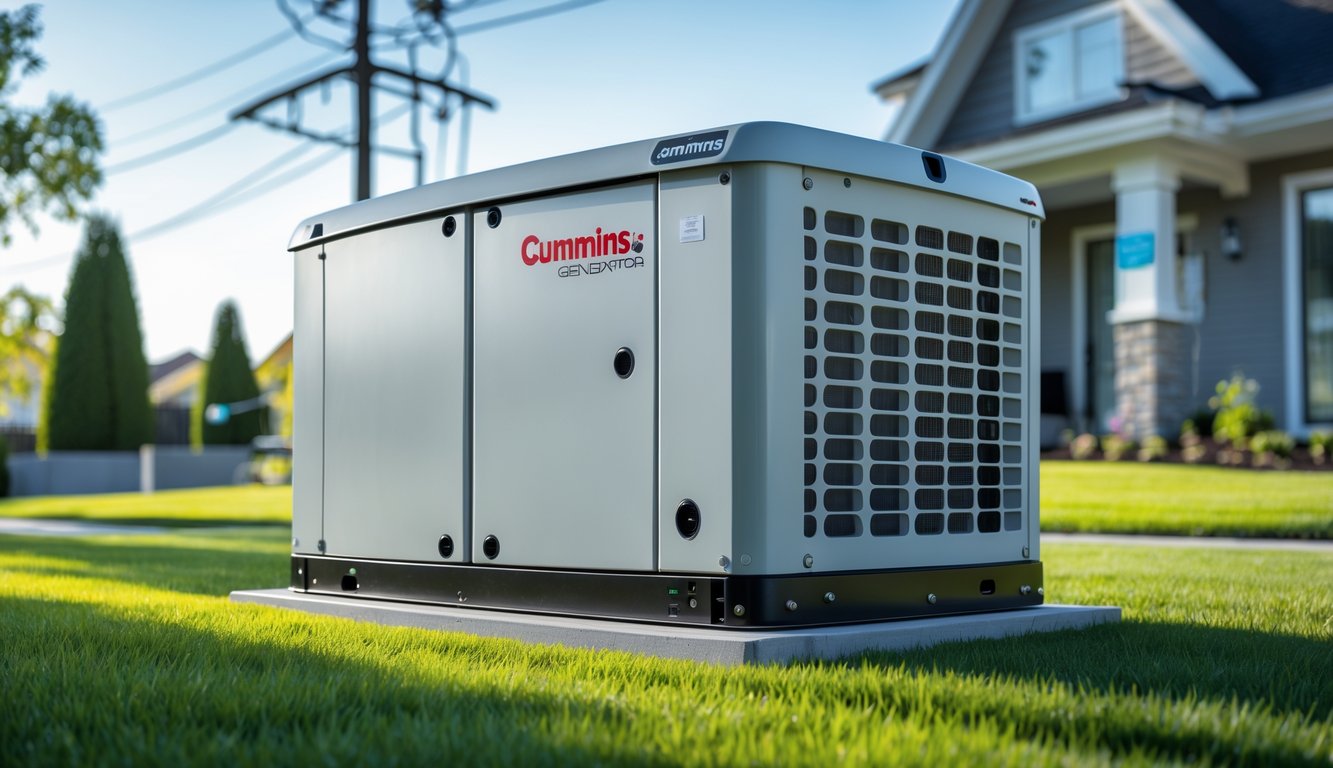
Cummins standby generators provide automatic backup power ranging from 13kW to over 150kW for homes, with improved fuel efficiency and smart monitoring features that weren't available in previous years.
These generators connect directly to your home's electrical system and turn on automatically when the power goes out.
The 2025 Cummins generator models include new features like quieter operation, better fuel efficiency, and smartphone connectivity that lets you monitor your generator from anywhere.
Whether you need to power essential circuits or your entire home, understanding your options will help you choose the right generator for your needs and budget.
Key Takeaways
- Cummins offers standby generators from 13kW to 150kW that automatically start when power fails
- Modern Cummins generators feature smart monitoring, improved fuel efficiency, and quieter operation than older models
- Proper sizing based on your home's power needs is crucial for getting the right generator and avoiding overpaying
Why Choose a Cummins Standby Generator in 2025
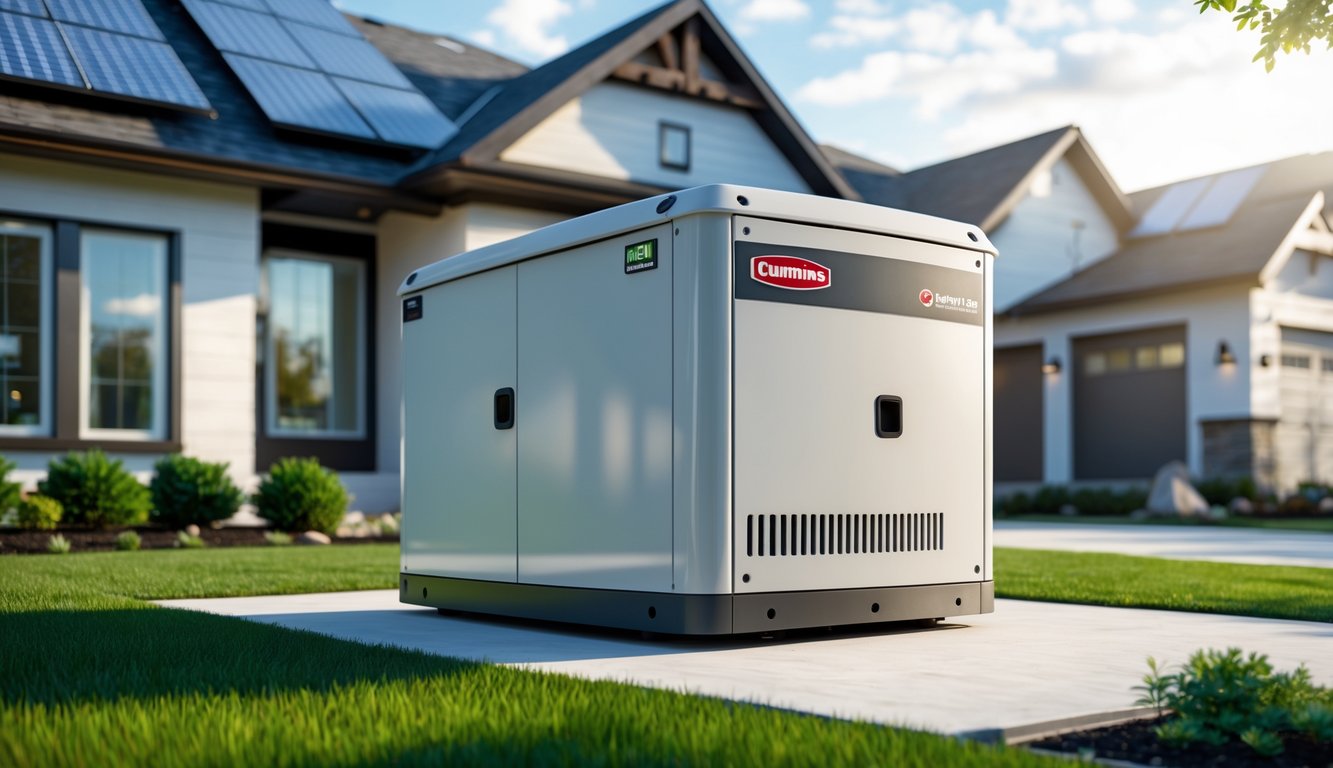
Cummins delivers proven reliability when power outages strike your home, backed by decades of engineering excellence and industry-leading warranty coverage.
Their 2025 models feature advanced quiet operation technology and smart monitoring capabilities that set them apart from competitors.
Reliability During Power Outages
Your home needs dependable backup power when utility service fails.
Cummins whole house generators provide automatic backup power that starts within seconds of detecting an outage.
The automatic transfer switch instantly disconnects your home from the power grid.
It simultaneously starts your generator and connects it to your electrical system.
This seamless transition keeps your essential appliances running without interruption.
Key reliability features include:
- Automatic start within 10 seconds of power loss
- Weather-resistant enclosures for all climates
- Self-diagnostic systems that run weekly tests
- Natural gas or propane fuel options for consistent operation
Cummins generators run weekly self-tests to ensure readiness when you need them.
These tests check battery levels, oil pressure, and coolant temperature automatically.
Advantages Over Competing Brands
Cummins stands out from other generator manufacturers through superior build quality and customer support.
Businesses trust Cummins standby generators because of their global reputation for innovation and performance.
Warranty coverage extends up to 10 years with extended warranty options.
This coverage protects your investment longer than most competing brands offer.
Your generator dealer network spans nationwide with trained technicians.
Local dealers handle sizing, installation, and ongoing maintenance support in your area.
Performance advantages:
- Lower maintenance requirements than competing models
- Higher fuel efficiency reduces operating costs
- Stronger resale value protects your home investment
- Global parts availability ensures quick repairs
The patented sound attenuation technology makes Cummins generators quieter than most alternatives.
This keeps your neighbors happy during extended outages.
Key Innovations for 2025
Remote monitoring capabilities let you check your generator status from anywhere using your smartphone.
You can view fuel levels, maintenance schedules, and system alerts through the mobile app.
Smart connectivity features send automatic notifications when maintenance is due.
The system alerts you to potential issues before they become major problems.
2025 technology improvements:
- Enhanced mobile app with real-time diagnostics
- Improved fuel efficiency ratings
- Quieter operation with new sound dampening
- Faster automatic start times
The updated control systems provide more detailed performance data than previous models.
You can track fuel consumption, runtime hours, and system performance trends over time.
New models feature improved cold weather starting for reliable operation in harsh climates.
Enhanced battery charging systems maintain readiness even during long periods without use.
Types of Cummins Standby Generators
Cummins produces three main categories of standby generators to meet different power needs and budgets.
Their lineup includes residential units for homes, commercial systems for businesses, and portable options for flexible power solutions.
Home Standby Generators
Cummins home standby generators automatically provide backup power when your utility fails.
These units connect directly to your home's electrical system and natural gas or propane supply.
Power Output Options:
- 13kW - Powers essential circuits
- 20kW - Runs most home appliances
- 24kW - Supports larger homes with multiple AC units
Your Cummins home standby generator includes an automatic transfer switch.
This device detects power outages and starts the generator within seconds.
Most models use air-cooled engines for lower maintenance costs.
The units feature weather-resistant enclosures rated for outdoor installation.
Cummins offers WiFi connectivity on newer models.
You can monitor your generator status and receive maintenance alerts through a smartphone app.
Commercial Standby Solutions
Commercial Cummins generators deliver higher power outputs for businesses and facilities.
These systems range from 30kW to over 3,000kW depending on your facility's needs.
Key Commercial Features:
- Diesel and natural gas fuel options
- Liquid-cooled engines for continuous operation
- Advanced control systems with remote monitoring
- Multiple generator paralleling capabilities
Hospitals, data centers, and manufacturing facilities rely on Cummins standby power systems for critical operations.
These generators meet strict emission standards while providing reliable backup power.
The Centum Series offers 1,750kW to 3,000kW output for large facilities.
These units received industry recognition for their performance and efficiency in 2025.
Commercial systems include load bank testing capabilities.
This ensures your generator performs correctly during actual outages.
Portable and Dual-Fuel Options
Cummins portable generators provide temporary power for construction sites, events, and emergency situations.
These units range from 2kW to 15kW output capacity.
Portable Generator Benefits:
- Wheel kits for easy transportation
- Multiple outlet configurations
- Electric and recoil start options
- Runtime up to 12 hours on a single tank
Dual-fuel models run on both gasoline and propane.
This gives you fuel flexibility during emergencies or extended use periods.
RV-specific models integrate with recreational vehicle electrical systems.
These generators feature quiet operation and compact designs for mobile applications.
Some portable units include inverter technology for clean power.
This protects sensitive electronics like laptops and medical equipment from power fluctuations.
Sizing Your Standby Generator: Choose the Right Model
Getting the right size home standby generator prevents power shortages during outages while avoiding wasteful over-purchasing.
You need to calculate your power needs, decide between essential circuits and whole-home backup power, and plan for future electrical demands.
Calculating Power Requirements
Start by listing every appliance and system you want powered during a power outage.
Focus on items you cannot live without for several days.
Essential items typically include:
- Refrigerator and freezer
- HVAC system or space heaters
- Water heater and well pump
- Medical equipment
- Lights in key rooms
- Internet and phone equipment
Find the running watts for each item on their nameplates or online databases.
Add these numbers together for your base power needs.
Next, identify the highest starting watts from your list.
Most motors need extra power to start up.
Add this single highest starting wattage to your running watts total.
Cummins recommends multiplying your total by 1.25 for a safety margin.
This accounts for power fluctuations and future needs.
Example calculation:
- Running watts total: 8,000W
- Highest starting watts: 2,000W
- Subtotal: 10,000W
- Safety margin (x1.25): 12,500W
- Minimum generator size needed: 13kW
Essential Circuits vs Whole Home Solutions
You have two main approaches when choosing backup power coverage for your home.
Essential circuits power only critical items through a manual transfer switch.
This typically requires 10-20kW generators.
You select which circuits get power during outages.
Whole home solutions power everything in your house automatically.
These need 20-60kW generators depending on your home size and electrical load.
Consider your lifestyle needs carefully.
Essential circuits work well if you can live with some inconvenience during outages.
You might lose power to some rooms or appliances.
Whole home generators maintain normal living conditions.
All lights, outlets, and appliances work as usual during power outages.
The price difference is significant.
Essential circuit systems cost $3,000-8,000 installed.
Whole home systems range from $8,000-20,000 installed.
Think about outage frequency in your area.
Areas with frequent storms benefit more from whole home backup power systems.
Future-Proofing Your Purchase
Plan for electrical changes you might make over the next 10-15 years.
Home standby generator systems last decades with proper maintenance.
Common future additions include:
- Electric vehicle charging stations (7-11kW each)
- Pool pumps and heaters (3-5kW)
- Hot tubs or spas (4-8kW)
- Home additions with new circuits
- Heat pump upgrades (3-15kW)
Electric vehicles create the biggest future power demands.
A single EV charger uses more electricity than most major appliances.
Consider your family's changing needs too.
Elderly family members might require medical equipment.
Growing families need more space and power.
Generator sizing experts suggest buying 20-30% more capacity than current calculations show.
This prevents expensive upgrades later.
Review local building code changes as well.
Some areas now require higher electrical capacity for new construction and major renovations.
Size recommendations by home type:
- Small homes (under 2,000 sq ft): 13-16kW
- Medium homes (2,000-2,500 sq ft): 16-20kW
- Large homes (over 2,500 sq ft): 20-26kW+
Fuel Types and Efficiency Considerations
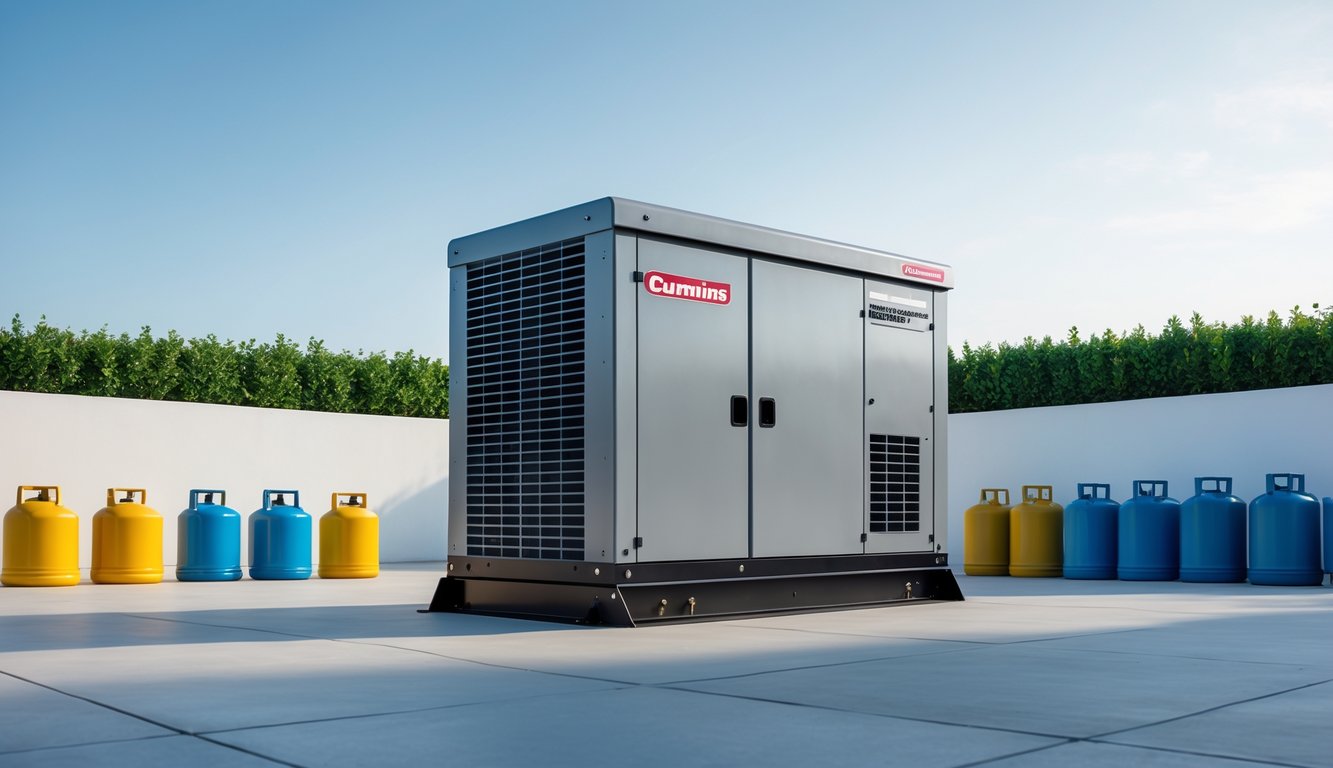
Cummins offers different fuel options for standby generators, each with distinct efficiency ratings and operational costs.
Your choice between natural gas, propane, diesel, or hybrid systems will determine your generator's performance during power outages.
Natural Gas or Propane Models
Natural gas generators connect directly to your home's gas line, providing unlimited fuel supply during extended outages.
You never need to worry about refueling or storage tanks.
Propane models require storage tanks but offer better fuel stability.
Propane doesn't degrade over time like gasoline, making it ideal for infrequent use.
Efficiency Comparison:
- Natural gas: 25-35% thermal efficiency
- Propane: 20-30% thermal efficiency
- Operating costs: $0.02-0.04 per kWh
Both fuel types burn cleaner than diesel.
They produce fewer emissions and require less maintenance on your backup power system.
Natural gas availability depends on your utility connection.
During natural disasters, gas lines may shut off for safety reasons.
Diesel Generators
Diesel generators provide top-tier efficiency with energy output reaching 35-45% thermal efficiency.
They excel in extreme weather conditions and extended runtime situations.
Cummins diesel engines deliver consistent fuel efficiency through precise fuel delivery systems.
Their combustion optimization reduces unnecessary fuel consumption.
Diesel Performance Benefits:
- Longer lifespan: 15,000-20,000 hours
- Better fuel economy: 0.5-0.8 gallons per hour per 10kW
- Cold weather reliability: Starts in temperatures below -10°F
Fuel storage requires tanks and regular maintenance.
Diesel fuel degrades after 12-18 months without additives.
Operating costs range from $0.15-0.25 per gallon.
Your home standby generators will consume approximately 2-3 gallons per hour at 50% load.
Hybrid and Renewable Options
Cummins offers hybrid systems that combine traditional generators with battery storage.
These systems reduce fuel consumption by 20-40% during partial load conditions.
Solar integration allows your generator to recharge batteries during daylight hours.
This extends runtime without additional fuel consumption.
Hybrid System Components:
- Battery bank (lithium-ion or lead-acid)
- Solar panel array (optional)
- Intelligent load management
- Automatic switching controls
Renewable options work best for homes with moderate power needs.
They provide quiet operation during nighttime hours when noise restrictions apply.
Initial costs are higher but operational savings accumulate over time.
Your backup power system becomes more sustainable while maintaining reliability.
Installation and Integration with Your Home
Cummins standby generators require professional installation to ensure safe operation and code compliance.
The process involves detailed site planning, proper permitting, and skilled electrical work that connects seamlessly with your home's power system.
Professional Generator Installation Process
Installing a home standby generator requires licensed professionals who understand electrical codes and safety protocols.
Your installer will handle the complex electrical connections between your generator, automatic transfer switch, and main electrical panel.
The installation team will first position your Cummins generator on a prepared concrete pad.
They'll connect the fuel lines to your natural gas supply or propane tank using proper fittings and leak-testing procedures.
Key installation steps include:
- Installing the automatic transfer switch near your electrical panel
- Running electrical conduit from the generator to your home
- Connecting control wiring between components
- Grounding the system according to local electrical codes
- Testing all connections and safety systems
Your electrician will program the transfer switch to monitor utility power.
When an outage occurs, the system automatically starts your generator within 10-20 seconds.
The entire installation typically takes 6-8 hours for most residential applications.
Complex installations with long fuel runs or electrical upgrades may require additional time.
Site Assessment and Planning
Your installer will evaluate your property to determine the optimal generator placement.
The unit must be positioned at least 5 feet from windows, doors, and air intakes to prevent carbon monoxide infiltration.
Site requirements include:
- Level ground with proper drainage
- Clear access for maintenance
- Adequate ventilation clearances
- Proximity to fuel and electrical connections
The assessment also includes calculating your home's power requirements.
Your installer will review your electrical panel to determine which circuits need backup power during outages.
Fuel supply considerations vary by type.
Natural gas connections require coordination with your utility company.
Propane installations need tank sizing based on your generator's fuel consumption and desired runtime.
Your installer will identify the shortest route for electrical conduit and fuel lines.
This planning reduces installation costs and ensures clean, professional-looking connections.
Permits and Local Codes
Generator installation requires permits from your local building department before work begins.
Your installer typically handles permit applications as part of their service.
Common permits needed:
- Electrical permit for transfer switch and wiring
- Fuel permit for gas line connections
- Zoning permit for equipment placement
Local codes specify minimum clearances from property lines, structures, and utilities.
Most areas require generators to be at least 5 feet from windows and 3 feet from other structures.
Your installation must pass electrical and fuel system inspections.
The inspector will verify proper grounding, correct wiring methods, and safe fuel connections.
Some homeowner associations have additional requirements for generator placement or screening.
Check your HOA rules before finalizing your installation location.
Building codes also specify noise limits for residential generators.
Cummins units typically meet these requirements, but your installer will confirm compliance with local ordinances.
Maintenance, Costs, and Ownership Experience
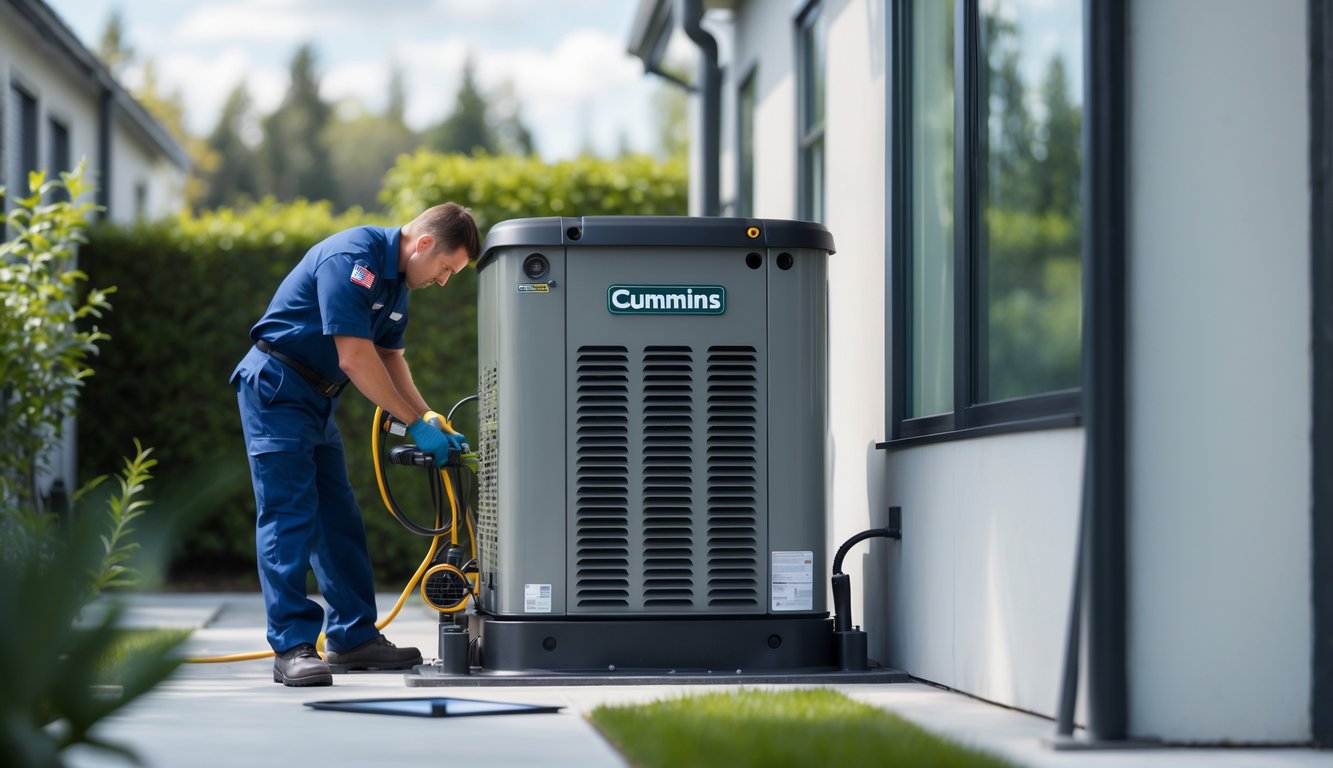
Cummins standby generators require specific maintenance schedules and offer advanced monitoring features that help reduce long-term ownership costs.
Understanding warranty coverage and service support ensures reliable emergency power for your home.
Routine Maintenance Requirements
Your Cummins home standby generator needs regular maintenance to ensure reliable operation during emergencies.
The comprehensive maintenance checklist includes daily, weekly, monthly, and annual tasks that keep your system running properly.
Daily checks include visual inspections for fluid leaks, loose connections, and frayed wires.
You should also check fuel levels, coolant, and oil levels daily.
Monitor the control panel for alarms, warning lights, or fault codes that indicate potential issues.
Weekly maintenance requires running your generator for 15-30 minutes under load to prevent fuel system problems.
Check the coolant system for leaks and inspect battery connections for corrosion.
For diesel units, drain any accumulated water from the fuel-water separator weekly.
Monthly tasks involve thorough inspections of engine oil, battery electrolyte levels, and coolant.
Perform load tests to verify your generator can handle rated loads without voltage fluctuations or unusual noises.
Keep the area around your generator clean and free from debris for proper ventilation.
Annual maintenance includes oil and filter changes, fuel filter replacement, and air filter replacement.
The coolant system needs flushing to prevent corrosion and buildup.
Professional inspection by an authorized Cummins dealer helps identify subtle issues before they become major problems.
Smart Monitoring and Diagnostics
Modern Cummins generators include built-in monitoring systems that track performance and alert you to potential issues.
These systems reduce maintenance costs by identifying problems early.
The digital control panel displays system status, fault codes, and maintenance reminders.
You can view operating hours, battery voltage, and engine parameters at a glance.
Remote monitoring capabilities allow you to check your generator status from your smartphone or computer.
This feature sends alerts for maintenance needs, power outages, and system faults.
Diagnostic codes help technicians quickly identify specific problems during service calls.
This reduces repair time and labor costs compared to manual troubleshooting.
The system logs operating data that helps track fuel consumption, runtime hours, and maintenance intervals.
This information helps you plan maintenance schedules and budget for ongoing costs.
Predictive maintenance features analyze performance trends to recommend service before components fail.
This approach prevents costly emergency repairs and extends equipment life.
Warranty and Service Support
Cummins provides comprehensive warranty coverage for their home standby generators. Residential units typically include 5 years or 2,000 hours of operation.
Commercial applications may have different warranty terms. The warranty covers parts and labor for manufacturing defects but requires proper installation by certified technicians.
Regular maintenance with genuine Cummins parts maintains warranty coverage. Cummins supports customers through thousands of authorized dealers and service centers across North America.
This extensive network helps you find qualified technicians for installation, maintenance, and repairs. Many dealers offer 24/7 emergency support for critical applications.
Response times depend on your service agreement and geographic location. Cummins' large market presence and established supply chain ensure strong parts availability.
Common maintenance items like filters and oil are widely available at competitive prices. You can choose extended warranty options for additional coverage beyond the standard period.
These plans may include preventive maintenance services. Service agreements often include priority scheduling, discounted labor rates, and guaranteed response times for emergency repairs.
Frequently Asked Questions
Buyers often focus on power output comparisons, maintenance schedules, and warranty coverage when selecting Cummins generators.
Energy efficiency ratings and new smart connectivity features also play key roles in purchasing decisions.
What factors should I consider when choosing a Cummins standby generator for my home?
You need to calculate your home's power requirements first. Start with essential appliances like refrigerators, heating systems, and lighting.
Consider your lot size and local building codes. Cummins home standby generators must be installed by a certified electrician in compliance with all regulations.
Your budget affects both the generator size and installation costs. Larger homes typically need 20-25 kW units.
Smaller homes may only require 13-17 kW models. Weather conditions in your area matter too.
If you live in extremely cold climates, you might need a cold weather kit with component heaters.
How does the power output of Cummins residential generators compare to other brands?
Cummins offers generators ranging from 13 kW to 125 kW for residential use. Their smaller models compete directly with Generac and Kohler in the 13-20 kW range.
The comparison between Kohler and Cummins generators shows similar power outputs across comparable models. Both brands offer reliable performance in their respective size categories.
Cummins uses commercial-grade components even in residential units. This approach provides consistent power delivery but may result in higher upfront costs than some competitors.
What are the maintenance requirements for a Cummins standby generator?
Your maintenance schedule depends on your specific generator model. Consult your Operator Manual for recommended maintenance, as requirements vary by unit.
Most Cummins generators need oil changes every 100-200 hours of operation. Air filter replacements typically occur annually or after 200 hours of use.
You should schedule professional maintenance through a local Cummins dealer for routine service calls. Weekly exercise cycles help maintain engine health.
Your generator automatically runs for 12-20 minutes to circulate fluids and charge the battery.
How do Cummins standby generators perform in terms of energy efficiency?
Cummins generators use advanced engine technology to optimize fuel consumption.
Their engines deliver consistent performance at varying load levels. The automatic load management feature adjusts power output based on your home's current needs.
This reduces unnecessary fuel consumption during low-demand periods. Natural gas models typically offer better efficiency than propane units.
Liquid propane provides more power per unit but burns faster than natural gas connections. Your generator's efficiency also depends on proper sizing.
An oversized unit will consume more fuel than necessary, while an undersized generator will strain under heavy loads.
What warranty options are available for Cummins standby generators?
Cummins 13, 17 and 20 kW models include a 5-year/2,000 hour limited warranty. This coverage exceeds many competitor offerings in the residential market.
25-125 kW models include a 2-year limited warranty as standard coverage. These larger commercial-grade units have different warranty terms.
Extended warranty options allow for full coverage up to 10 years. These plans typically cover parts, labor, and travel charges for authorized service calls.
Your warranty remains valid regardless of where you purchase the generator. Third party retailers guarantee the Cummins warranty as long as installation follows manufacturer guidelines.
What are the latest technologies incorporated into the 2025 line of Cummins home generators?
Smart connectivity features allow you to monitor generators remotely through smartphone apps. You can check generator status, maintenance schedules, and power outage alerts from anywhere.
Advanced transfer switches provide faster switching times between utility and generator power. The RA Series ATS models offer seamless transitions with minimal interruption.
Improved sound dampening reduces noise levels compared to previous generations. The QuietConnect series minimizes operational sound for residential neighborhoods.
Enhanced cold weather performance includes better battery heaters and improved fuel systems. These upgrades ensure reliable starting in temperatures well below freezing without additional kits.
Leave a comment