

Last updated: April 17, 2026
Quick Answer
A 20kW standby generator runs effectively unlimited hours on natural gas as long as utility pressure stays above 5 to 7 inches W.C. On propane, runtime depends on tank size: a 500-gallon tank delivers 18 to 30 days at typical household loads of 25 to 50 percent, while a 1,000-gallon tank stretches self-sufficiency to 5 to 8 weeks. Most homes draw 5 to 15 kW during an outage, so real-world consumption sits well below the 1.42 gallons per hour full-load figure.
A 20kW standby generator on a 500-gallon propane tank will run your home for 18 to 30 days, depending on how much power you actually use. On natural gas, it runs as long as the gas utility keeps flowing. Those are the short answers. Below, you will find the full math, real consumption rates, and the tank sizing strategy that keeps your lights on through any power outage.
Who This Is For
This guide is for homeowners who have selected a 20kW standby generator and need to know how long it will run on propane or natural gas before committing to a tank size or fuel contract. The runtime tables and load scenarios below also help you decide whether 20kW is the right size for your home.
Key Takeaways
- A 20kW standby generator on propane burns 0.69 to 1.42 gallons per hour depending on load (consistent with residential propane consumption rates tracked by the U.S. Energy Information Administration).
- A 500-gallon propane tank gives you 18 to 30 days of runtime at typical home loads (25-50%).
- Natural gas provides unlimited runtime as long as utility pressure stays above 5-7 in. W.C.
- Most homes draw 5-15kW during an outage, which means your generator runs at 25-75% load, not 100%.
- Temperatures above 60°F reduce output by roughly 1% per degree Celsius, cutting into your safety margin.
- Oil checks every 24 hours during extended operation are required to avoid engine damage.
What Controls a 20kW Generator’s Runtime
Three factors determine how long a 20kW standby generator can run: fuel source, load level, and environmental conditions. Get any one of these wrong and your runtime estimate will be off by days.
Fuel source is the biggest variable. Propane generators pull from a fixed tank, so runtime is limited by tank size. Natural gas generators connect to your utility line, so they run continuously as long as the supply holds. Each fuel source has different consumption rates even on the same generator.
Load level is the second factor. A 20kW generator rarely runs at full 20kW output. Your actual load depends on which appliances are running at any given moment. A home running just the furnace, fridge, and lights might pull 5kW (25% load). Add central air conditioning and you could hit 15kW (75% load). The difference in fuel consumption between 25% and 75% load is significant.
Environmental conditions round out the picture. High temperatures and high altitude both reduce a generator’s rated output. A generator rated at 20kW in mild weather might only deliver 17.8kW on a hot summer afternoon. That means your appliances push it harder, which burns more fuel per hour.
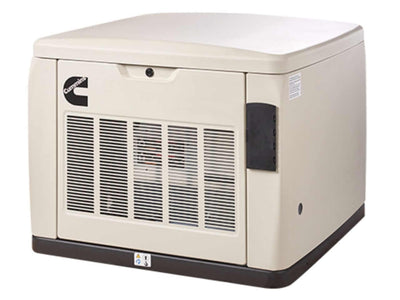
The rest of this article breaks down each factor with real numbers from the Cummins RS20AC spec sheet so you can calculate your own run times with confidence.

Propane Runtime: The Math You Need
Propane runtime comes down to a simple formula: tank size divided by gallons-per-hour consumption. The Cummins RS20AC publishes verified LP vapor consumption rates at each load level, and these numbers are representative of most air-cooled 20kW standby generators on the market [1].
Propane Consumption by Load Level (Cummins RS20AC)
| Load Level | Power Output | Propane Consumption |
|---|---|---|
| 25% | 5 kW | 0.69 gal/hr |
| 50% | 10 kW | 0.90 gal/hr |
| 75% | 15 kW | 1.14 gal/hr |
| 100% | 20 kW | 1.42 gal/hr |
Now here is what those consumption rates look like against common propane tank sizes. Propane tanks should only be filled to 80% capacity for safety, but the numbers below use the full tank volume to match how tanks are sold and labeled.
Propane Runtime by Tank Size and Load Level
| Tank Size | 25% Load (5 kW) | 50% Load (10 kW) | 75% Load (15 kW) |
|---|---|---|---|
| 250 gallons | 362 hrs (15.1 days) | 278 hrs (11.6 days) | 219 hrs (9.1 days) |
| 500 gallons | 725 hrs (30.2 days) | 556 hrs (23.2 days) | 439 hrs (18.3 days) |
| 1,000 gallons | 1,449 hrs (60.4 days) | 1,111 hrs (46.3 days) | 877 hrs (36.5 days) |
Note: Runtimes assume full tank capacity. Propane tanks are typically filled to 80% for safety. Multiply by 0.8 for usable capacity estimates.
For most homeowners, a 500-gallon tank at 50% load provides over 23 days of continuous power. That covers nearly any extended power outage, including multi-week events caused by ice storms or hurricanes.
The Cummins RS20A is a solid entry point for homeowners who want a 20kW standby generator on propane or natural gas. It pairs with a separately purchased transfer switch, which gives you flexibility to choose the right switch for your panel.

Natural Gas: Unlimited Runtime With One Condition
Natural gas generators can run indefinitely as long as utility supply holds. A 20kW standby generator connected to natural gas is no exception. There is no fuel tank to empty. As long as your gas utility maintains supply pressure, the generator keeps running. That makes natural gas the preferred fuel source for homeowners in areas with reliable gas infrastructure.
The one condition is supply pressure. A 20kW generator like the Cummins RS20AC requires a minimum of 5-7 in. W.C. (inches of water column) supply pressure to operate at rated output.
Natural Gas Consumption (Cummins RS20AC)
| Load Level | BTU/hr Input | Approx. ft³/hr |
|---|---|---|
| 25% (5 kW) | 128,822 | ~129 ft³/hr |
| 50% (10 kW) | 163,890 | ~164 ft³/hr |
| 75% (15 kW) | 212,731 | ~213 ft³/hr |
| 100% (20 kW) | 255,947 | ~256 ft³/hr |
A standard residential gas meter is rated for about 175,000 BTU/hr [2]. That capacity handles a 20kW generator comfortably at 50% load (163,890 BTU/hr) but falls short at full load (255,947 BTU/hr). If you plan to run the generator at 75-100% load while also using gas appliances like a furnace or water heater, have a licensed plumber verify your gas line sizing and meter capacity before installation.
Most residential homes have adequate natural gas supply for a 20kW generator at typical outage loads of 50-75%. The key advantage over propane is that you never have to schedule fuel deliveries or worry about running out during an extended power outage.
How Much Power Does Your Home Actually Use?
Your generator run times depend entirely on what you are running. Matching your power needs to the right load level is how you maximize runtime. Most homeowners overestimate their load, which leads to oversized tanks or unnecessary upgrades. Here is a breakdown of common household loads so you can estimate your actual draw.
| Appliance | Running Watts | Startup Surge |
|---|---|---|
| 3-ton central AC | 3,500-5,000W | 15-20 kVA |
| 1HP well pump | 1,500-2,000W | 3,000-4,000W |
| Electric water heater | 4,000-5,500W | N/A (resistive) |
| Refrigerator | 150-300W | ~1,200W |
| Freezer | 100-250W | ~1,000W |
| Sump pump | 800-1,500W | 2,000-4,000 VA |
Essential circuits only (lights, fridge, freezer, sump pump, furnace fan): 5-8 kW. At 25-40% load, a 500-gallon propane tank can last a month or longer.
Heating-only home (gas furnace with blower, fridge, well pump, general circuits): 5-15 kW. This puts you at 25-75% load depending on how many circuits are active.
Full home with central AC (AC plus well pump plus water heater plus all circuits): 15-25 kW. This pushes a 20kW generator to 75-100% load, especially during AC startup surges. If your total running load sits near 20kW, consider whether a larger unit makes more sense.
The standard fuel sources for residential 20kW standby generators are natural gas and propane. Both fuel types support full rated output.
A 20kW standby generator can run for several days or weeks depending on fuel type and load. The takeaway: most homes during a power outage land at 30-60% load on a 20kW standby generator. That is the sweet spot where fuel consumption stays moderate and the generator runs comfortably within its rating.
Quick Sizing Reference: Generator Size by Home Profile
| Home Size | Estimated Load | Recommended Size | Runtime (NG) | Runtime (500-gal LP) |
|---|---|---|---|---|
| 1,000 - 1,800 sq ft | 5 - 10 kW | 14 - 20 kW | Unlimited* | 23 - 30 days |
| 1,800 - 2,500 sq ft | 10 - 15 kW | 20 kW | Unlimited* | 18 - 23 days |
| 2,500 - 3,500 sq ft | 12 - 18 kW | 20 - 22 kW | Unlimited* | 14 - 20 days |
| 3,500 - 5,000 sq ft | 18 - 28 kW | 24 - 26 kW | Unlimited* | 10 - 16 days |
| 5,000+ sq ft / dual HVAC | 25 - 40 kW | 26 - 48 kW | Unlimited* | 7 - 12 days |
*Natural gas runtime is continuous as long as utility supply pressure stays above 5-7 inches of water column. Propane runtimes assume a 500-gallon tank at average household load (not peak). Actual runtime varies with temperature, altitude, and appliance usage patterns.
Temperature and Altitude: The Hidden Runtime Killers
Generator spec sheets list rated power at 60°F (15.5°C) at sea level. If your climate or elevation differs, your generator produces less power than the label says. That means higher effective load percentage and faster fuel consumption.
The Cummins RS20AC derates at 1% per degree Celsius above 15.5°C. Here is how that plays out at common summer temperatures:
| Ambient Temperature | Power Reduction | Effective Output |
|---|---|---|
| 60°F (15.5°C) | 0% | 20.0 kW |
| 80°F (26.7°C) | ~11.2% | ~17.8 kW |
| 95°F (35°C) | ~19.5% | ~16.1 kW |
| 104°F (40°C) | ~24.5% | ~15.1 kW |
On a 95°F day your 20kW generator delivers about 16.1 kW. If your home draws 15kW with the AC running, you are now at 93% effective load instead of 75%. That increases fuel consumption and leaves almost no margin for startup surges from the AC compressor or well pump.
Above 500 feet of elevation, air-cooled generators lose roughly 3.5% of rated power per 1,000 feet. A home at 3,000 feet starts with about 9% less power before temperature enters the picture. If you live at altitude in a hot climate, both factors stack. The practical fix: size your propane tank one step up from what the base math suggests to cover the real-world performance gap.

Load Management Strategies
You do not have to power everything at once. Smart load management extends your generator run times and keeps the engine at a comfortable load level.
Use a Smart Transfer Switch
A whole-home transfer switch with load management can monitor total draw and temporarily shed non-critical circuits when the generator approaches its limit. For example, it can delay the water heater while the AC compressor starts, then restore it once the surge passes. This keeps your generator from hitting 100% load and extends propane run times considerably.
Stagger High-Draw Appliances
Avoid running the electric water heater, AC, and oven at the same time. During an extended outage, heat water during off-peak hours and limit oven use. This keeps your average load at 40-60% instead of spiking to 80-100%.
Reduce AC Runtime
Raising the thermostat by 3-5 degrees during an outage can reduce AC runtime by 20-30%, which drops your average generator load significantly. The difference between running at 50% load and 75% load on a 500-gallon propane tank is nearly 5 extra days of runtime.
The Cummins RS20AC ships with a 200A whole-home transfer switch included, which simplifies installation and gives you load management from day one. The Intellichoice controller handles automatic startup, load monitoring, and weekly exercise cycles.

Choosing the Right Propane Tank Size
Your propane tank size determines how many days you can ride out a power outage without a fuel delivery.
A 250-gallon tank provides 9-15 days of runtime at typical loads. This works for areas with short outage histories where fuel deliveries remain accessible within a few days. It is the minimum recommended size for a 20kW standby generator.
The 500-gallon tank is the most popular choice. At 50% load it delivers 23 days of continuous operation, which covers nearly any weather event including extended ice storms and hurricane recovery periods.
A 1,000-gallon tank provides 36-60 days of runtime. This makes sense for rural properties where propane delivery may be delayed during widespread outages, or for homeowners who buy propane in bulk during the off-season when prices are lower.
| Scenario | Recommended Tank | Why |
|---|---|---|
| Suburban, short outages (1-3 days) | 250-gallon | Fuel delivery is accessible within days |
| Hurricane or ice storm zone | 500-gallon | 23+ days covers extended grid-down events |
| Rural, limited fuel access | 1,000-gallon | Self-sufficient for 5-8 weeks |
| Natural gas primary, LP backup | 250-gallon | Backup use only if NG pressure drops |
Keep in mind that propane tanks are filled to 80% capacity for thermal expansion safety. A “500-gallon” tank holds about 400 gallons of usable propane. Factor this into your planning for a precise runtime estimate.
If you prefer natural gas or want slightly higher output for extra headroom, the Briggs & Stratton PowerProtect PP22 at 22kW gives you 10% more capacity on the same fuel source. It includes Bluetooth monitoring through the MobileLink app.
10-Year Ownership Cost Comparison: 20kW Standby Generator
| Cost Category | Natural Gas | Propane (500-gal tank) |
|---|---|---|
| Generator purchase | $5,800 - $7,000 | $5,800 - $7,000 |
| Installation (pad, wiring, gas line) | $3,000 - $5,000 | $3,500 - $6,000 |
| Propane tank (lease or purchase) | $0 | $800 - $2,500 |
| Annual maintenance (oil, filters, service) | $200 - $350/yr | $200 - $350/yr |
| Annual fuel cost (weekly exercise + 72-hr outage) | $150 - $300/yr | $400 - $800/yr |
| Warranty repairs (post-warranty, yr 6-10) | $500 - $1,500 | $500 - $1,500 |
| Estimated 10-Year Total | $12,800 - $19,000 | $14,500 - $23,500 |
Natural gas typically costs 30-50% less per BTU than propane, which compounds over a decade of weekly exercise cycles and outage events. Propane's higher per-gallon cost is offset by the fact that you control your fuel supply and are not dependent on gas utility pressure during a widespread emergency.
Scenario: Ice Storm, 72 Hours Without Grid Power
A January ice storm knocks out power across your county. Temperatures hover at 18 degrees F. Your 20kW generator starts automatically within 10 seconds. Your gas furnace blower, refrigerator, sump pump, well pump, and essential lights draw a combined 7kW, putting you at 35% load.
On a 500-gallon propane tank, you have roughly 26 days of fuel at this rate. The real risk is not running out of propane. It is running out of patience. After 72 hours, utility crews restore power to most neighborhoods. Your propane gauge has barely moved.
On natural gas, the equation is even simpler: your generator runs the entire time without fuel concerns, as long as gas utility pressure stays above 5 inches of water column. That reliability is why most installers in cold climates recommend natural gas when a utility connection is available.
When a 20kW Generator Is Not Enough
A 20kW standby generator handles most homes, but certain setups push past its limits.
Your central AC is 4 tons or larger. A 4-ton or 5-ton AC system can draw 5,000-7,000W running with startup surges exceeding 20 kVA. Combined with a well pump, water heater, and general circuits, total load regularly exceeds 20kW.
You have an electric range, electric dryer, and electric water heater. Three major electric appliances running simultaneously can add 12,000-15,000W to your load. On top of AC and other circuits, a 20kW unit will be overloaded.
Your home is larger than 3,500 square feet with multiple HVAC zones. Larger homes with two AC systems often have peak loads above 25kW.
You live in a hot climate at elevation. Temperature and altitude derating can reduce your effective output to 15-16kW on a summer afternoon. If your normal load sits at 15kW, you have no headroom for startup surges.
In these cases, a 26kW unit like the Briggs & Stratton PowerProtect PP26 provides the extra capacity you need. With a 65.5 kVA motor-starting rating, it handles large HVAC startup surges without straining, and the extra 6kW of capacity gives you meaningful headroom in hot weather when derating cuts into output.

Briggs & Stratton PP26 26kW PowerProtect Standby Generator
$6,833.00
Shop NowOil and Maintenance During Extended Operation
Runtime calculations assume the generator stays mechanically healthy during an extended period of use [4]. That requires regular maintenance during extended runs.
Oil monitoring: Check the oil level every 24 hours during a power outage. Under sustained full load, oil degrades faster than during weekly exercise cycles. Standard oil change intervals run every 100 hours under normal conditions, but during continuous heavy-load operation check oil condition every 8-25 hours and change it if it appears dark or thin.
Air filter: Inspect the air filter every 48-72 hours in dusty or smoky conditions. A clogged filter restricts airflow, raises operating temperature, and increases fuel consumption.
Airflow clearance: Keep the area around the unit clear of debris, snow, and vegetation. The NFPA 37 standard requires a minimum 5-foot clearance from openings and combustible materials [3]. Blocked airflow can trigger thermal shutdowns, especially in hot weather when the generator is already running near its temperature limit.
Stock supplies before storm season: Extra oil, an oil filter, an air filter, and spark plugs. During a widespread outage, auto parts stores may be closed. Having supplies ready means your generator keeps running while others wait for parts.
The Bottom Line
A 20kW standby generator covers most homes under 3,500 square feet with room to spare. Your actual runtime depends on three things: fuel source, load level, and how well you manage high-draw appliances during an outage. On natural gas, runtime is effectively unlimited. On propane with a 500-gallon tank, you get 18 to 30 days at typical household loads.
Fuel choice shapes your long-term ownership experience. Natural gas costs less per BTU, eliminates fuel delivery logistics, and runs as long as the utility holds. Propane gives you fuel independence and works in areas without gas service, but requires tank sizing that matches your outage risk profile.
The best time to install a standby generator is before you need one. Explore the full lineup of Briggs & Stratton home standby generators to find the right fit for your home, fuel source, and budget. Briggs & Stratton units ship with a 7-year comprehensive warranty (parts, labor, and travel), while Generac offers a 5-year limited warranty and includes transfer switch options that simplify installation.
No one who installs a whole-home standby generator regrets the decision during the first outage. You have done the research and you know which specs matter for your home. The next step is getting two or three quotes from licensed installers and confirming the unit is in stock before storm season starts. The window between one outage and the next is the only window you control.
References
- U.S. Energy Information Administration. "Propane Explained." eia.gov
- U.S. Energy Information Administration. "Natural Gas Explained." eia.gov
- National Fire Protection Association. "NFPA 37 Standard for Stationary Combustion Engines." nfpa.org
- U.S. Department of Energy. "Backup Power Systems for Homes." energy.gov
- Briggs & Stratton Energy Solutions. "PowerProtect Home Standby Generators." energy.briggsandstratton.com
- Cummins. "Quiet Connect Home Standby Generators." cummins.com
Frequently Asked Questions
How many days can a 20kW generator run on a 500-gallon propane tank?
At 50% load (10kW output), a 20kW generator burns about 0.90 gallons of propane per hour. A 500-gallon tank provides approximately 556 hours or 23.2 days of continuous runtime. At 25% load that extends to 30.2 days. At 75% load it drops to 18.3 days. Most homes average 40-60% load during an outage, so plan for roughly 18-27 days of runtime from a 500-gallon tank.
Can a 20kW generator run central air conditioning?
Yes. A 20kW standby generator can run a 3-ton central AC system (3,500-5,000W running) along with other household loads. The key concern is startup surge. A 3-ton AC compressor can surge to 15-20 kVA on startup. A 20kW generator handles this, but if you have a 4-ton or larger system, verify that total surge plus running load stays within the generator’s surge rating before committing to a 20kW unit.
Does a 20kW generator need a dedicated propane tank?
It depends on your setup. Some homeowners connect the generator to the same tank that feeds a gas fireplace or pool heater. This works, but other appliances will compete for fuel during an outage. A dedicated tank ensures your runtime calculations remain accurate. The tank must have a separate supply line with adequate flow capacity for the generator’s maximum consumption rate of 1.42 gal/hr at full load.
What size natural gas meter does a 20kW generator need?
A standard residential gas meter rated at 175,000 BTU/hr is adequate for a 20kW generator running at 50% load (163,890 BTU/hr). At 75% or 100% load, the generator’s demand (212,731 to 255,947 BTU/hr) exceeds a standard meter’s capacity. If you expect to run at higher loads, or if the generator shares the gas supply with a furnace and water heater, contact your gas utility about upgrading your natural gas line and meter to a higher capacity.
How often do I need to change the oil during extended operation?
During normal use, oil change intervals are every 100 hours or 6 months. During an extended power outage with sustained load, check the oil level every 24 hours. Under heavy continuous load, inspect oil condition every 8-25 hours and change it if it looks degraded. Keep extra oil and filters on hand before storm season so you are not caught without supplies during an outage.
Can a 20kW generator run the whole house?
For most homes under 3,000 square feet with a single AC system, yes. A whole house power generator rated at 20kW handles a typical load of 12-18kW with central AC running. A 20kW generator covers this with some headroom. Homes with multiple AC zones, electric water heaters, electric ranges, and electric dryers may exceed 20kW during peak use. In those cases, load management through a smart transfer switch or upgrading to a 22-26kW unit is recommended.
What happens if the generator runs low on propane?
Most modern standby generators have a low-pressure sensor that triggers a controlled shutdown before the tank runs completely dry. Running the tank to empty can cause the generator to stall under load and may make it difficult to restart because air enters the fuel line. Monitor your tank gauge regularly during extended outages and schedule a propane delivery when the tank drops below 20%.
At what temperature does a 20kW generator lose power?
A 20kW generator is rated at full power at 60°F (15.5°C) at sea level. Above that temperature, output decreases by approximately 1% per degree Celsius. At 80°F (26.7°C), you lose about 11.2% of rated power, dropping effective output to roughly 17.8kW. At 95°F (35°C), output falls to about 16.1kW. This derating matters most on hot days when AC load is also at its highest.
Is a 20kW generator big enough for a 3,000 sq ft home?
In most cases, yes. A 3,000 sq ft home with a single 3-ton AC system, standard appliances, and a gas water heater typically draws 12-18kW during an outage. A 20kW standby generator covers this with headroom. If your home has a 4-ton or larger AC, an electric water heater, and electric cooking appliances, total peak load can exceed 20kW. Have your electrician run a load calculation before committing to a size.
How long can a 20kW generator run continuously?
On natural gas, a 20kW standby generator can run continuously for weeks, providing reliable backup power as long as gas supply and pressure remain adequate. On propane, continuous runtime is limited by tank size. Mechanically, modern standby generators are built for extended operation, but they require maintenance during long runs. Check oil every 24 hours and plan for an oil change every 100 hours. With proper maintenance, a 20kW generator can sustain 500+ hours continuously, though most outages last far less than that.