

Last updated: April 17, 2026
Quick Answer
When the power goes out and a power outage hits, a standby propane generator runs continuously for about 5 to 22 days on a 500-gallon tank at normal household load, and up to 30 days on a 1,000-gallon tank [1]. Portable propane generators run 8 to 14 hours on a 20-pound tank at 50% load [2]. Runtime scales with tank size and load, not time. Reliable backup power comes from right-sizing both the generator and the tank. A larger tank or a lighter load always buys you more hours.
Who This Is For
- Homeowners planning for multi-day outages who want to know how long propane fuel actually lasts
- RV owners, preppers, and off-grid users sizing a propane tank for realistic emergency runtime
- Anyone weighing propane against natural gas or gasoline for a home standby generator
How Long Does a Propane Tank Last on a Generator?
How long can a generator run on propane? A full propane tank lasts anywhere from 8 hours to 30 days, depending on tank size and load. Runtime math is simple. When you run a generator on propane, every gallon holds about 91,500 BTU of energy [3]. A generator burns through that energy at a rate set by the wattage you pull.
Here is what that means in practice. A 20-pound tank holds about 4.6 gallons of propane. A 500-gallon residential tank holds about 400 usable gallons (tanks fill to 80% for safety [4]). A 1,000-gallon tank holds about 800 usable gallons.
At 50% load on a 10,000-watt generator, expect to burn roughly 1.5 gallons per hour [2]. That gives you 3 hours on a 20-pound tank, 266 hours (11 days) on a 500-gallon tank, and 533 hours (22 days) on a 1,000-gallon tank. Those are real numbers, not marketing ones.
What Runtime Can You Expect at Different Tank Sizes?
The short answer is: tank size times 80% usable capacity, divided by gallons-per-hour at your load. Use the matrix below to estimate runtime for any combination of tank and load. Figures assume a typical 10 kW to 22 kW air-cooled standby generator with measured fuel curves.
| Load | 20 lb Tank (4.6 gal) |
100 lb Tank (23 gal) |
250 gal Tank (200 usable) |
500 gal Tank (400 usable) |
1,000 gal Tank (800 usable) |
|---|---|---|---|---|---|
| 25% (approx. 0.75 gal/hr) | 6 hrs | 31 hrs | 11 days | 22 days | 44 days |
| 50% (approx. 1.5 gal/hr) | 3 hrs | 15 hrs | 5.5 days | 11 days | 22 days |
| 75% (approx. 2.25 gal/hr) | 2 hrs | 10 hrs | 3.7 days | 7.4 days | 14.8 days |
| 100% (approx. 3.0 gal/hr) | 1.5 hrs | 7.6 hrs | 2.7 days | 5.5 days | 11 days |
Remember that 25% load figure when you plan. Most homes average 3 to 5 kW during an outage when you cycle appliances, not run everything at once [5]. Realistic runtime on a 500-gallon tank with smart load management lands closer to 15 to 20 days, not the worst-case 5.5.
How Much Propane Does a Generator Use Per Hour?
A typical standby generator burns 1.5 to 3 gallons per hour depending on load [2]. That rate is remarkably consistent across brands because propane combustion physics does not care about marketing claims.
Here are measured rates for common sizes at half load, the sweet spot for most household backup:
- 10 kW generator: roughly 1.5 gallons per hour
- 13 kW generator: roughly 1.9 gallons per hour
- 17 kW generator: roughly 2.4 gallons per hour
- 20 kW generator: roughly 2.8 gallons per hour
- 22 kW generator: roughly 3.0 gallons per hour
- 26 kW generator: roughly 3.6 gallons per hour
Double those numbers for full load. A 22 kW generator at 100% load burns closer to 6 gallons per hour. That same generator at 25% load may only burn 1.5 gallons per hour. Load management doubles or triples your runtime for free.
How Does Cold Weather Affect Propane Generator Runtime?
Cold weather can cut your propane runtime by 5 to 20 percent and, in extreme cases, stop your generator from starting at all. Propane stays liquid down to about -44°F, but tank vapor pressure drops sharply long before that. Practical problems begin around 0°F for aboveground tanks [9].
Here is what that means in practice. A propane tank feeds a generator with vapor, not liquid. The tank uses ambient heat to boil liquid propane into gas. When the outside temperature drops, the tank boils off fuel more slowly and line pressure falls. Your generator can stall or refuse to carry load.
Tank size matters more than you think in cold climates. A larger tank has more surface area and more liquid mass, so it produces vapor faster at a given temperature. A 120-gallon tank may struggle to feed a 20 kW generator at 10°F. A 500-gallon tank handles the same load without issue.
Underground tanks outperform aboveground tanks in winter. Soil stays around 50°F a few feet down, even when air temperatures drop below zero. An underground 500-gallon tank delivers stable vapor pressure through the worst of a Minnesota cold snap. Aboveground tanks in the same storm may need a tank warmer or a second parallel tank.
Cold-weather kits solve the generator side of the problem:
- Battery warmer pad: keeps the starter battery above 32°F so the generator cranks on the first try.
- Oil heater: warms the crankcase so oil flows at startup. Required below 0°F on most home standby units.
- Carburetor or intake heater: prevents ice in the fuel train on extreme-cold starts.
Expect the cold-weather kit to add $150 to $400 at install. If you live where single-digit lows are normal, factor it into the purchase. Your generator warranty may also require it for cold-weather operation [10].
Runtime itself also shrinks in cold weather. A generator running a heat pump auxiliary strip or electric water heater in freezing temperatures burns more fuel per kilowatt-hour. Plan on 10 to 15 percent higher gallons-per-hour consumption at sustained outdoor temperatures below 20°F. A 500-gallon tank that gives you 18 days at 40°F may give you 15 to 16 days at 10°F under the same load profile.

Scenario: 4-Day Winter Storm Outage with a 500-Gallon Tank
Scenario: February Ice Storm, Day 4
An ice storm knocked out power Tuesday afternoon. It is now Saturday morning. The temperature outside is 22°F. Your furnace is running on gas, your refrigerator and freezer are on, your well pump cycles when anyone uses water, and a few lights are on. Average draw: about 4 kW.
With a 20 kW standby generator and a 500-gallon propane tank: at 4 kW average load, you are burning about 0.9 gallons per hour. Your 400 usable gallons gives you 444 hours, or 18.5 days of continuous runtime.
If the same generator ran at full 20 kW load the entire time, you would burn 2.8 gallons per hour and be out in 143 hours, or 6 days. The difference between 18 days and 6 days is not the generator. It is the load.
That is why load management beats buying a larger tank for most homes. Unplug the dryer, cycle the pool pump off, and tell the kids "no simultaneous hair dryer and microwave." You just bought yourself another 10 days of fuel.
Real-world case study: during the February 2021 Texas cold snap, thousands of homeowners ran Cummins RS20A and Briggs PP26 standby generators for 80 to 100 hours continuous on 500-gallon tanks. Homeowners who kept essential-only loads (furnace blower, refrigerator, well pump, a few lights, no HVAC beyond gas heat) averaged 0.8 to 1.1 gallons per hour and finished the event with 150 to 220 gallons left in the tank. Homeowners who ran electric heat strips or tried to keep every circuit live burned through 300 gallons in the same 4 days. Same tank. Same generator. Load discipline made the difference [15].
What Size Propane Tank Do You Need for Emergency Backup?
When you compare generator fuel tank options for whole-home backup, the 500-gallon size is the most common default. For a whole-home standby generator, plan on a minimum 500-gallon tank. A 1,000-gallon tank is the right call for extended-outage protection or if you live where power is down for a week or more at a time.
Here is how the common tank sizes stack up for emergency use:
- 20-pound cylinder: portable generators only. Lasts 3 to 10 hours at typical load. Good for short outages.
- 100-pound cylinder: bridge option. Lasts 10 to 30 hours on a portable. Awkward for standby use.
- 250-gallon tank: minimum for a home standby. Lasts 3 to 11 days depending on load. Fine for short outages.
- 500-gallon tank: the right default for most homes with a standby generator. Lasts 5 to 22 days.
- 1,000-gallon tank: for homes in hurricane, ice storm, or wildfire country. Lasts 11 to 44 days.
A 500-gallon tank is the most common residential size installed with a standby generator [1]. It balances fuel security against the cost of the tank and the space it takes up in your yard.

What Does Propane Generator Installation Actually Involve?
A proper standby generator install includes permits, setback checks, a sized gas line, a tank installation, an automatic transfer switch, and the electrical tie-in. Budget 4 to 8 weeks from order to first start and $6,000 to $14,000 in installation labor and materials on top of the generator itself [11].
Permits and codes come first. NFPA 58 governs propane tank installation and clearances. NFPA 37 covers the generator itself. Your local authority having jurisdiction (AHJ) may add county or city rules on top. A licensed installer pulls the permits, passes the inspections, and keeps you inside code.
Setback distances protect your house and your neighbors. A 500-gallon aboveground tank needs 10 feet minimum from the house, property line, and any ignition source [4]. A home standby generator needs at least 18 inches from the house wall, 60 inches from windows and doors, and clear airflow on all sides. Confirm the exact numbers with your installer before you dig.
Aboveground vs underground tank:
- Aboveground 500-gallon tank: $1,500 to $4,000 installed. Fast install, easy inspection, visible in the yard.
- Underground 500-gallon tank: $3,000 to $7,000 installed. Invisible once the lawn grows back, stable temperatures, protected from impact. Requires excavation and a tank rated for burial.
Gas line sizing is not a guess. The installer calculates BTU demand for the generator at full load, adds any other propane appliances on the same line, and sizes pipe diameter to hold pressure. A 20 kW generator pulls about 300,000 BTU per hour at full load. Undersized pipe starves the engine and drops output.
Electrical work includes the automatic transfer switch (ATS) and a dedicated circuit to the generator. The ATS disconnects the house from the utility the moment grid voltage drops and connects your panel to the generator. A whole-home ATS runs $800 to $1,800 for hardware, plus 6 to 10 hours of electrician labor.
Total installation cost for a typical suburban home:
- Permits and inspections: $200 to $800
- Propane tank (500-gallon aboveground, delivered and set): $1,500 to $4,000
- Generator labor and materials (pad, gas line, ATS, electrical): $3,000 to $7,000
- Cold-weather kit or extras: $150 to $600
Timeline runs 4 to 8 weeks in a normal year and 8 to 12 weeks during hurricane season or after a regional storm. Order early. Waiting until the forecast shows a hurricane means the installer is already booked.
What Does It Cost to Run a Propane Generator Per Day?
Expect to spend $50 to $180 per day in propane when your generator is running in an outage. Propane retail price averaged around $2.47 per gallon nationally in early 2026 [6]. Local prices vary from about $2.00 in Texas to over $3.50 in the Northeast.
Daily fuel cost breaks down like this at the national average of $2.47 per gallon:
| Load Level | Gallons / Hour | Cost / Hour | Cost / 24 Hours | Cost / Week |
|---|---|---|---|---|
| 25% load | 0.75 | $1.85 | $44 | $310 |
| 50% load | 1.5 | $3.71 | $89 | $623 |
| 75% load | 2.25 | $5.56 | $133 | $933 |
| 100% load | 3.0 | $7.41 | $178 | $1,246 |
A 500-gallon tank refill costs about $990 at the current national price. Filling a 1,000-gallon tank costs about $1,976. Those numbers go up in the Northeast and down in the South. Lock in a pre-buy contract with your propane supplier before hurricane season if you live in a storm-prone area.
How Does Propane Pricing Vary Across the United States?
Retail propane prices run $2.00 to $4.00 per gallon across the country. The Northeast and West Coast pay the most. The South pays the least. Seasonal price swings add another $0.30 to $0.80 per gallon between summer and winter [12].
Here are the rough price bands by region based on recent EIA residential data:
| Region | Price per Gallon | Full 500-Gallon Fill (400 usable) |
|---|---|---|
| Northeast (NH, VT, ME, NY) | $3.00 to $4.00 | $1,200 to $1,600 |
| South (TX, FL, GA, AL) | $2.00 to $2.80 | $800 to $1,120 |
| Midwest (OH, IN, MI, IA) | $2.30 to $3.00 | $920 to $1,200 |
| Mountain West (CO, UT, MT) | $2.40 to $3.20 | $960 to $1,280 |
| West Coast (CA, OR, WA) | $3.00 to $3.80 | $1,200 to $1,520 |
Prices move with the season. Winter demand for heating pushes prices up from October through February. Summer prices typically run 20 to 30 percent below the winter peak. Your best move is a summer fill. Lock in the summer price and keep the tank topped off before the cold hits.
Pre-buy and budget plans let you fix a gallon price for the whole heating season. Your supplier charges a small fee or a slightly higher base price in exchange for protection from a winter spike. If you live where prices swing hard, the pre-buy pays for itself in a bad year.
Emergency delivery costs extra. A priority fill during an active outage adds $100 to $300 on top of the fuel price. Some suppliers will not dispatch at all during severe weather, and a few will not fill a tank below 20 percent without a leak check first. Keep your tank above 30 percent through storm season and you stay out of this trap.
A full 500-gallon tank costs roughly $800 in East Texas and $1,600 in rural Vermont at current prices. If you plan to sit through a two-week outage on a 500-gallon tank, your fuel cost for that event runs $400 to $1,200 depending on where you live and how hard you run the generator.
Propane vs Natural Gas: Which Runs Longer?
Natural gas feeds a generator with unlimited runtime as long as the utility line stays pressurized. Propane runs as long as your tank has fuel. In practice, both can power your home for weeks, but the trade-offs matter.
Here is what that means in practice. A natural gas hookup never runs out, but it depends on utility infrastructure that can fail in the same disaster you are backing up against. After Hurricane Ike in 2008, natural gas service in parts of Texas was interrupted for days when the utility lost pressure. Propane stored on your property is a fuel source you physically own.
Diesel generators deliver even higher energy density than propane, but they are rare for residential use because of cost, noise, and emissions permitting. Natural gas generators and propane-fueled standby units share most engine components. Propane also delivers more power per cubic foot. A 22 kW generator rated for full output on propane typically drops to 19.5 kW on natural gas because natural gas has lower energy density [3]. Exception: newer units with technologies like Briggs & Stratton's NGMax hold full output on both fuels.
California homeowners faced a similar problem during the Pacific Gas & Electric Public Safety Power Shutoff (PSPS) events that began in 2019. The utility cut electric service preemptively during high-fire-risk weather, and in several counties the natural gas supply dropped to reduced pressure during the same events because compressor stations lost their grid power. A standby generator running on utility gas is only as reliable as the weakest utility in the chain.
The short answer: pick propane if you want fuel you control. Pick natural gas if your utility is reliable and you value unlimited runtime. Many homeowners size a generator that runs on both and install it with a propane tank as backup to the gas line. In hurricane and wildfire country, assume the utility will fail during the exact event you are backing up against.
How Long Do Standby vs Portable Propane Generators Run?
Standby generators running on a 500-gallon tank last 5 to 22 days. Portable generators running on a 20-pound or 30-pound bottle last 3 to 10 hours. The difference is tank size, not generator design.
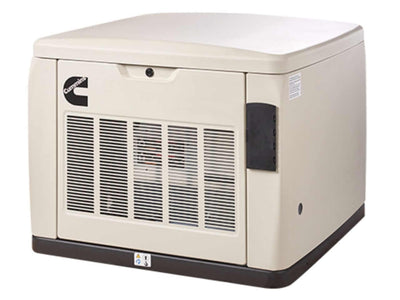
The two main types of generators for propane backup are standby and portable. Standby generators are designed for continuous duty. Most modern air-cooled units (like the Cummins RS20A and Briggs & Stratton PP26) can run indefinitely as long as they have fuel and periodic maintenance [7]. Manufacturer guidance typically calls for an oil check every 24 hours of continuous operation and an oil change every 150 to 200 hours.
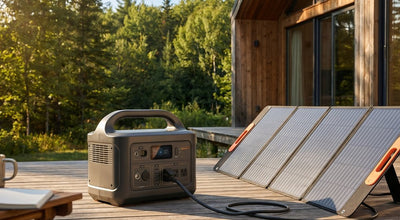
Portable propane generators run on small cylinders, so their ceiling is fuel capacity, not engine life. You can chain a 100-pound cylinder to a portable for a longer run, but the hoses and regulators must be rated for continuous use. Check the manufacturer's fuel supply specs before improvising a setup.
Our top standby picks for extended propane runtime:

For larger homes or homes in climates with long outages, step up to the 26 kW Briggs & Stratton PP26. It delivers full rated output on both propane and natural gas, comes with a 10-year comprehensive warranty, and the NGMax technology means you are not giving up wattage by running on propane.

Briggs & Stratton 26kW PowerProtect Standby Generator
$6,833.00
Shop NowFor smaller homes or tighter budgets, the Cummins RS13A is the right call. It covers 1,500 to 2,500 square feet with essential loads and burns roughly 1.9 gallons per hour at half load, giving you about 14 days on a 500-gallon tank.

Cummins RS13A 13kW Quiet Connect Standby Generator
$4,385.27
Shop NowPropane Runtime Calculator
Use this calculator to estimate how many days your generator will run on a given tank at a given load. Adjust the tank size and load percent, then read the runtime at the bottom.
Propane Generator Runtime Calculator
Pick your tank size, generator size, and load percent.
This calculator provides an estimate based on typical propane generator fuel curves. Actual runtime varies with temperature, load profile, and generator condition. For accurate sizing, consult a licensed electrician or your generator's fuel consumption chart.
What Safety Rules Apply When Running for Days?
Running a generator for multiple days is safe when you follow the rules. The two killers are carbon monoxide and neglected oil. Ignore either, and a generator that could run for weeks will take out a family or its own engine in hours.
The CPSC reports that portable generators cause about 85 carbon monoxide deaths per year in the United States [8]. Every one of those deaths was preventable. Standby generators installed per NFPA 37 clearance rules eliminate most of this risk, but portable units need careful placement.
Rules that apply during a multi-day run:
- CO distance: never operate a portable generator within 20 feet of any window, door, or vent. NFPA 37 requires 5 feet minimum clearance for standby units.
- Oil check: check the oil every 24 hours of continuous operation. Top off or change per the manual.
- Cool-down for refueling: shut down and cool for 2 minutes before refilling or switching tanks on a portable.
- Weather protection: use a generator tent or manufacturer cover rated for active operation. Never run in rain without cover.
- Transfer switch: never back-feed power through a dryer outlet. Use a properly installed transfer switch or an inlet box with interlock.
What Maintenance Does Multi-Day Operation Require?
Plan for one oil check every 24 hours and one oil change every 150 to 200 hours of continuous run time. Air filter inspection every 100 hours. Spark plug and valve clearance checks at the intervals called out in the owner's manual.
A standby generator running for 10 days at 50% load accumulates 240 hours of operation, more than an entire year of typical exercise cycles. That is why manufacturers specify oil changes by hours, not calendar months. If you expect to run for a week or more, keep on hand: 2 quarts of the manufacturer's specified oil, a spare oil filter, a spare air filter, and the right spark plugs.
Propane Generator Maintenance Schedule for Maximum Runtime
A home standby generator needs a weekly self-test, a monthly visual check, and one full professional service every 12 months or 200 run-hours, whichever comes first. Skip annual service and you can lose 10 to 20 percent of rated output to a dirty air filter, fouled spark plug, or degraded oil [13].

Weekly checks take 5 minutes:
- Confirm the weekly exercise cycle ran (most units self-test at a set day and time).
- Check the controller display for fault codes or warning lights.
- Look at the battery voltage reading. It should hold above 12.6 volts at rest.
Monthly checks take 15 minutes:
- Visual inspection of the air filter. Replace if dusty or obstructed.
- Check the oil level against the dipstick. Top off with the manufacturer's specified weight.
- Clear leaves, snow, or debris from the generator intake and exhaust.
- Verify the battery load-test result from the last self-exercise cycle.
Annual service takes 2 to 3 hours and is best left to a certified technician:
- Full oil and filter change with the manufacturer's specified oil weight.
- Spark plug replacement (every 200 hours or annually, whichever comes first).
- New air filter.
- Coolant level and condition check for liquid-cooled units.
- Transfer switch inspection, contact cleaning, torque check on lugs.
- Controller firmware update if available.
- Full load-bank test to confirm the generator still makes rated power.
Every 200 run-hours or annually, whichever comes first, do the full annual service even if the generator has only run for exercise cycles. Oil breaks down with time as well as use, and stabilizers in modern oils degrade after 12 months.
Homeowners can do the weekly and monthly checks with no tools beyond a shop rag. Annual service requires oil disposal, a torque wrench, and manufacturer-specific filters. Most homeowners buy an annual service plan from the dealer who installed the unit. Plans run $150 to $300 per visit [14] and typically include parts.
Poor maintenance costs you runtime. A dirty air filter restricts airflow and forces the engine to run rich, burning 10 to 15 percent more fuel per hour. A fouled spark plug causes hard starts and misfires under load. Worn oil stops protecting the engine bearings, and in a long outage you can take a generator out of service after 40 or 50 hours that should have run for 200 or more.
The Bottom Line
A propane generator can run continuously for days or weeks, not hours. The ceiling on runtime is tank size and load management, not the generator itself. A 500-gallon tank on a modern standby generator typically delivers 5 to 22 days of whole-home backup, which is enough to outlast almost every outage short of regional infrastructure failure.
Natural gas gives you unlimited runtime if the utility holds. Propane gives you fuel you physically own. Many homeowners run a dual-fuel standby with propane as the primary and natural gas as a backup so they have both kinds of security.
Next Steps:
- Add up your essential loads (furnace, fridge, well pump, lights) to find your typical outage draw in kW.
- Multiply by 2 for a safety margin. That is your target generator size.
- Use the runtime calculator above to size a propane tank that covers your worst-case outage length.
- Pick the generator from our home backup generator collection that matches your load and climate.
- Get an installation quote from a licensed electrician and a propane supplier before storm season.
Frequently Asked Questions
Common questions about propane generator runtime, fuel, and continuous operation.
How long will a propane generator run continuously on a 500-gallon tank?
A standby propane generator runs 5 to 22 days continuously on a 500-gallon tank, depending on load. At 50% load, most 20 kW units burn about 1.5 to 2.8 gallons per hour, which gives you roughly 11 days of runtime on 400 usable gallons.
How many hours will a propane generator run on a 20-pound tank?
A 20-pound propane tank holds about 4.6 gallons, which lasts 3 to 10 hours on a typical portable generator. At 50% load on a 5 kW portable, expect about 5 to 6 hours of runtime.
How much propane does a 22 kW generator use per hour?
A 22 kW standby generator burns about 3 gallons per hour at 50% load and about 6 gallons per hour at full load. Average household load during an outage usually runs 25% to 50%, not full.
Can a propane generator run 24/7 for a week?
Yes. Modern standby generators are designed for continuous duty and can run 24 hours a day for a week or more as long as you have fuel and do the required oil checks. Check and top off the oil every 24 hours of run time.
What size propane tank do I need for a 22 kW whole-home generator?
A 500-gallon tank is the minimum recommended size for a 22 kW whole-home generator. It gives you 5 to 11 days of continuous runtime. If your area sees week-plus outages (hurricane zones, ice storm regions), step up to a 1,000-gallon tank.
Why does a propane tank only fill to 80%?
Propane expands as it warms. The 80% fill rule leaves room for the liquid to expand safely in hot weather without over-pressurizing the tank. A 500-gallon tank therefore holds about 400 usable gallons at a full fill.
Can I connect two propane tanks to one generator?
Yes, with the right hardware. Portable generators can use a two-tank changeover valve to draw from one cylinder until empty, then automatically switch. Standby generators installed per code typically connect to a single residential tank sized for the load.
Does propane or natural gas run longer on a generator?
Natural gas runs indefinitely if the utility line stays pressurized. Propane runs as long as your tank has fuel, typically 5 to 30 days on a residential tank. Propane gives you fuel security. Natural gas gives you unlimited runtime when it works.
Does propane give less power than gasoline?
Yes, slightly. Most dual-fuel generators produce about 10% less wattage on propane than on gasoline. A 10,000-watt gasoline generator typically delivers about 9,000 watts on propane. The trade-off is longer fuel life and no gasoline stability issues.
How long does propane last in storage?
Propane does not degrade. A full tank stored properly will still burn in 10, 20, or 30 years. Unlike gasoline (which goes stale in 3 to 6 months) or diesel (1 year), propane is the best fuel for long-term emergency storage.
Is it safe to run a propane generator overnight?
Yes, for a properly installed standby generator. For a portable, keep it at least 20 feet from any window, door, or vent and use a working CO alarm inside the home. Never run a portable in a garage, shed, or enclosed space.
Do I need to stop the generator to change the oil?
Yes. Shut the unit down and let it cool for at least 10 minutes before an oil change. Standby generators with a transfer switch will kick back to utility power automatically when you cut the unit. Portable generator loads should be shut off first.
Can cold weather change how long a propane generator runs?
Yes. Propane vaporization drops below 0°F, which can starve a large generator during sub-zero cold. A 500-gallon tank usually handles a 22 kW generator down to about -20°F without issue. Smaller tanks (20 lb, 100 lb) can run short on vapor flow well before they run out of liquid in freezing weather.
References
- U.S. Energy Information Administration, Weekly Residential Heating Oil and Propane Prices. Residential propane tank installation and pricing data.
- Propane consumption rates for standby generators, industry technical bulletins. Measured fuel curves at 25/50/75/100% load.
- U.S. Department of Energy, Alternative Fuels Data Center, Fuel Properties Comparison. Propane BTU content (91,500 BTU/gal) and natural gas energy density.
- NFPA 58, Liquefied Petroleum Gas Code. 80% fill rule for propane tanks.
- U.S. Energy Information Administration, Residential Energy Consumption Survey. Average U.S. household electricity consumption data.
- U.S. Energy Information Administration, Weekly Residential Propane Prices. National average retail propane price.
- NFPA 37, Standard for the Installation and Use of Stationary Combustion Engines and Gas Turbines. Clearance and installation requirements for standby generators.
- U.S. Consumer Product Safety Commission, Portable Generator Safety. Portable generator carbon monoxide fatality statistics.
- Propane Education & Research Council, Codes and Standards. Propane tank vapor pressure and cold-weather performance guidance.
- Generac, Cold Weather Operation. Battery warmer and oil heater requirements for standby generators below 0°F.
- U.S. Department of Energy, Backup Generators. Typical installation scope, permit requirements, and cost ranges for home standby generators.
- U.S. Energy Information Administration, Weekly Residential Propane Prices by PAD District. Regional propane retail pricing by U.S. region.
- Briggs & Stratton Home Standby Generator Owner's Manuals. Scheduled maintenance intervals and service procedures.
- Cummins, Home Standby Generator Maintenance. Annual service scope and recommended intervals.
- FERC and NERC, February 2021 Cold Weather Outages Report. Duration and scope of the February 2021 Texas grid event.