

Last Updated: April 21, 2026
Quick Answer
A portable generator runs 8 to 12 hours continuously on one tank of gas before it needs a cool-down and oil check [1][5]. Dual-fuel units on a 100 lb propane tank can stretch that to 30 hours or more between shutdowns [12]. Our top pick is the Cummins Onan P2500i at $784. It runs 9.5 hours at 50% load, stays at 52 to 58 dB, and ships with a CO shutoff sensor [5][3].
Who This Is For
- Homeowners sizing a generator for multi-hour or multi-day power outages
- RV owners and off-grid campers planning long runs without shore power
- Medical users running a CPAP, oxygen concentrator, or refrigerated medication and needing safe overnight runtime
- Contractors and business owners running tools or coolers on job sites with no grid power
- Buyers weighing gas, propane, and dual-fuel options for storm season prep

Quick vocabulary refresher
Continuous runtime is how long your generator can run between forced shutdowns. It is limited by fuel tank size, load, and engine cooling needs. Total runtime is how long you can keep power flowing if you refuel and keep up with oil checks.
Load percent is the share of rated wattage your actual appliances pull. A 3,800W generator running a 1,900W load is at 50% load. Lower load means longer run time (also called runtime) on a single tank of gas.
How Long Can a Portable Generator Actually Run Without Stopping?
A portable generator runs 8 to 12 hours without stopping on a single tank of gas. That is the range most manufacturers print in their owner manuals for air-cooled engines [1][5]. After that window the engine needs a cool-down break and an oil check before restart.
The real limit is not just the fuel tank. It is the air-cooled engine itself. Air-cooled small engines rely on a cooling fan and fins to shed heat. After 8 to 12 hours of steady work, oil thins, seals get stressed, and internal parts push past their safe heat range [13].
Here is the short version by engine class.
| Engine Type | Continuous Runtime | Break Needed | Fuel Source |
|---|---|---|---|
| Gas inverter (air-cooled) | 8 to 12 hours | 30 to 60 minutes cool down | Gasoline |
| Dual-fuel portable | 8 to 12 hours per fuel switch | Oil check only at propane swap | Gas or propane |
| Open-frame gas | 8 to 12 hours | 30 to 60 minutes cool down | Gasoline |
| Diesel generators (less common in the portable class) deliver cooler-burning extended run time. Diesel portable (rare) | 24 hours or more | Oil check every 8 hours | Diesel |
| Standby (liquid-cooled) | Days at a time | None during run | Natural gas or propane |
Standby generators live in a different league. A standby unit uses a liquid-cooled engine and an external fuel source like natural gas or a large propane tank. It can run for days during a long power outage. The cooling system and external fuel tank remove the two hard limits that cap a portable [13].
Portable generators are designed for outage windows, job sites, and off-grid weekends. They are not built for unattended, nonstop, week-long runs. If you expect outages longer than three days, run a dual-fuel unit on a large propane tank. Add a simple rotation plan for the oil check.
The U.S. Department of Energy backs this up in its home emergency power sizing guide [8]. It recommends sizing a portable generator with at least 30% headroom over your actual running load. Lower load on the engine cuts heat, saves fuel, and lets the unit hit the top of its rated runtime window.
Why Portable Generators Need Breaks (The Engine Reality)
Portable generators need breaks because air-cooled engines cannot run forever. The break serves three jobs. The engine cools to a safe temperature. The oil level gets checked and topped off. Thermal stress on seals and gaskets resets for another work cycle [13].
Skip the breaks and three things start to fail. Oil thins and loses its protective film. Metal parts expand past their design tolerance. Exhaust valves can warp or stick. Any one of those failures voids your warranty [5].
Oil level checks every 8 hours
Every major portable generator manufacturer prints the same schedule. Check the oil level every 8 hours during continuous use. Cummins, Pulsar, and Bluetti all specify this interval in their owner manuals [5].
An air-cooled engine burns a small amount of oil during normal operation. A generator at 50% load can drop the oil level by a quarter quart over 24 hours of use. Run past the low-oil line and the engine seizes in minutes.
Most modern portable generators have a low-oil shutoff sensor. That sensor shuts the engine down before damage happens. It is a safety net, not a substitute for a visual oil check.
Oil change at 20 to 25 hours for break-in
The first oil change happens at 20 to 25 hours of runtime. This is the break-in interval. Fresh engine metal sheds microscopic particles into the oil during the first run. Changing the oil at 20 hours clears those particles before they wear down bearings [13].
Follow the manufacturer's guidelines exactly on break-in. Miss this one service and you can cut engine life in half.
Regular oil change every 50 to 100 hours
After break-in, change the oil every 50 to 100 hours of runtime. Pulsar recommends 50 hours for heavy duty use and 100 hours for occasional use. Cummins specifies 100 hours for the P2500i under normal operation [5].
Use the oil weight your manual calls for. Most small engines use 10W-30 for moderate weather and 5W-30 for cold starts below 40 degrees. The American Petroleum Institute tracks oil service ratings for small engines in its SJ and SN classifications [14].
What happens when you ignore breaks
A generator run nonstop for 24 hours at 50% load on a dirty oil film will usually survive. The same unit run for a week without a break will seize. The damage shows up as scored cylinder walls, melted piston rings, or a bent connecting rod [13].
Repair cost for a seized small engine runs $400 to $900 at a dealer. That is often more than a replacement unit. This is the hidden cost of skipping the 8 hour oil check.
Real Runtime on One Tank (Sizes + Fuel Types)
Runtime depends on three things. Tank size. Load percent. Fuel type. A 2,500W inverter running at 25% load sips fuel. The same unit at 100% load drinks it [5].
Here is a concrete runtime table for common portable generator sizes at 50% load, which is the load most homes run during a power outage.
| Generator | Tank | Fuel Burn at 50% | Runtime at 50% |
|---|---|---|---|
| Cummins Onan P2500i (2,500W) | 1.1 gal gas | 0.12 gal/hr | 9.5 hours |
| HB5020C (2,500W) | 1.0 gal gas | 0.12 gal/hr | 8 hours |
| HB5040DC dual fuel (3,800W gas) | 1.3 gal gas | 0.29 gal/hr | 4.5 hours gas |
| HB5040DC on 20 lb propane | 20 lb tank | 2.7 lb/hr | 7 to 8 hours |
| HB5040DC on 100 lb propane | 100 lb tank | 2.7 lb/hr | 37 hours |
| DB5041C open frame (4,500W) | 1.98 gal gas | about 0.3 gal/hr at light load | up to 6.5 hours |
| Typical 7,500W portable | 6 gal gas | 0.75 gal/hr | 10 to 12 hours |
Three rules pop out of the table. Bigger generators burn more fuel, but the ratio of runtime to tank size stays close for well-designed inverters. Propane on a 100 lb tank is the single longest continuous option for a portable unit. Open frame units carry a bigger tank and deliver similar hours to an inverter at 50% load.
Load matters more than most buyers think. A 2,500W inverter at 25% load can burn only 0.08 gallons per hour. That same 1.1 gallon tank now lasts 13 to 20 hours under eco mode [5]. This is where inverter technology earns its keep. Eco throttle spins the engine only as fast as your load demands.
Non-inverter open frame units burn fuel at a fixed rpm regardless of load. A 4,300W open frame unit running a 400W load still burns fuel at near full speed. If fuel efficiency matters for your long runs, pick an inverter.
Which Fuel Lets You Run Longest?
Propane on a large tank runs the longest on a single fill. Gasoline is easy to get but short on shelf life. Diesel runs the longest per tank on portable diesels but is rare in the consumer class [12].
Here is how the three fuel types compare on the factors that matter for long runtime.
| Fuel | Shelf Life | Typical Tank | Runtime at 50% load |
|---|---|---|---|
| Gasoline | 30 to 90 days | 1 to 6 gal built in | 4 to 12 hours |
| Propane 20 lb | Indefinite | 20 lb external | 7 to 10 hours |
| Propane 100 lb | Indefinite | 100 lb external | 35 to 40 hours |
| Propane 500 gal | Indefinite | 500 gal external | about 26 days |
| Diesel | 6 to 12 months | 5 gal built in | 10 to 20 hours |
Gasoline: easy to find, short on shelf life
Gasoline is the default fuel for portable generators because nearly every gas station sells it. A typical portable gas generator runs 8 to 12 hours per tank at 50% load. That is enough for a full work shift or a single overnight outage [5].
The catch is shelf life. Gasoline without stabilizer starts to degrade in 30 to 90 days. Ethanol-blended gas pulls moisture out of the air and forms gunk in carburetors [15]. Adding a fuel stabilizer stretches shelf life to 3 to 6 months.
Rotate your stored fuel every 90 days if you want it ready for an outage. Label each can with the fill date. Empty old fuel into your car tank and refill with fresh gas on a rolling schedule.
Propane: the long runtime leader
Propane has an indefinite shelf life. A sealed 20 lb propane tank stored in the shade holds pressure for a decade [16]. That alone makes propane the best choice for emergency prep.
The runtime math is what makes propane shine for long outages. A dual-fuel generator like the HB5040DC burns about 2.7 pounds of propane per hour at 50% load. A 20 lb tank lasts 7 to 8 hours. A 100 lb tank lasts 37 hours. A 500 gallon home propane tank (about 400 usable gallons) at that draw can power the unit for about 26 days at 50% load.
Propane burns cleaner than gasoline, which means lower carbon deposits on valves and spark plugs. The exhaust is lower in carbon monoxide than gas exhaust, though not CO free. The engine still needs the same 20 foot CPSC placement distance from the house [2].
Diesel: long continuous runs in a rare format
Diesel portables are uncommon in the consumer class. When you find them, they run longer continuously than any gas portable. Diesel engines run cooler than gas engines at the same load. That lower thermal stress lets a diesel portable push 24 hours of continuous runtime without a forced cool down. Oil checks at 8 hours still apply [17].
Diesel shelf life beats gas by months. Treated diesel with a biocide additive stores 12 months or more in sealed cans. The downside is weight, cost, and the lack of diesel at most gas stations. If your job site runs long hours, diesel is worth the search. If you want an emergency generator for the garage, gas or dual fuel makes more sense.
Natural gas: standby only
Natural gas from a utility gas line powers only fixed standby generators. Portable generators cannot connect safely to a residential gas line. If your home has a gas line and you want multi-day outage coverage, install a fixed standby unit. A portable on a 500 gallon propane tank is the other right answer [13].
The dual-fuel advantage for outages
Dual-fuel generators take both gasoline and propane. The engine has two separate fuel systems and a selector valve. You can run gas until the tank is low, then switch to propane without shutting the engine down. That switch stretches your continuous runtime by 7 to 40 hours depending on propane tank size [12].
This is the single best trick for long outages. A gas tank buys you 4 to 9 hours. A 100 lb propane tank adds 37 more. Plan the switch so you never have to stop the engine for a refuel. That matters during the middle of the night when refueling in the dark is a hassle.

Quick runtime primer: how long can a generator run vs how long can you run
How long a portable generator can run depends on three factors. The type of generator matters most. Then the load. Then the fuel source. Portable generators typically deliver backup power for 8 to 12 hours on gas. Propane generators can run longer on the same load. Diesel generators run longest of all but are rare in the consumer class.
How long can a generator run safely without breaks? Follow the manufacturer guidelines. Most recommend a cooldown every 8 hours at a time. Running as long as you want is not safe. Run time also depends on ambient temperature and altitude.
Portable vs standby is a common question. Standby units run for days or weeks on natural gas or a large propane tank. A portable needs refueling and oil checks. Discover how long your specific model can run by checking the spec sheet. When you need to run your generator for 24 hours or more, choose dual fuel. Power goes out without warning, so plan for days at a time of backup power. Choose the right generator type for your outage length. All portable generators are designed to run for hours at a time, but none are designed to run nonstop. Running for days at a time, with oil checks, is the job of standby units on utility gas or a large propane tank.
The 4 Best Portable Generators for Extended Runtime (Generator Types Compared) in 2026
The right generator for long runtime depends on your load, your fuel plan, and your noise tolerance. These four picks cover the four most common use cases our customers ask about. Each one is proven in long outage runs and stocked in the portable generators catalog.
1. Cummins Onan P2500i, Best Quiet Long-Runtime Pick
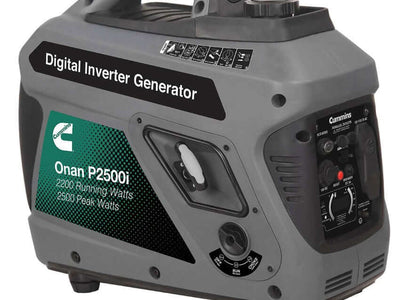
The Cummins Onan P2500i is the top pick for buyers who want premium build quality, a quiet inverter engine, and reliable long runtime on gas. It delivers 2,500 starting watts and 2,200 running watts from a 1.1 gallon fuel tank. At 50% load the unit runs 9.5 hours per tank. In eco throttle mode at 25% load the runtime stretches to 13 hours or longer [5].
Noise output runs 52 to 58 dB from seven meters, which is near conversation volume. That makes the P2500i safe for overnight runs in a suburban yard without waking the neighbors. The CARB-compliant engine meets California emissions rules. A built-in CO shutoff sensor meets the ANSI and PGMA G300-2018 standard required on new portables [3].
The P2500i is a pure sine wave inverter, which means clean power for sensitive electronics like CPAPs, laptops, and medical refrigerators. The unit carries a 3-year consumer warranty from Cummins, one of the longest in the portable class. Weight is 47 pounds with a molded handle for easy one-person carry.
Use cases include overnight medical runs, a CPAP and small fridge combo, trim contractor tools, and travel trailer weekends. At $784 with a 10-year service network behind it, the P2500i is the best premium long-runtime portable for homes and small job sites.

Cummins Onan P2500i Quiet Portable Inverter Generator 2500W
$784.00
Shop Now2. HB5040DC 3800W Dual Fuel, Best for Multi-Day Outages
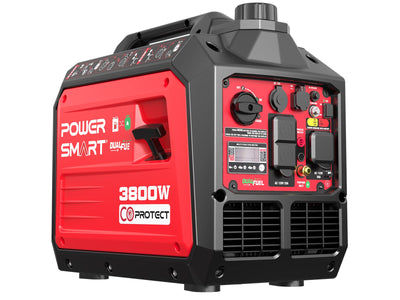
The HB5040DC is the pick for buyers who want the longest possible continuous runtime on a portable. It is a dual-fuel inverter that runs on gasoline or propane. On gas it makes 3,800 starting watts and 3,300 running watts. On propane it makes 3,500 starting watts and 3,100 running watts. The fuel selector valve lets you switch fuels without shutting the engine down [12].
Runtime is the headline story. On the 1.3 gallon gas tank at 50% load the unit runs 4.5 hours. On a 20 lb propane tank it runs 7 to 8 hours at 50% load. On a 100 lb propane tank the unit runs about 37 hours continuously. Many rural homes already have a 500 gallon home propane tank for heating. On that tank the HB5040DC can run about 26 days at 50% draw.
The unit includes CO Alert shutoff, which meets the ANSI and PGMA G300-2018 standard. It is a pure sine wave inverter with Total Harmonic Distortion under 3%, which is safe for electronics and medical gear. Noise runs 59 dB at quarter load in eco mode, a little louder than the P2500i but much quieter than a conventional open frame [3].
Use cases include multi-day storm outages, off-grid cabins with a propane supply, RV boondocking with a large propane tank, and small job site work. At $469.99 it is the best dual-fuel inverter in the sub-4,000 watt class.

3800W/3500W Gas/Propane Dual Fuel Inverter Generator HB5040DC
$449.99
Shop Now3. DB5041C 4500W Open Frame, Best Value for Sustained Loads
The DB5041C is the pick for buyers who want more running watts at a low price. It is an open-frame inverter rated for 4,500 starting watts and 3,800 running watts.
Its 1.98-gallon tank runs up to 6.5 hours, so plan to refuel for all-day loads. The smart panel has 120V outlets, an ECO mode, and a CO alarm.
At 63 pounds and 72 dB, it is light and fairly quiet for its output. It suits job sites, shops, and outage loads in the 2 to 3.5 kW range.

4500W Open Frame Inverter Generator w/ CO Alert DB5041C
$349.99
Shop Now4. HB5020C 2500W, Best Budget Runtime Pick
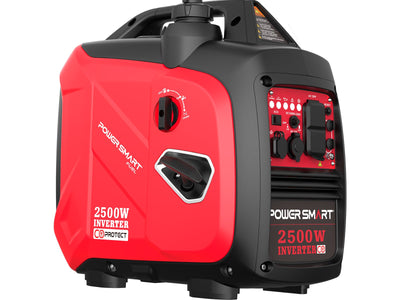
The HB5020C is the pick for buyers who want reliable portable runtime at the lowest price. It is a 2,500 starting watt, 2,200 running watt gas inverter with a 1 gallon tank. Runtime is 8 hours at 50% load and 13 hours or more in eco mode at light load [5].
The unit includes CO Alert shutoff and meets the ANSI and PGMA G300-2018 standard for new portables. The pure sine wave output is safe for laptops, phones, and medical gear. Weight is 48 pounds with a molded carry handle.
Use cases include light overnight outage coverage, tailgating, small camping trips, and CPAP-plus-fridge combos. This is the best sub-$400 CO-safe inverter in the 2,500 watt class. At $329.99 the HB5020C is the simplest way to get safe, reliable runtime in a portable that fits the trunk of a car.

Can You Run a Portable Generator 24 Hours Straight?
You should not run a gas portable generator a full 24 hours without a break, but a dual-fuel unit on a large propane tank or a portable diesel can safely exceed 24 hours with scheduled oil checks. Short answer. You should not run a gas portable generator 24 hours straight (yes, people do run for 24 hours) without a break. A dual-fuel portable on a large propane tank can do it with scheduled oil checks. A portable diesel can push past 24 hours with cooling and oil checks [1][13].
The 24 hour question splits into two issues. Can the engine run that long mechanically? And can you feed it enough fuel to keep going?
Mechanical limits on 24 hour runs
Air-cooled gas engines should get a cool-down break at 8 to 12 hours. The manufacturer's printed guidance is clear on this [5]. Running a gas portable for 24 hours straight does not guarantee failure. But it stresses the oil, the rings, and the valve seats. Over many 24 hour runs, that stress adds up and shortens engine life.
Diesel portables are an exception. The cooler-burning diesel engine handles 24 hours or more without the same thermal penalty. Still, the oil level check at 8 hour intervals applies to every engine.
Liquid-cooled generators, which are usually fixed standby units rather than portables, can run for days. The coolant circuit sheds heat faster than air cooling can. That is why a whole-home standby runs a week during a storm without breaking a sweat.
Fuel feeding for a 24 hour run
Gas portables cannot carry 24 hours of fuel in the tank. A 6 gallon tank on a typical 7,500W unit lasts 10 to 12 hours at half load. To hit 24 hours on gas you have to refuel. That means shutting the engine down, letting it cool for at least 5 minutes, refilling the tank, and restarting [1].
Never refuel a gas generator while it is running or still hot. Gasoline fumes ignite on contact with hot exhaust pipes. Fire investigators link this mistake to dozens of generator fires each year. The Consumer Product Safety Commission warns against hot refueling in every portable generator advisory [2].
Propane refueling without shutdown
Propane is different. You can swap an empty propane tank for a full one without shutting the generator down. The fuel line has a shutoff valve at the tank end. Close that valve, let the engine run until it stalls from fuel starvation, swap the tank, open the valve, and restart in under a minute. Many users simply swap tanks at a safe distance from the hot engine without letting it stall.
This is the cleanest way to hit multi-day runs on a portable. Plan the propane swap at the 8 hour mark for the oil check. Both happen during the same break.
The real 24 hour plan
If you need 24 hours of power from a portable, do this. Run a dual-fuel unit on a 100 lb propane tank. Schedule an oil level check every 8 hours. Listen for the engine note changing, which tells you the propane tank is near empty. Swap the tank before it runs dry so the engine stays hot and ready.
Real scenario: 48 hour ice storm outage
A Kentucky homeowner loses power at 4 PM on a Thursday after an ice storm. She fires up the HB5040DC dual-fuel on a 100 lb propane tank. The generator runs 37 hours at a 50% load covering fridge, furnace fan, lights, and a CPAP. She swaps to gas at hour 36 and gets another 4.5 hours while she drives to buy a second propane refill. Total uptime to power restoration at hour 48: zero cold food lost, zero sleep disruption, and one clean oil top-off at the hour 24 stop.
Carbon Monoxide Safety for Long Runtime
The CDC links 85 to 100 deaths per year to portable generator carbon monoxide poisoning, the leading cause of non-fire CO deaths in the United States. Carbon monoxide is the number one safety risk with portable generators. The Centers for Disease Control and Prevention links 85 to 100 deaths per year to portable generator CO poisoning. That makes it the leading cause of non-fire CO deaths in the United States [1].
A portable generator makes as much CO in one hour as hundreds of idling cars. Run one in a garage with the door open and you can reach deadly CO levels in 5 to 10 minutes. Run one indoors and the kill time drops under 5 minutes [2].

The 20 foot rule from CPSC
The Consumer Product Safety Commission recommends placing a portable generator at least 20 feet from the house. The exhaust must point away from windows, doors, and air conditioning intakes. Wind direction matters. If a breeze is blowing toward the house, move the generator further or switch sides of the yard [2].
Never run a portable generator inside a house, basement, crawl space, garage, or carport. The CPSC says this even with doors and windows open. CO builds faster than ventilation can clear it in any partially enclosed space.
ANSI and PGMA G300-2018 CO shutoff
All four of our featured generators meet the ANSI and PGMA G300-2018 standard. That standard requires a built-in CO sensor that shuts the engine down before CO reaches dangerous levels [3]. As of 2025, federal rules require this CO shutoff on most new portable generators sold in the U.S.
The CO shutoff sensor is a last line of defense, not the first. Correct 20-foot placement is the first line. A battery-powered CO detector inside the house is the second. The generator's own shutoff sensor is the third.
Night and overnight operation
Running a generator overnight is safe with three habits. Place the unit 20 feet from the house with exhaust downwind. Use a CO detector with a fresh battery inside every sleeping area. Check fuel and oil at a schedule that does not require a middle-of-the-night trip in the dark.
A weather-rated generator tent keeps rain off the engine without trapping exhaust. Never cover a running generator with a tarp or blanket, which traps heat and CO.
Multi-day run safety check
During a multi-day outage, walk around the generator at every oil check. Smell for unburned gas. Look at the exhaust color. A black exhaust means a rich mixture and higher CO. A clean nearly invisible exhaust means the engine is running right. Test the CO detector inside at least once per day. Replace the detector battery if it chirps.
How Weather Affects Runtime
Cold weather below 20 degrees thickens oil and lowers propane tank pressure, cutting continuous runtime, while extreme heat and high altitude reduce it further. Weather changes generator runtime in ways most buyers do not plan for. Cold weather, hot weather, rain, and altitude all cut continuous runtime or require different setup habits [1].
Cold weather below 20 degrees
Cold weather thickens oil and drops propane tank pressure. Gas engines need a lighter oil weight in the cold. Most portable generator manuals call for 5W-30 below 40 degrees instead of the 10W-30 used in warmer months [5].
Propane pressure drops about 20% at 20 degrees Fahrenheit compared to 70 degrees. A full 20 lb propane tank reads lower on the gauge and can feed less fuel per minute. That can cut your effective generator output. Keep propane tanks out of the wind and off frozen ground if possible. A tank cover or an insulated blanket slows the pressure drop.
Starting a cold engine takes more fuel per start. Plan for a 10% shorter first-tank runtime in freezing weather. Gas lines can freeze if water condensed in the tank. A winter fuel additive prevents ice in fuel lines.
Hot weather above 90 degrees
Hot weather raises engine oil temperature and can shorten the 8 to 12 hour run window. An engine that runs reliably 12 hours at 70 degrees may hit its safe oil temperature at 10 hours at 95 degrees. Check the oil every 6 hours instead of 8 when outdoor temperature climbs [5].
Give the generator extra clearance from walls and fences in hot weather. The cooling fan needs unblocked airflow on all sides. Four feet of clearance in summer is a good baseline.
Rain and standing water
Never operate a portable generator in standing water. Electrical components on the frame can ground through water and shock anyone who touches the unit. The National Electrical Code treats outdoor generators the same as any other wet-location electrical equipment [18].
Use a generator tent or a shed designed for generators. These tents have enough clearance for cooling airflow and keep rain off the engine. Cheap tarp covers trap exhaust and should never be used on a running unit. The Ready.gov family emergency guide lists generator tents as a required item for storm-season prep [9].
Altitude above 3,000 feet
High altitude thins the air. A portable gas engine loses about 3% of rated power for every 1,000 feet of elevation above sea level. A 5,000W generator at 7,000 feet delivers only about 3,900W usable output [5].
Match your load to the derated output at your altitude. Mountain homes and off-grid cabins should size generators larger to account for altitude loss. Some manufacturers sell high-altitude jets for the carburetor, which can restore some of the lost power.
Using a portable generator for extended backup means planning for several factors. Oil changes come first. Then fuel supply. Then the amount of power your generator delivers to your home. Most gas generators usually run 6 to 18 hours on a single tank depending on load. Add oil every 8 hours. Change oil and filter every 50 to 100 hours. Choosing the right specific generator model matters. Some models can run for days with scheduled breaks.
A generator can be a lifesaver during a long outage. Keep your home running smoothly by staying ahead of maintenance. Position the generator at least 20 feet away from the house. Gas generators need cooldowns. Dual fuel units capable of running for days need the same oil checks every 8 hours before needing a break. Your electrical system depends on steady generator output, so watch for voltage drops. Follow the manufacturer guidelines and your generator will keep running through the longest outage. Generator types vary in how long can they run between stops: gas 8-12 hours, propane longer via tank swaps, diesel even weeks on a big tank. A generator for longer outages needs more than raw power; it needs thermal headroom and serviceable parts.
The Maintenance Schedule That Keeps Generators Running
A portable generator that gets basic service lasts 2,000 to 3,000 hours of runtime. Skip the maintenance and that number can drop under 500 hours. Two hours of service a year buys you a decade of reliable service [13].
Pre-outage checklist
Before every expected outage, run through this list. Check engine oil level with the unit on level ground. Check fuel level and top off if stale. Look at the spark plug for fouling. Inspect the air filter for dirt. Start the unit and run it under a small load for 10 minutes to verify it is ready.
This 15 minute check catches 80% of the problems that leave a generator dead on arrival during a storm. Do this at least twice a year, once in spring and once in fall.
Break-in oil change at 20 hours
The first oil change happens at 20 to 25 hours of runtime. Drain the oil while the engine is warm, which suspends the break-in particles. Refill with the oil weight specified in the manual. Dispose of the used oil at a municipal recycling center or any auto parts store that accepts used oil [10].
Skipping the break-in oil change is the single most common cause of early engine wear on portable generators. Put it on your calendar.
Regular oil schedule
After break-in, change the oil every 50 to 100 hours of runtime. A weekend camper at 8 hours per trip hits the 50 hour mark after 6 trips. An outage-only user at 24 hours per outage hits 50 hours after two major storms. Keep a simple log taped to the generator with date, hours, and oil type.
Air filter and spark plug
Inspect the air filter every 50 hours. Clean foam filters with soapy water and let them dry fully. Replace paper filters when they look dirty. The air filter is the lungs of the engine. A clogged filter runs the engine rich, which wastes fuel and builds carbon on valves.
Inspect the spark plug every 100 hours. Clean with a wire brush or replace it every 200 hours. The plug is cheap. The engine damage from a worn plug is not.
Fuel storage and rotation
Keep gasoline in sealed cans with fuel stabilizer added. Label each can with the fill date. Rotate every 90 days by pouring old fuel into the family car and refilling the can. Store propane tanks upright in a cool shaded spot. Check the date stamp on 20 lb propane tanks. Tanks expire 12 years from the manufacture date and must be requalified after that [16].
Store the generator itself in a dry shed or garage. Run it for 15 minutes every three months to circulate oil and keep seals soft. Add fuel stabilizer to the tank before long storage, or drain the tank if you will not run the unit for 6 months or more.
Interactive Portable Generator Runtime Calculator
Use this calculator to estimate your continuous runtime and total fuel burn for a long outage. Pick your generator size, load percent, and fuel type. The output updates with estimated runtime on one tank and total fuel burn for a 24 hour outage.
The calculator gives a close estimate for well-maintained inverter generators. Open-frame units that run at fixed rpm burn fuel closer to the 50% load number even at light load. Add 10% to the estimated burn rate for open-frame generators at light loads to stay safe.
Long-term power depends on several factors: generator type, tank capacity, ambient temperature, and maintenance discipline. Inverter generators tend to sip fuel at light loads. Open-frame generators tend to burn more. Altitude also affects its runtime because thinner air means less complete combustion. A ready generator is one that can run anywhere, from a driveway to a job site. Gas supply stability matters most when running everything from the fridge to the sump pump. Plan for days or even weeks of outage and your generator will be ready when you need it. Check your generator every 50 running hours. Your generator may need a new spark plug earlier if it runs dirty fuel. Follow the manufacturer guidelines to keep your power flowing through the storm.
The Bottom Line
A portable generator runs 8 to 12 hours continuously on gas before it needs a cool down and an oil check. Dual fuel on a 100 lb propane tank stretches that to 37 hours. Large propane tanks let a portable run for days. Pair a smart fuel plan with the 20 foot CO rule and the 8 hour oil check. A portable generator covers nearly any outage you will see in a decade.
Your Next Steps
- Size the generator with 30% headroom over your actual running load to cut heat and stretch runtime.
- Buy a dual-fuel model if any outage in your area could last more than 12 hours.
- Plan an oil check every 8 hours during continuous use and schedule those breaks around your sleep.
- Place the generator at least 20 feet from the house with exhaust pointed away from windows and doors.
- Keep a CO detector with a fresh battery inside every sleeping area during a long run.
- Rotate stored gasoline every 90 days and add fuel stabilizer to every can.
- Browse our full portable generator collection to compare runtime and fuel type side by side.
Frequently Asked Questions
Common questions about portable generator runtime, refueling, fuel types, and safe operation during long power outages.
How long can a portable generator run on one tank of gas?
A portable generator runs 8 to 12 hours on one tank of gas at 50% load. Inverter models in eco mode at 25% load can stretch that to 13 to 20 hours. Open-frame units at high load can drop to 4 to 6 hours per tank.
Can you run a portable generator 24 hours straight?
You can, but not on gas alone without breaks. A gas portable needs a cool-down and an oil check at 8 to 12 hours. A dual-fuel unit on a 100 lb propane tank can run about 37 hours with only a brief oil check. A diesel portable can push 24 hours or more with scheduled oil checks.
How many hours a day can I run my portable generator?
Most portable generators can run 20 to 22 hours a day with a 30 to 60 minute cool-down at the 8 to 12 hour mark. That keeps the engine in the safe temperature range and lets you check the oil. Running 24 hours a day without breaks stresses the engine and voids most warranties.
Can I refuel a portable generator while it is running?
Never refuel a gas generator while it is running or hot. Gas fumes ignite on contact with hot exhaust parts. Shut the engine down and let it cool for at least 5 minutes before adding fuel. Propane is different because the tank swap happens outside the hot zone, and you can swap tanks without shutting the engine down.
How often should I change the oil during a long outage?
Check the oil level every 8 hours of continuous runtime. Change the oil at 20 to 25 hours for a new engine in break-in. After break-in, change the oil every 50 to 100 hours. During a multi-day outage, top off the oil at every 8 hour break and plan a full oil change if the runtime passes 50 hours.
How do I know when my generator needs a break?
The clock is the best guide. At 8 to 12 hours of continuous runtime, stop the engine for a 30 to 60 minute cool-down and an oil check. Other cues include a change in engine note, hotter-than-normal exhaust, or the low-oil warning light. Any of those signals means stop now and service the engine.
Does propane make a generator run longer than gasoline?
Yes, for any tank larger than 20 lb. A 20 lb propane tank runs 7 to 8 hours at 50% load on a 3,500W dual-fuel unit. That is similar to a 1.3 gallon gas tank. A 100 lb propane tank runs 37 hours. A 500 gallon home propane tank runs about 26 days. Propane also stores indefinitely while gasoline spoils in 30 to 90 days.
How long can a diesel generator run continuously?
A portable diesel generator can run 24 hours or longer continuously because diesel engines run cooler than gas engines. Oil checks every 8 hours still apply. Large diesel gensets used at hospitals and data centers can run for days with scheduled refueling and oil service. Portable diesels are less common but are the choice for long job-site runs.
Which fuel stores longest for emergency prep?
Propane wins by a wide margin. Sealed propane tanks hold pressure indefinitely. Diesel treated with a biocide additive stores 6 to 12 months. Gasoline with stabilizer stores 3 to 6 months. For long-term outage prep, a 100 lb propane tank kept in the shade is the lowest maintenance option.
Is it safe to run a generator overnight?
Yes, with three habits. Place the generator at least 20 feet from the house with exhaust pointed away. Install a CO detector with a fresh battery in every sleeping area. Schedule the 8 hour oil check for a time that does not require a middle-of-the-night trip. A quiet inverter like the Cummins P2500i at 52 to 58 dB is a strong pick for overnight runs.
Can I run a generator in the rain?
Only under a weather-rated generator tent with proper clearance for cooling airflow. Never run a generator in standing water or with a tarp that traps exhaust. Storm-rated generator tents provide at least 4 feet of clearance from the engine and keep rain off electrical connections. Never operate a wet generator without drying it first.
Do I need a CO detector if my generator has a CO shutoff sensor?
Yes. The CO shutoff on the generator meets the ANSI and PGMA G300-2018 standard, but it is a backup. A CO detector inside the house is the primary alarm for anyone sleeping in the building. The CPSC recommends both devices plus the 20 foot setback as the three-layer safe operating plan for portable generators.
References
- Centers for Disease Control and Prevention. "Carbon Monoxide Poisoning from Portable Generators." cdc.gov
- U.S. Consumer Product Safety Commission. "Portable Generator Safety." cpsc.gov
- Portable Generator Manufacturers Association. "ANSI/PGMA G300-2018 Safety and Performance of Portable Generators." pgmaonline.com
- U.S. Environmental Protection Agency. "Phase 3 Emission Standards for New Nonroad Spark-Ignition Engines." epa.gov
- Cummins. "Onan P2500i Inverter Portable Generator Operator Manual and Spec Sheet." cummins.com
- National Fire Protection Association. "NFPA 37 Standard for the Installation and Use of Stationary Combustion Engines and Gas Turbines." nfpa.org
- Occupational Safety and Health Administration. "1926.304 Woodworking Tools and Portable Engine Safety." osha.gov
- U.S. Department of Energy. "Sizing and Selecting Home Emergency Generators." energy.gov
- Federal Emergency Management Agency. "Emergency Power Preparedness Guide." ready.gov
- American Red Cross. "Power Outage Safety and Generator Use." redcross.org
- U.S. Department of Agriculture Food Safety and Inspection Service. "Keeping Food Safe During an Emergency." fsis.usda.gov
- U.S. Energy Information Administration. "Propane and Residential Heating Fuel Data." eia.gov
- Society of Automotive Engineers. "SAE J1349 Engine Power Test Code for Small Internal Combustion Engines." sae.org
- American Petroleum Institute. "Engine Oil Classification System for Small Engines." api.org
- ASTM International. "ASTM D4814 Standard Specification for Automotive Spark-Ignition Engine Fuel." astm.org
- National Institute of Standards and Technology. "Propane Stability and Storage Research." nist.gov
- Bluetti. "Portable Diesel and Dual Fuel Generator Operating Guidance." bluettipower.com
- National Fire Protection Association. "NFPA 70 National Electrical Code for Outdoor Generator Installations." nfpa.org