

Last updated: June 28, 2026
Quick Answer
The main types of generators sort two ways. By design, you have portable (conventional), inverter, standby (whole-home), and portable power stations, plus large industrial units. By fuel, you have gasoline, propane, diesel, natural gas, dual-fuel, and solar or battery power. Your best pick depends on what you need to run, for how long, and where.
Who This Guide Is For
- Homeowners who want backup power before the next storm knocks out the grid
- First-time buyers trying to understand the kinds of generators on the market
- RV owners and campers who need quiet, clean power off the grid
- Contractors and job-site crews who need rugged power output at the work site
What Are the Main Types of Generators?
A generator turns mechanical energy into electricity. An engine spins an alternator, and that motion becomes the power that runs your home or gear. That is the simple version.
That motion can make alternating current (AC) for your home or direct current (DC) for batteries. Most units make AC, the same power generation idea used at power plants and along power lines. Battery and solar generators store DC, then invert it to AC. Either way, the goal is a reliable power supply when utility power drops.
The harder part is choosing. There are two ways to sort the kinds of generators on the market. The first is by design, which controls how the unit works and what it powers best. The second is by fuel, which controls runtime, storage, and cost.
We will walk both, with real use cases for each. By the end, you will know the right generator for your power needs and budget. That includes backup power during an outage and off-grid power away from the grid. Let us start with design.

What Are the Types of Generators by Design?
Design tells you how a generator makes and delivers power. It also shapes the price, the noise, and how clean the power supply is for sensitive electronics. Here are the five you will see most.
Portable (Conventional) Generators
A conventional portable generator runs a gas or diesel engine at a fixed speed. That engine spins an alternator that makes AC power directly at 120 or 240 volts [1]. It is the classic open-frame unit you wheel out when the power goes down.
Most consumer portables fall between about 900 and 10,000 watts, with home-backup units often in the 3,000 to 8,500 watt range [1]. Prices run roughly $250 to $500 for small 1 to 2 kW units, and about $800 to $1,500 or more for 7 to 10 kW models. They cost the least per watt, which is the big draw.
This portable generator is best for short-term home backup like the fridge, lights, and a sump pump, plus job sites and outdoor events. The trade-off is noise. They run loud, often 70 to 80 dB at 20 to 25 feet, and the power is less clean than an inverter [1].
Inverter Generators
An inverter generator takes a smarter path. The engine makes raw AC, the unit turns it into DC, then inverts it back into stable, clean AC. The engine speed rises and falls with the load, so it runs quieter and sips less fuel [1].
Most portable inverter units make about 1,000 to 3,500 watts, with larger models reaching around 7,000 watts. Prices run roughly $400 to $900 for 1 to 2 kW units, and about $800 to $1,500 or more for 3 to 3.5 kW models. You pay more per watt than a conventional generator.
Think of the difference like a car on cruise control versus one stuck flooring the gas pedal. The inverter adjusts to the road. That clean power, often under 5 to 6% distortion, is safer for laptops, phones, and medical gear [1]. Quiet operation makes it the favorite for camping, tailgating, and RVs.
Standby (Whole-Home) Generators
A standby generator is the permanent option. It sits outside your home, hard-wired to an automatic transfer switch. When the grid fails, the transfer switch starts the generator and moves your home's load over, all on its own [1]. A standby unit can power an entire house and gives near uninterrupted power when the grid fails.
Whole-home units usually make 10,000 to 24,000 watts (10 to 24 kW) or more [1]. The generator itself runs about $3,000 to $6,000 or more. Installed with the transfer switch and gas hookup, total cost often lands at $7,000 to $15,000 or more, depending on your region and the work involved.
This is the right call for long outages and for homes that need heat, AC, well pumps, or medical equipment to stay on. It runs on natural gas or propane, so there is no manual refueling. The catch is the high upfront cost and the need for professional, permitted installation.
Portable Power Stations (Solar / Battery Generators)
A portable power station is a big lithium battery with a built-in inverter. People often call these solar generators because you can recharge them with solar panels. There is no engine and no combustion, so they make zero emissions [1].
Continuous output usually runs 300 to 3,000 watts, with capacity often between 500 and 5,000 watt-hours. Prices range from about $300 for small units to $5,000 or more for the largest. You recharge from a wall outlet, solar panels, a car, or another generator.
This is the only type you can safely run indoors. That makes it ideal backup power for a CPAP, a modem, lights, and electronics, plus apartments and condos where fuel and engine noise are problems. The limit is runtime. A battery can only hold so much, so big loads drain it fast.
A Quick Note on Industrial Generators
Industrial and commercial generators are the heavy hitters. These large diesel or gas units commonly range from 20 kW to several megawatts and run building systems, data centers, and hospitals [2]. They are built for prime or continuous duty, not the typical home. Most homeowners never need one, so we will keep our focus on the four types above.
What Are the Types of Generators by Fuel?
Fuel is the other half of the choice. It decides how long a generator runs, how you store it, and what it costs to operate. The table below compares the common options side by side.
| Fuel | Runtime / Storage | Cost | Best For | Watch-Outs |
|---|---|---|---|---|
| Gasoline | About 8 to 12 hrs at 50% load; stored gas lasts only a few months unless treated [1] | Roughly $3 to $4 per gallon | Short, occasional use; easy to find fuel | Short shelf life; hard to get in big outages |
| Propane | 5 to 10+ hrs on a 20 lb tank; stores for years without going bad [1] | About $15 to $25 per 20 lb fill | Long-term storage; dual-fuel units | Slightly less power than gas; need cylinders |
| A diesel generator | Long runtimes, large tanks; fuel stores 6 to 12 months | Near or above gas per gallon | High-power, long-duration jobs [2] | Louder, heavier; fuel needs care |
| Natural Gas | Runs as long as gas service holds; no storage needed | Often lowest cost per kWh | Whole-home standby backup | Needs a gas line; not for portables |
| Dual-Fuel | Switches between gas and propane for flexible runtime [1] | Small premium over single-fuel | Extended emergencies; fuel choice | More parts, hoses to maintain |
| Solar / Battery | Runtime set by battery size and load; holds charge for months | High upfront, low operating | Indoor backup; electronics; off-grid | Cannot run big loads long; slow recharge |
Here is what that means in practice. Gasoline is everywhere but goes stale fast. Propane stores for years, which is why so many dual-fuel units include it [1]. Natural gas wins for standby because it never runs out, as long as the line stays live. Solar and battery power give you silent, clean backup with no fuel to store at all.
What Size Generator Do You Need?
Sizing trips up most first-time buyers. The trick is understanding two numbers. Running watts is the steady power a device needs to keep going. Starting watts is the short burst it needs to turn on, often 2 to 3 times the running figure for anything with a motor [1].
Briggs & Stratton suggests a simple method. List every device, find the starting watts for motor loads, add up all the running watts, then add the single highest starting watt figure on top [1]. That total is your minimum generator size. The table below gives rough numbers to start with.
| Appliance | Running Watts | Starting Watts |
|---|---|---|
| Refrigerator / freezer | 150 to 300 W | 600 to 1,200 W |
| Furnace blower | 400 to 800 W | 1,000 to 1,600 W |
| Well or sump pump | 700 to 1,500 W | 1,500 to 3,000 W |
| Window AC unit | 1,000 to 1,500 W | 2,000 to 3,000 W |
| Whole average house | 10,000 to 20,000 W | Standby (10 to 20 kW) |
For just the essentials like a fridge, lights, and a small pump, a 3,000 to 5,000 watt portable often does the job [1]. An average home with a gas furnace and central AC usually needs a 10,000 to 20,000 watt standby unit [1]. For exact sizing, have an electrician run a load calculation.
How Do You Run a Generator Safely?
This section can save a life, so read it twice. A generator engine works like a car engine, and it can quickly make deadly levels of carbon monoxide [3]. You cannot see or smell this gas.
Never run a portable generator in an enclosed space. That means no garage, no basement, and no crawlspace, even with a door open [3]. Run it at least 20 feet from the house, with the exhaust pointed away from windows and doors [3]. Put working CO alarms inside your home, and look for units with automatic CO shutoff certified to ANSI/UL 2201 or ANSI/PGMA G300 [3]. Generator-related CO poisoning is a leading cause of death during outages [4].
The second danger is electrical. Never connect a generator straight into your home's wiring [1]. Doing this, called backfeeding, can send power back onto utility lines and kill a line worker repairing the grid.
If you want a generator to power house circuits, you need a transfer switch. Briggs & Stratton is clear: hire a qualified electrician to install one [1]. Standby units use an automatic transfer switch, while portables use a manual transfer switch or a panel interlock [1]. The National Electrical Code requires this proper transfer equipment to keep your generator from feeding the utility line [1].

Which Generator Should You Buy?
Now for the picks. We matched four strong options to the most common needs we see. Each one fits a different type of buyer, so find the row that sounds like you.
Best Inverter Generator
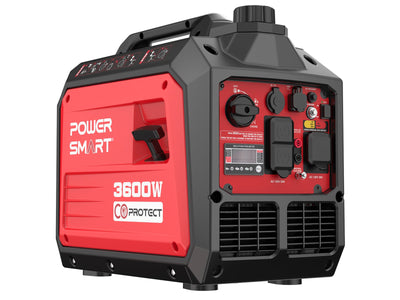
For clean, quiet power you can carry, an inverter generator is hard to beat. This 3,600-watt gas inverter unit includes a built-in CO alert sensor for safety. It runs sensitive electronics, camp gear, and a few home circuits without the harsh noise of an open-frame unit. It is a smart first generator for most buyers.

Best Dual-Fuel Portable
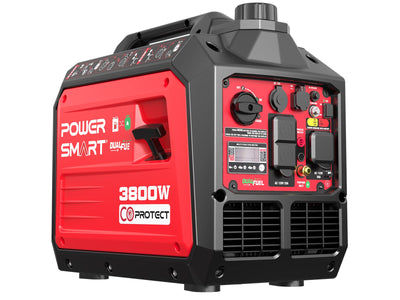
Want fuel flexibility when the grid goes down? This dual-fuel inverter generator runs on gasoline or propane, making about 3,800 watts on gas and 3,500 on propane. Use propane for long-term storage and gas when it is cheap and handy [1]. The built-in CO alert adds another layer of protection.

Best Whole-Home Standby
For automatic, hands-off backup power, a standby generator is the gold standard. The Briggs & Stratton PowerProtect 13 kW unit installs outside and starts on its own when the grid fails. It runs on natural gas or propane, so you never haul fuel. This is the pick for homeowners who want their lights, heat, and well pump to stay on through a multi-day outage.

Best Portable Power Station (Solar Generator)
If you need silent backup you can run indoors, a portable power station is the answer. The Anker SOLIX C1000 Gen 2 packs a 1,024Wh LiFePO4 battery with 2,000W output and fast wall charging. It keeps a CPAP, modem, and lights going during an outage, and you can recharge it with solar panels. No fumes, no noise, no fuel to store.

Anker SOLIX C1000 Gen 2 Professional Portable Power Station 1024Wh - Ultra-Fast LiFePO4 2000W Output
$499.99
Shop NowScenario: A Three-Day Outage Is Coming
A storm is forecast to knock out power for three days. You have a fridge, a gas furnace blower, a well pump, and a home office that cannot go dark. Do you grab a portable or commit to a standby?
The portable path: A 7,000 to 10,000 watt dual-fuel portable covers those loads. You save thousands up front. The cost is your time. You refuel it, you start it, and you run it outside, 20 feet away, all three days.
The standby path: A 13 kW standby on natural gas starts itself the second power drops. It runs the whole list without you lifting a finger. You pay much more up front and need professional install, but you never think about it again.
For a one-off storm, the portable wins on value. For a home that loses power every year, the standby pays you back in peace of mind.
The Bottom Line
There is no single best type of generator. There is only the right one for your loads, your budget, and how often the grid goes down. Match the type to the job and you will not overpay or come up short when it matters most.
Here is how to move forward.
- List every device you must keep running during an outage.
- Add up the running watts, then add the highest single starting watts on top.
- Pick the type of generator that fits: portable for short use, inverter for clean power, standby for whole-home, or a power station for silent indoor backup.
- For any home backup that ties into your wiring, plan for a transfer switch installed by a licensed electrician.
That is power that shows up when it counts. Need help matching a unit to your home? We are happy to walk you through it.
Frequently Asked Questions
What are the most common types of generators?
The most common types are portable (conventional) generators, inverter generators, standby whole-home generators, and portable power stations, also called solar generators. By fuel, the common kinds are gasoline, propane, diesel, natural gas, dual-fuel, and solar or battery. Most homeowners choose among the first four designs.
What is the difference between an inverter and a conventional generator?
A conventional generator runs its engine at a fixed speed and makes AC power directly. An inverter generator converts that power to DC and back to clean AC, and its engine speed changes with the load. The result is quieter operation, better fuel economy, and cleaner power that is safer for electronics. Inverters cost more per watt.
Are solar generators real generators?
A solar generator is really a portable power station, a large battery with a built-in inverter. It stores electricity rather than making it from fuel. It is a true power source for your devices, and you can recharge it with solar panels, a wall outlet, or a car. It just does not have a combustion engine.
What type of generator is best for home backup?
For automatic, long-term home backup, a standby generator is best. It starts on its own when the grid fails and runs on natural gas or propane. For short outages or a smaller budget, a portable or dual-fuel generator works well. For silent indoor backup of electronics and medical gear, choose a portable power station.
What size generator do I need for a house?
For just the essentials like a fridge, lights, and a small pump, a 3,000 to 5,000 watt portable is often enough. An average home with a gas furnace and central AC usually needs a 10,000 to 20,000 watt standby unit. Add your running watts plus the highest single starting watt figure, then ask an electrician for a load calculation.
Which fuel type is best?
There is no single best fuel. Gasoline is easy to find but stores poorly. Propane stores for years and burns clean. Natural gas is ideal for standby units because it never runs out. Diesel suits high-power, long-duration use. Dual-fuel gives you the most flexibility in an emergency.
Can I run a generator indoors?
Never run a fuel-burning generator indoors. Engines make carbon monoxide that can reach deadly levels fast, even in a garage with the door open. Run portable units at least 20 feet from the home with exhaust aimed away, and use indoor CO alarms. The only type safe to run inside is a battery-powered portable power station, which has no engine.
Do I need a transfer switch?
Yes, if you want to power your home's wiring. Never plug a generator straight into a wall outlet or panel, a dangerous practice called backfeeding. The National Electrical Code requires proper transfer equipment. Standby units use an automatic transfer switch, and portables use a manual transfer switch or interlock installed by a licensed electrician.
How long can each type run?
A gasoline portable often runs 8 to 12 hours at half load on one tank. Propane runtime depends on cylinder size, often 5 to 10 hours or more on a 20 lb tank. A natural gas standby can run for days as long as gas service holds. A portable power station runs until its battery drains, set by its capacity and your load.
Which type of generator is quietest?
A portable power station is the quietest because it has no engine and runs in near silence. Among fuel-burning types, inverter generators are the quietest, often in the 50 to 65 dB range at 25 feet. Conventional open-frame portables are the loudest, usually 70 to 80 dB at 20 to 25 feet.
References
- Briggs & Stratton. "Portable Generator Buying Guide." briggsandstratton.com
- Generator Source. "Essential Generator Buyer's Guide." generatorsource.com
- Consumer Reports. "Generator Buying Guide." consumerreports.org
- U.S. Centers for Disease Control and Prevention. "Carbon Monoxide and Generator Safety." cdc.gov